
Join me as I share my island-hopping journey through Mykonos, Naxos, and Santorini—three islands, each with their own unique and charming character.
- Languages Spoken: Greek (official), but English is widely spoken in tourist areas.
- Currency: Euro (€)
- Historical Significance: The birthplace of democracy, Western philosophy, the Olympic Games, and home to ancient wonders like the Parthenon and Delphi.
- Best Time to Visit: April–June & September–October (pleasant weather, fewer crowds). July–August is great for beaches, but is hot and crowded.
Day 1-2: Athens
Landing in Athens felt like stepping into an ancient world and a lively city. I stayed at Athens Backpackers Hostel, a centrally located spot that was perfect for exploring. The rooftop patio was a great place to unwind in the evenings, offering a relaxed atmosphere with views of the Acropolis.
From the hostel, it was just a 10-minute walk to the base of Acropolis Hill, making it easy to visit the Parthenon, Odeon of Herodes Atticus, and the Temple of Athena Nike. While everyone recommends seeing it before the crowds, I was visiting in shoulder season in early October and showing up in early afternoon was totally fine.
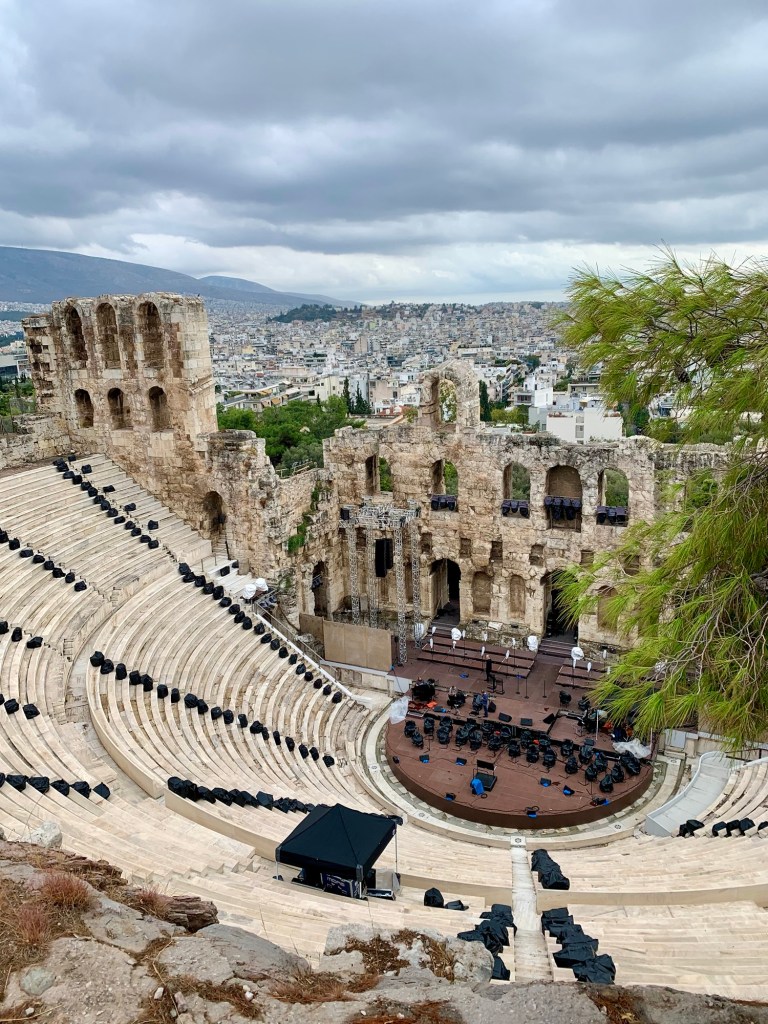
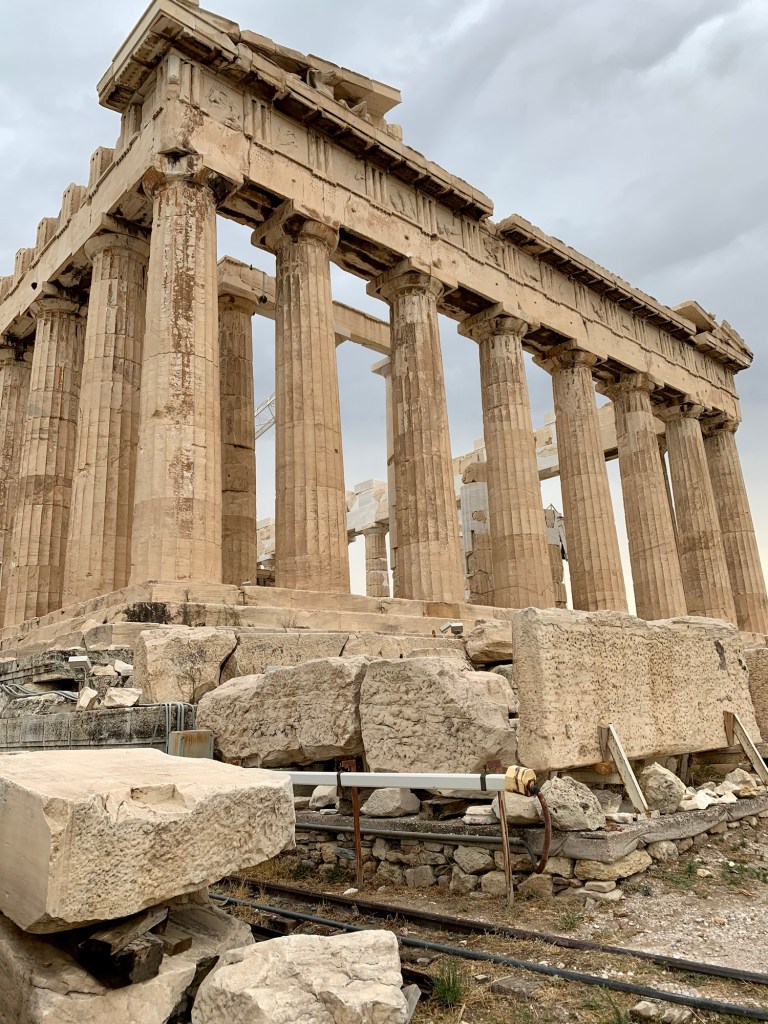
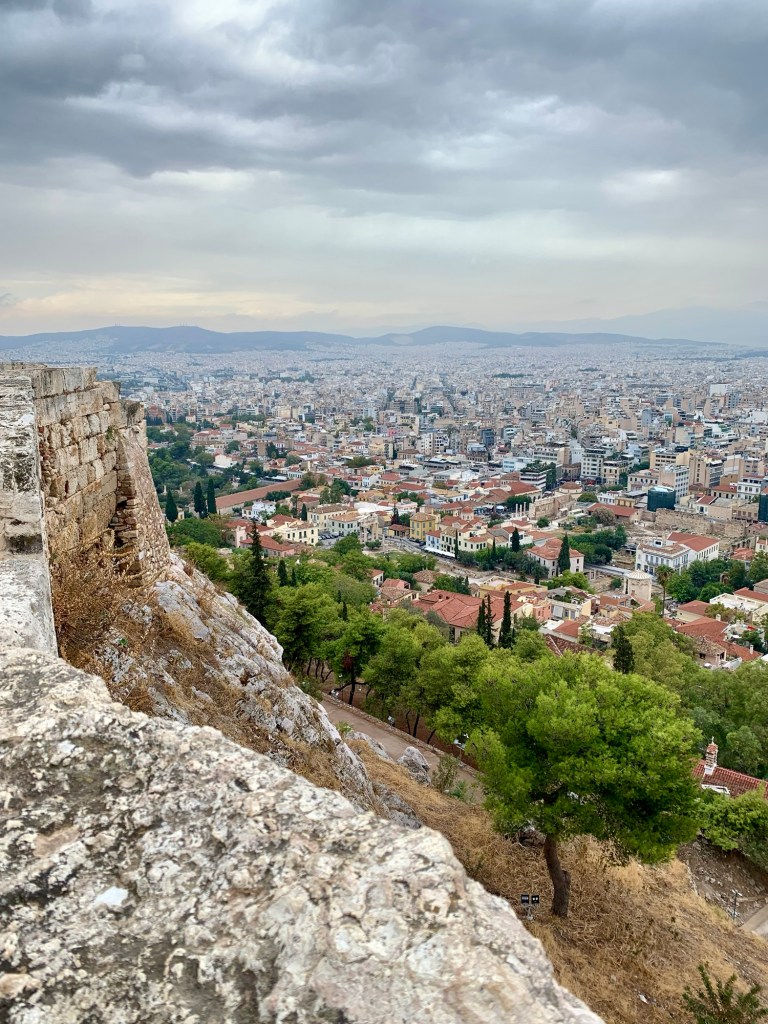
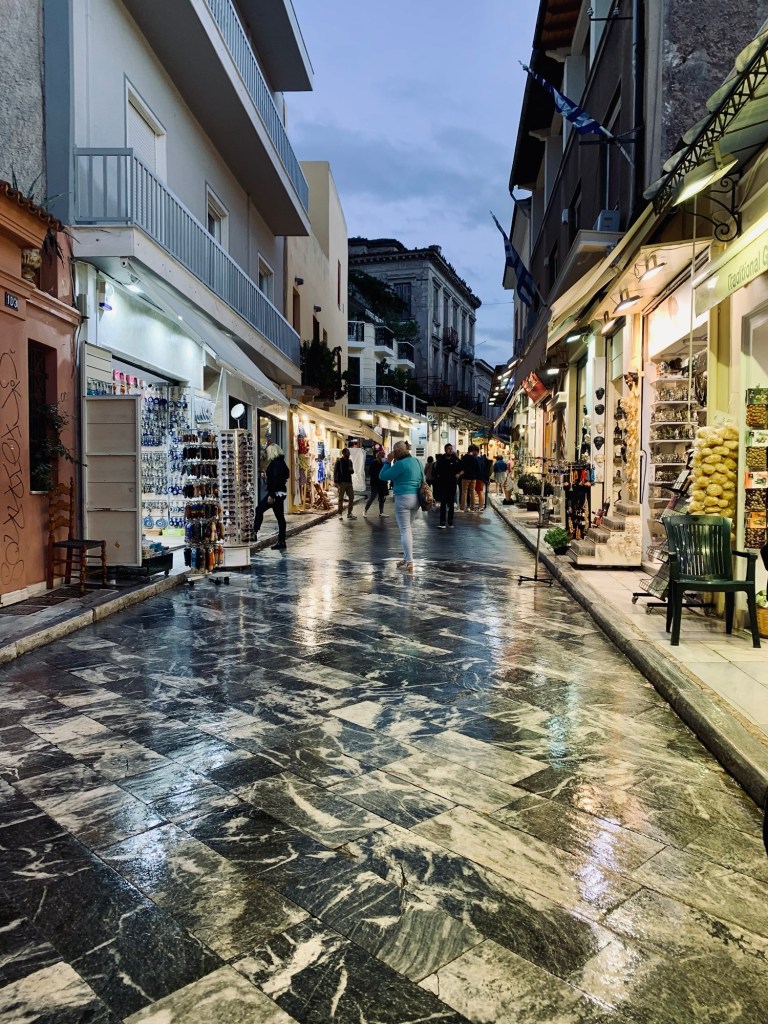
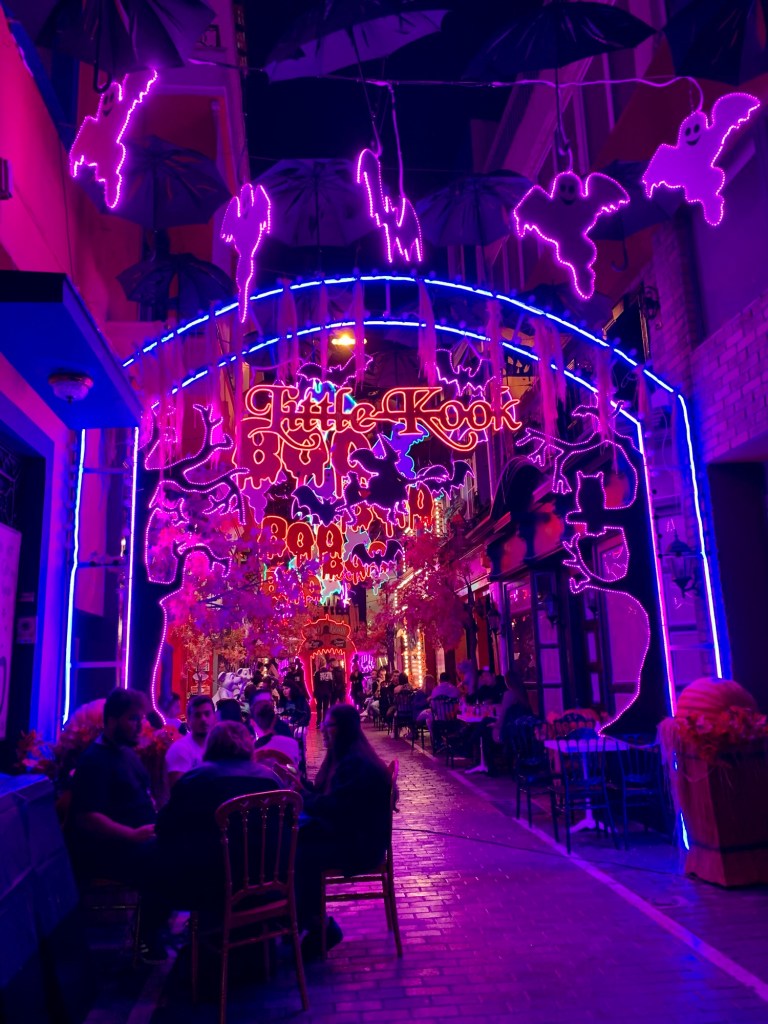
With only two days in Athens, much of my time was spent wandering through the charming streets of Plaka, where cobblestone alleys and colorful houses gave the neighborhood a timeless feel. Staying within walking distance of lively markets, cozy tavernas, and trendy bars, I had my first—though certainly not my last—gyro, a perfect introduction to Greek street food.
The Monastiraki Square area was a lively maze of winding streets, bars, and rooftop restaurants with nice views of the city. While I only had a chance to visit it at night, every turn revealed something new.
Day 3-6: Mykonos
My journey to Mykonos started before dawn in Athens, navigating the city’s public transportation to reach Piraeus Port in time for an early morning ferry. The trip itself was smooth, but finding the right boat in the darkness of the dockyard was a bit hard. Thankfully, I had built in a small buffer of time—though, if you know me, not much of one. After a bit of searching, I found my ferry, walked on board, and enjoyed what turned out to be a surprisingly pleasant and fast ride across the Aegean.
When we arrived, most passengers had pre-arranged transportation waiting at the ferry terminal, but I hadn’t planned that far ahead. As I started walking toward the road to look for a bus, I noticed a small fleet of sea buses at the far end of the dock, shuttling foot passengers to Old Port and Mykonos Town. I wasn’t exactly sure where it would drop me off, but it seemed like a more interesting option, so I hopped on and picked a stop that looked close to my hotel—or so I thought.
What I didn’t realize was that Mykonos hotels are built high into the hills, and the way up wasn’t as simple as it seemed on a map. Instead of a direct path, I found myself zigzagging up endless switchbacks, all while carrying my 20lb backpack in the warm midday sun. With no taxis, buses or pedestrians in sight, I just forged on, resigned to my choices.
Just when I was three quarters of the way up, and seriously contemplating my choices, an older German couple pulled over and kindly offered me a ride. Drenched in sweat and exhausted, I gratefully accepted, and they drove me the last stretch to the top of the hill. It was an unexpected adventure, but in true travel fashion, it all worked out in the end.
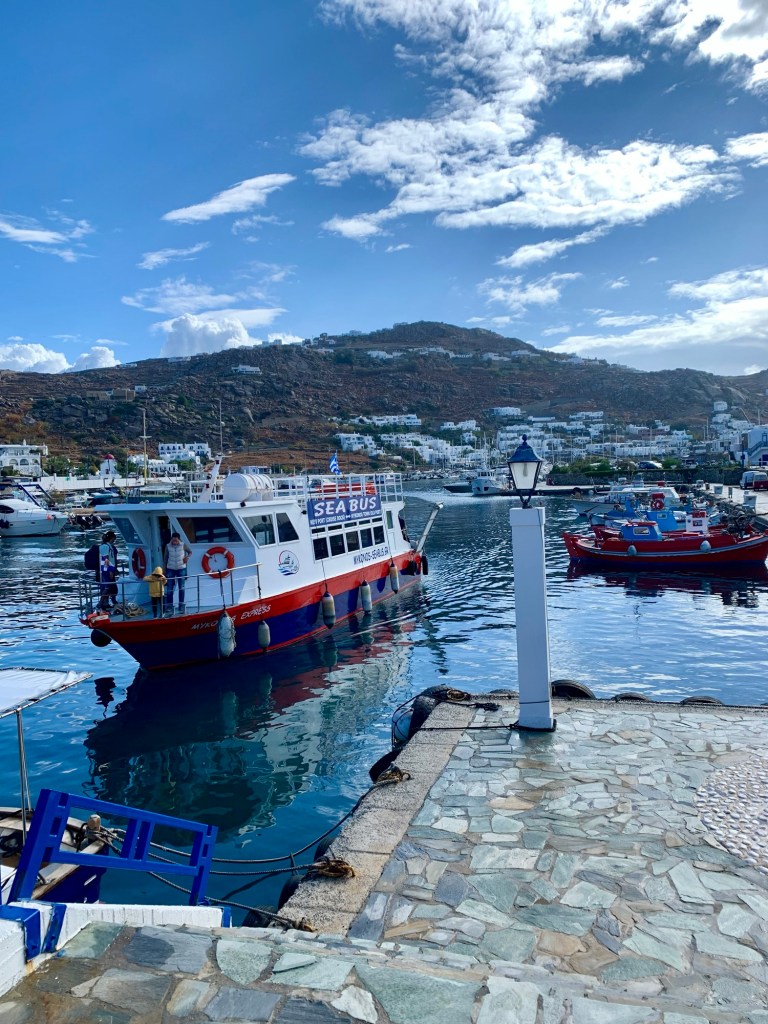
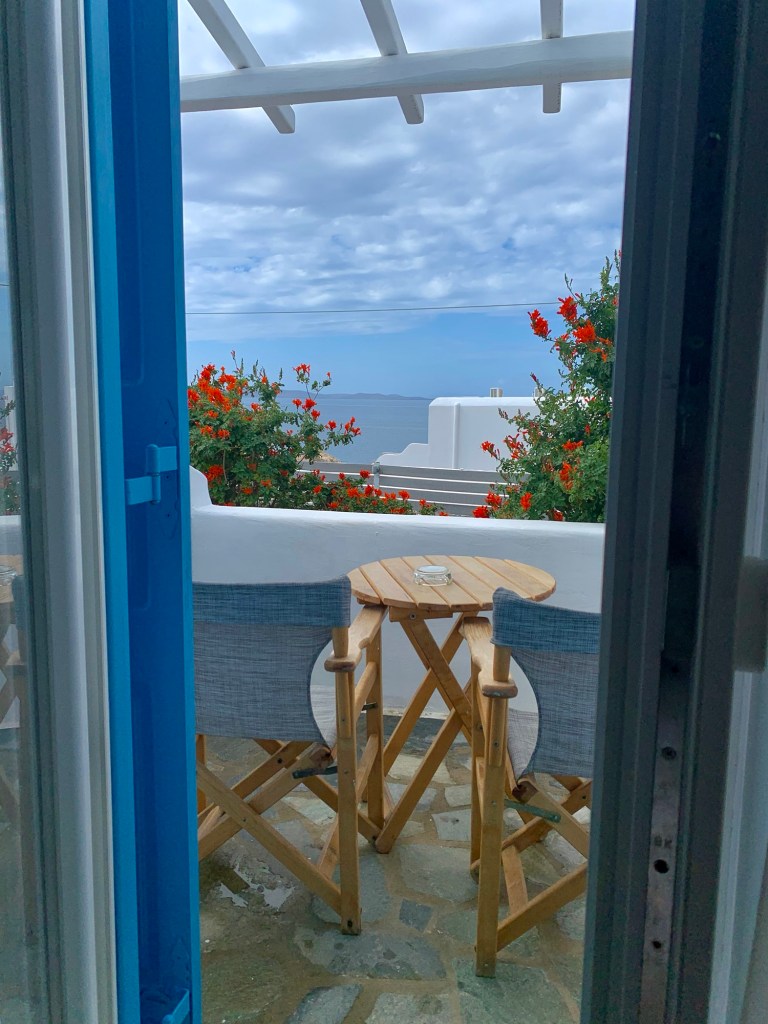
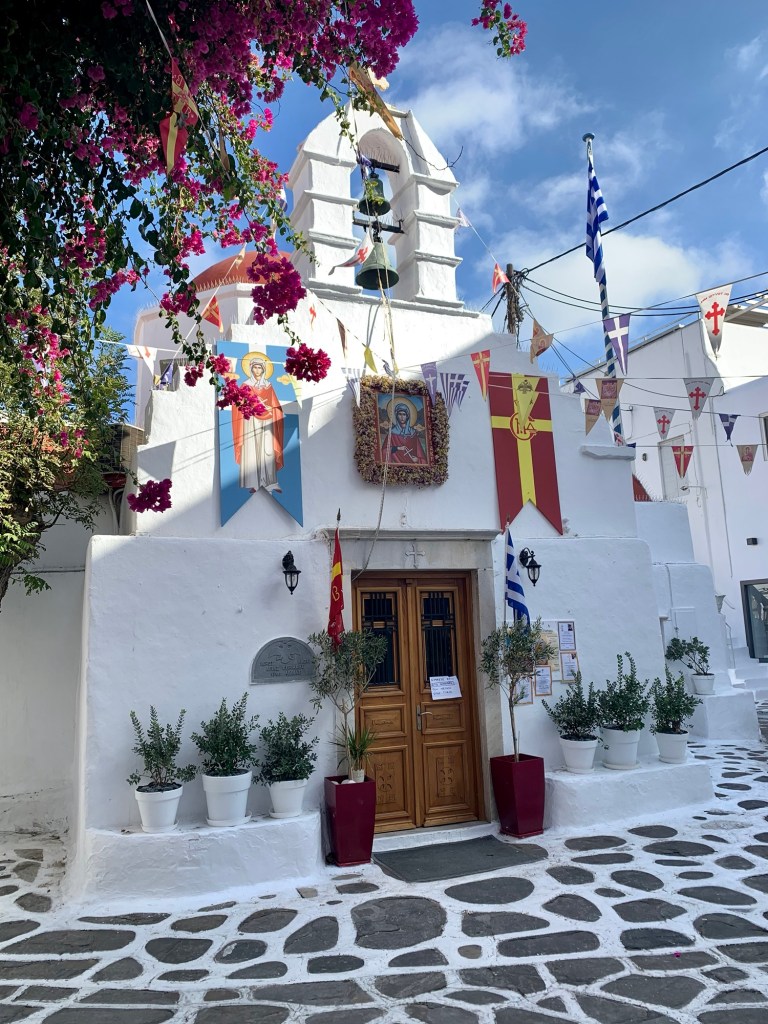
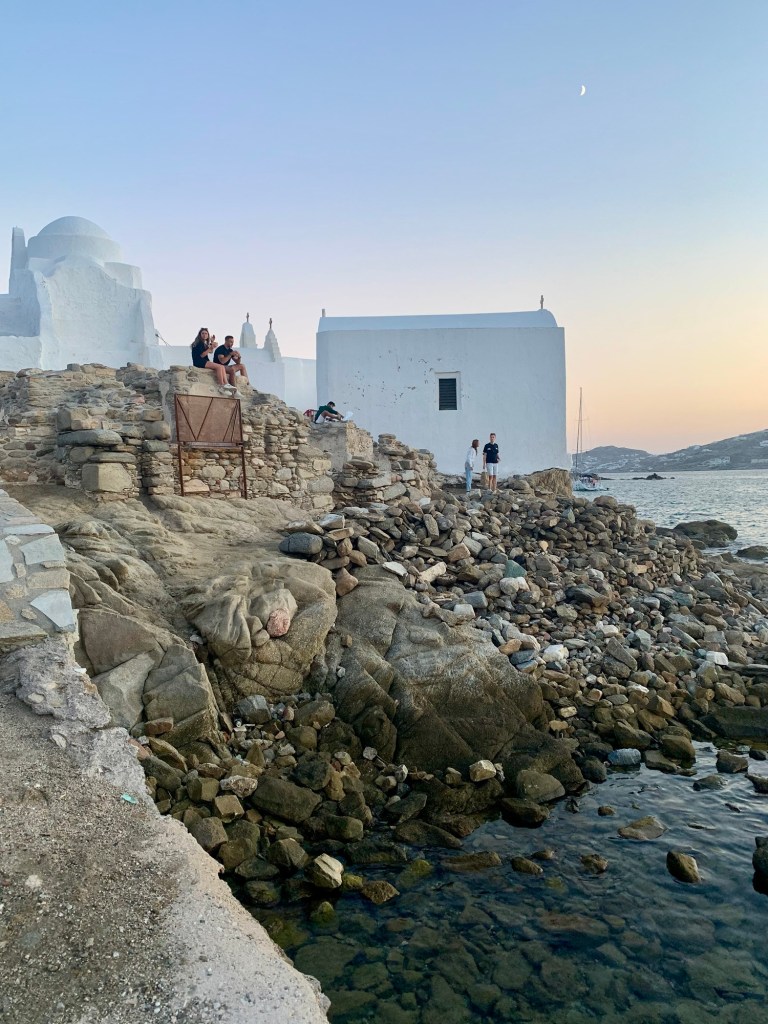
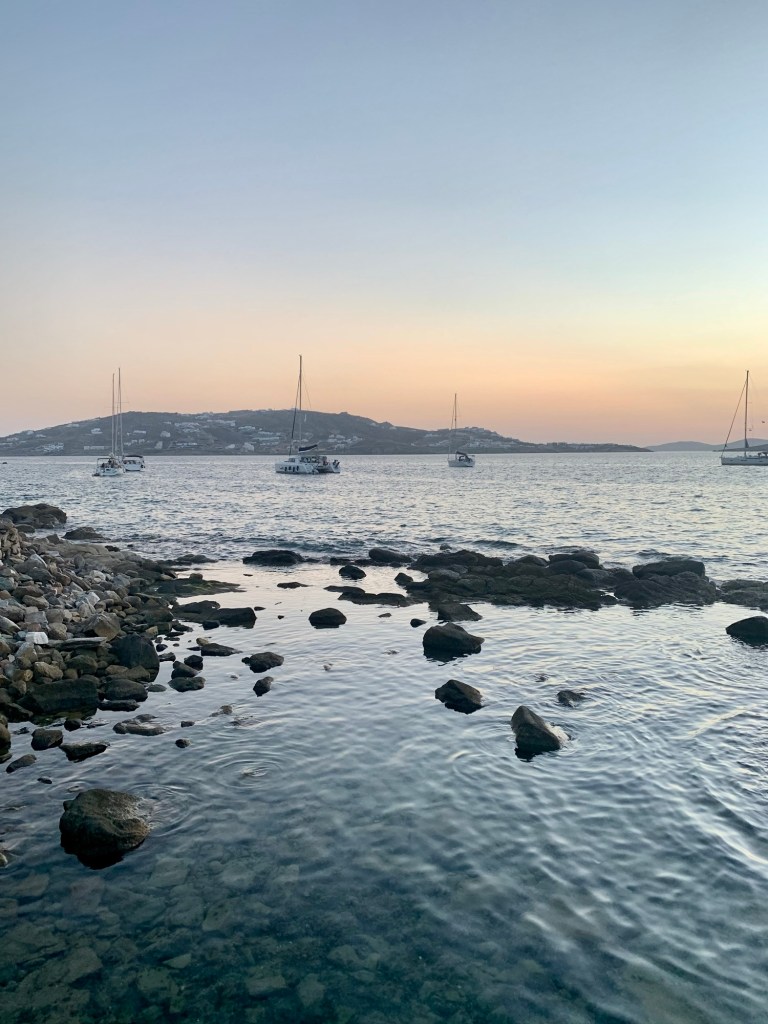
Walking around Mykonos Town felt exactly like what I had pictured—classic cobblestone streets, white buildings with blue accents, and narrow, winding alleys that made it easy to get a little lost. The town sat right on the water, with waves crashing up against the walls in some spots and seaside restaurants lining the edge in others.
The streets were full of shops, cafés, and small hidden courtyards, all tucked between the maze-like pathways that were originally designed to confuse pirates (and still do a great job at confusing tourists). The famous windmills stood tall on a hill overlooking the town, and no matter which way you turned, there was a lively energy.
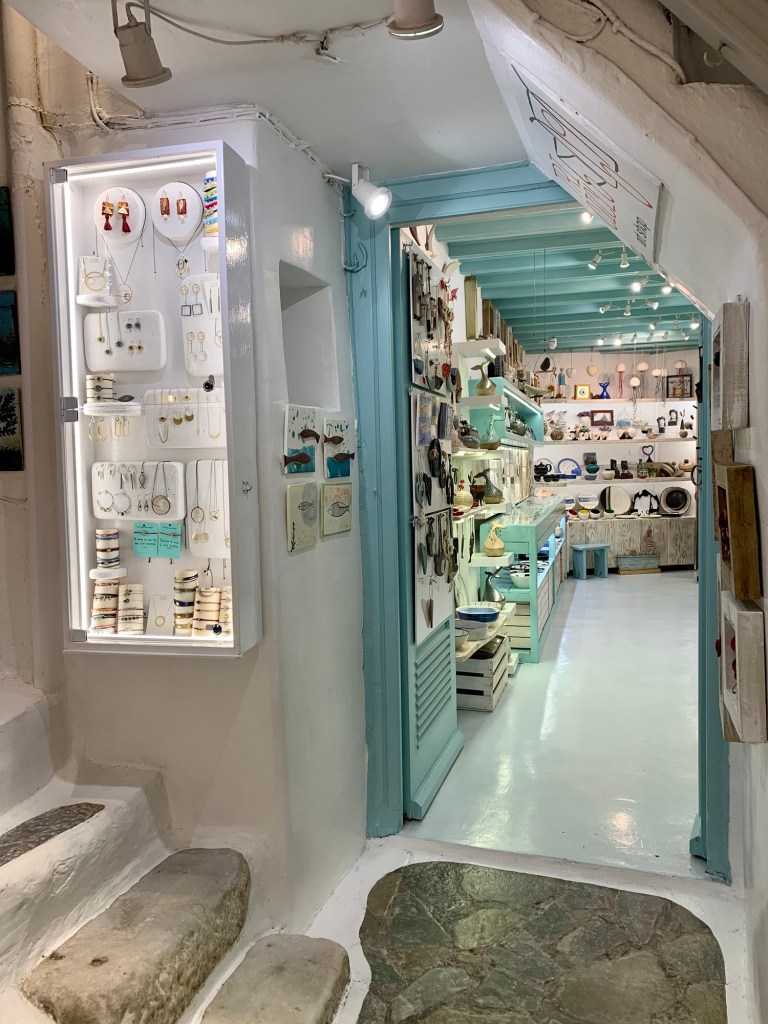
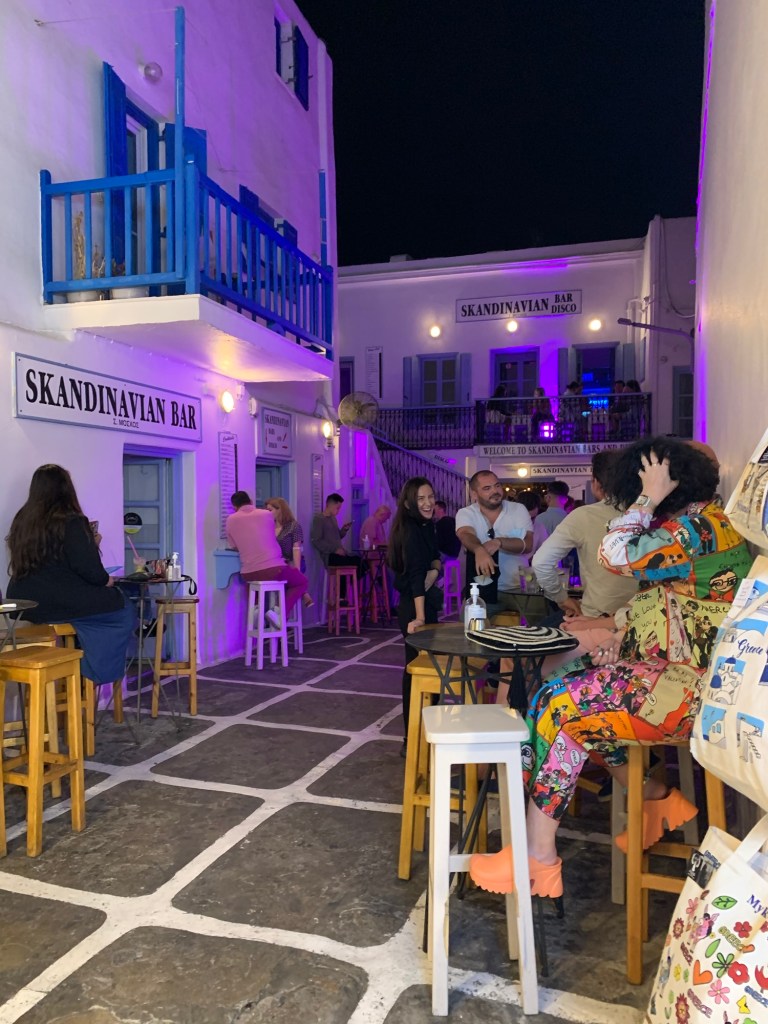
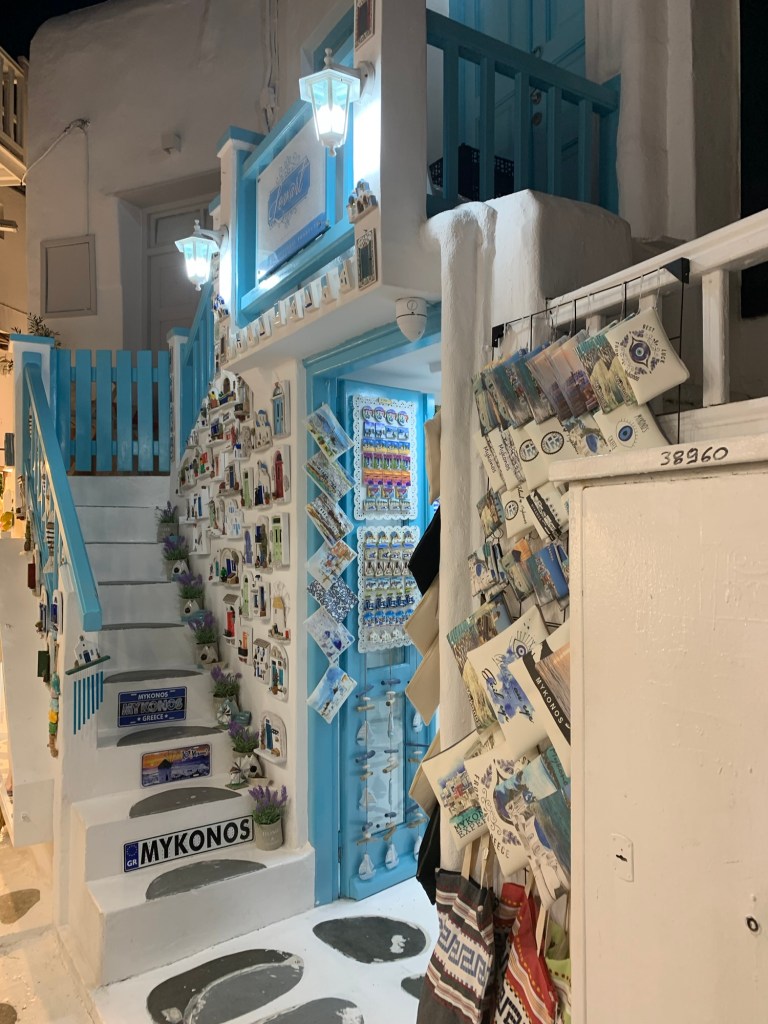
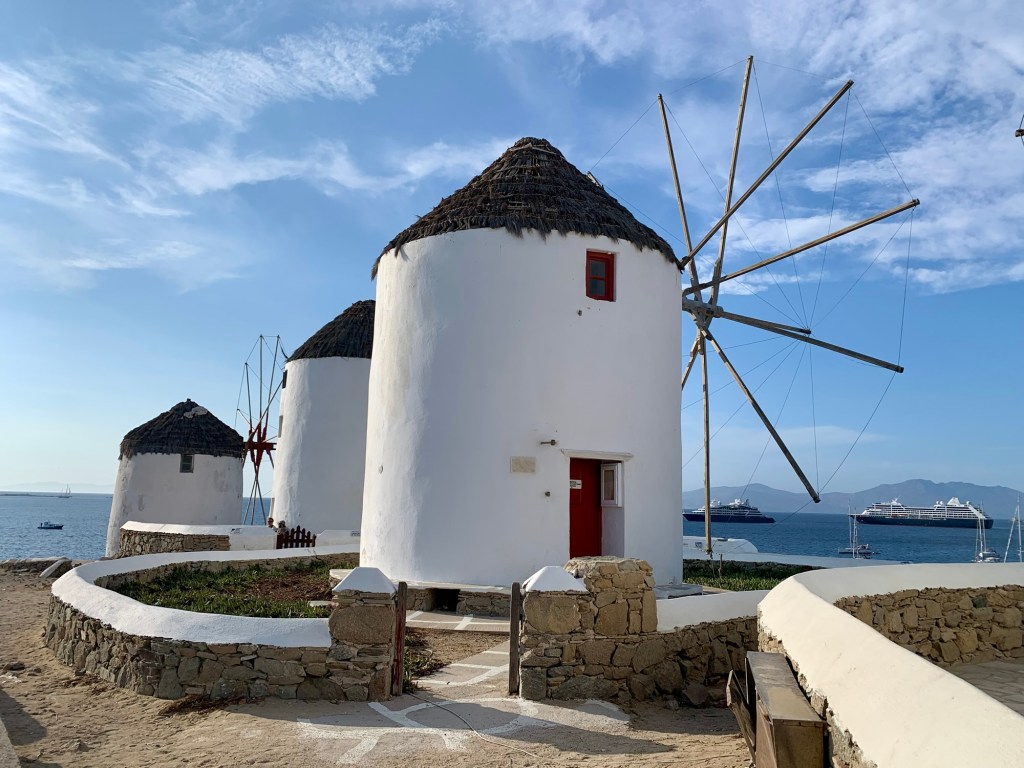

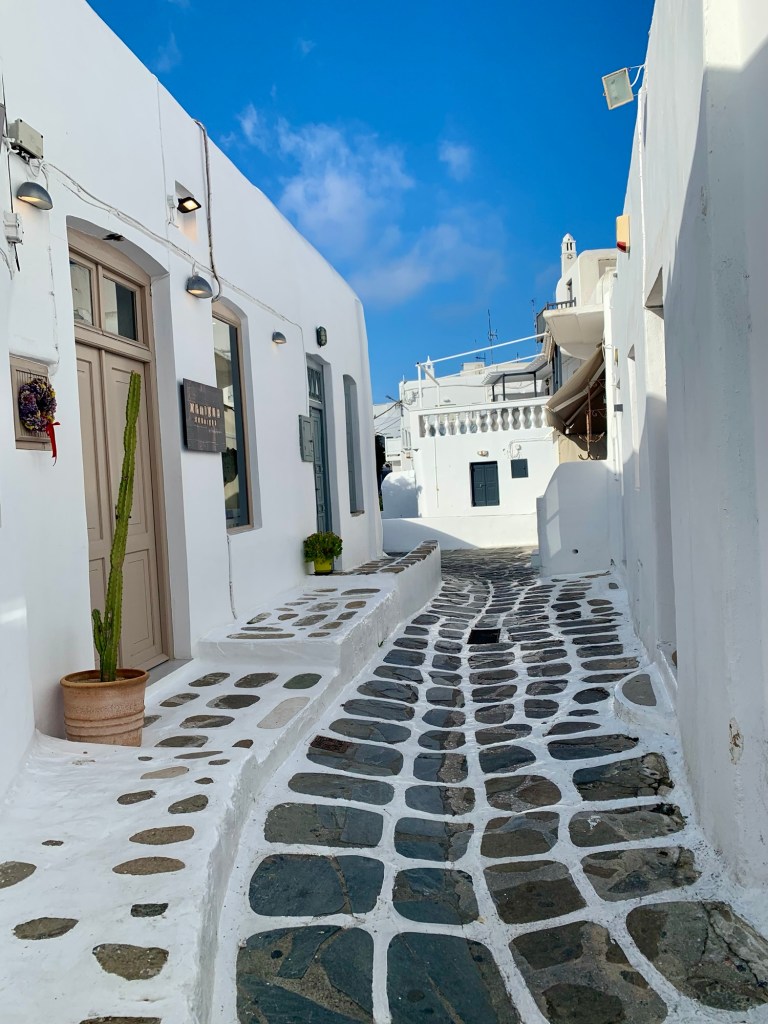
It was easy to wander with no plan and still stumble upon something interesting, whether it was a cool little boutique, a great spot for a drink, or a perfect view of the sunset over Little Venice.
Visiting Delos
Even though I was only in Mykonos for a few days you can take a catamaran day-trip to visit the island of Delos, an ancient archaeological site a short ride away. The trip itself was beautiful—crystal-clear waters, swimming, and views of the Cyclades islands in every direction.
Delos is an important historical sites in Greece, known as the mythological birthplace of Apollo and Artemis. In ancient times, it was a major religious and trade centre, but is completely uninhabited now. What’s left behind is impressive—massive columns, intricate mosaics, buildings, homes, and aqueducts that date back thousands of years.
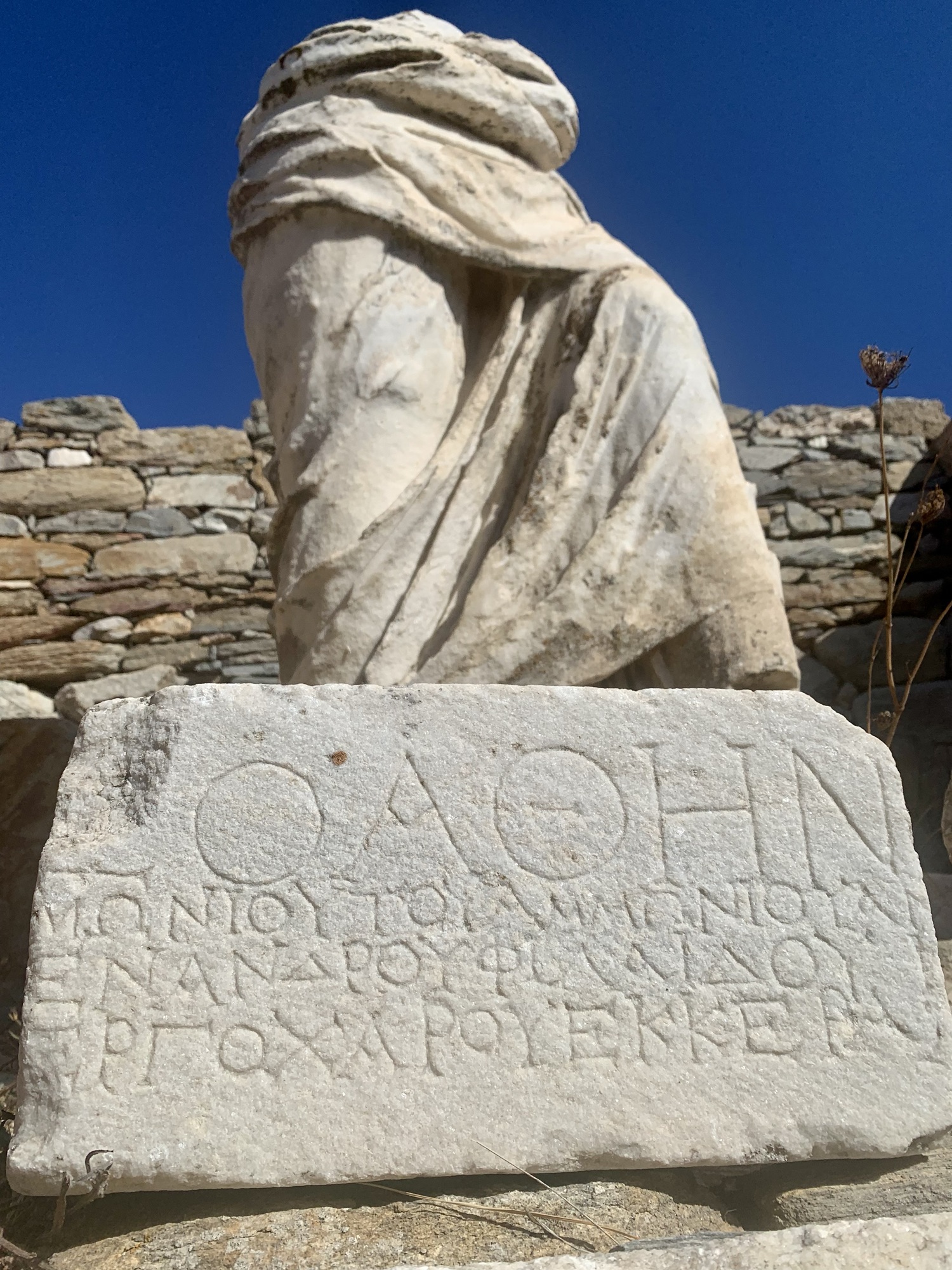
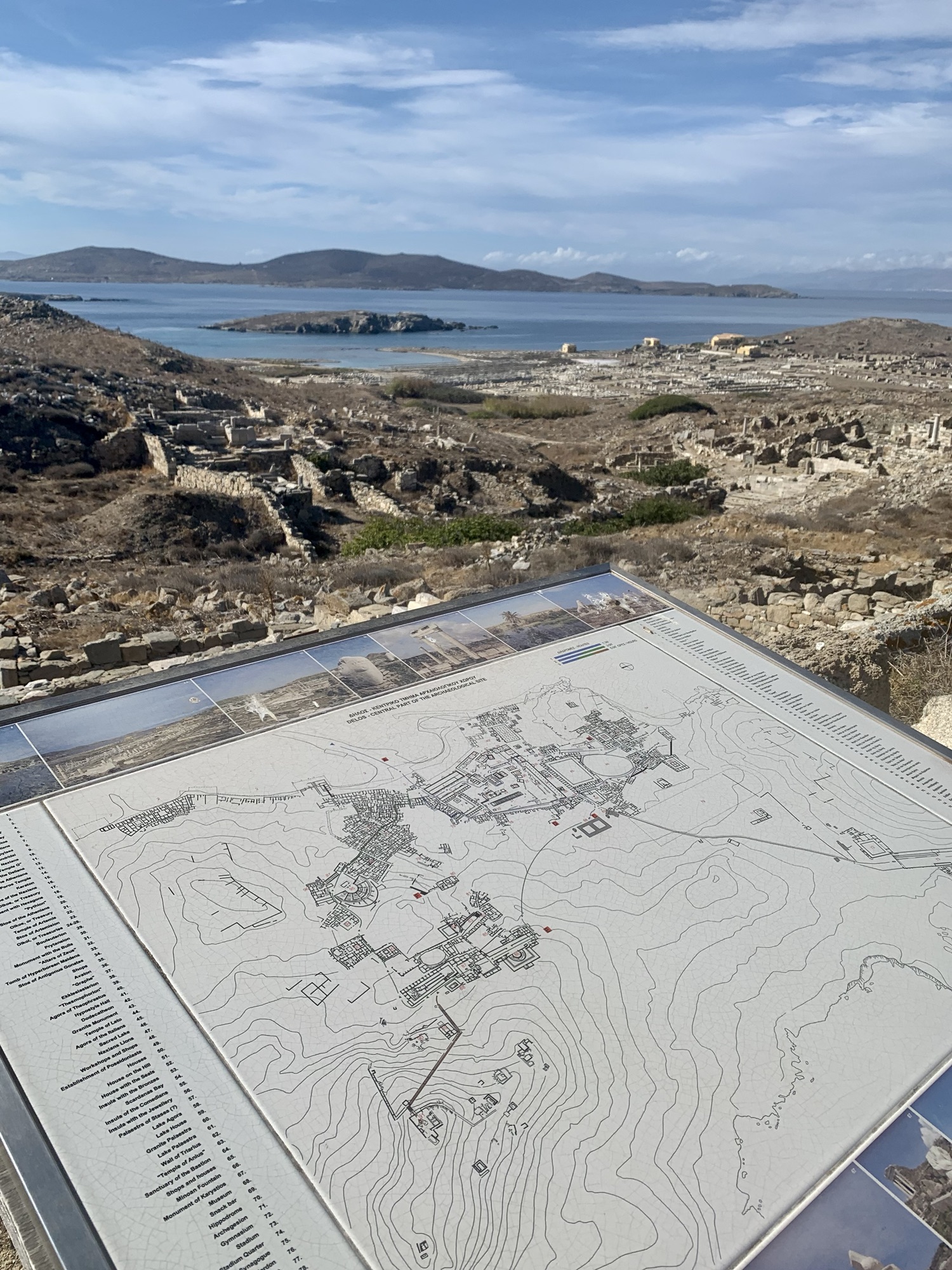
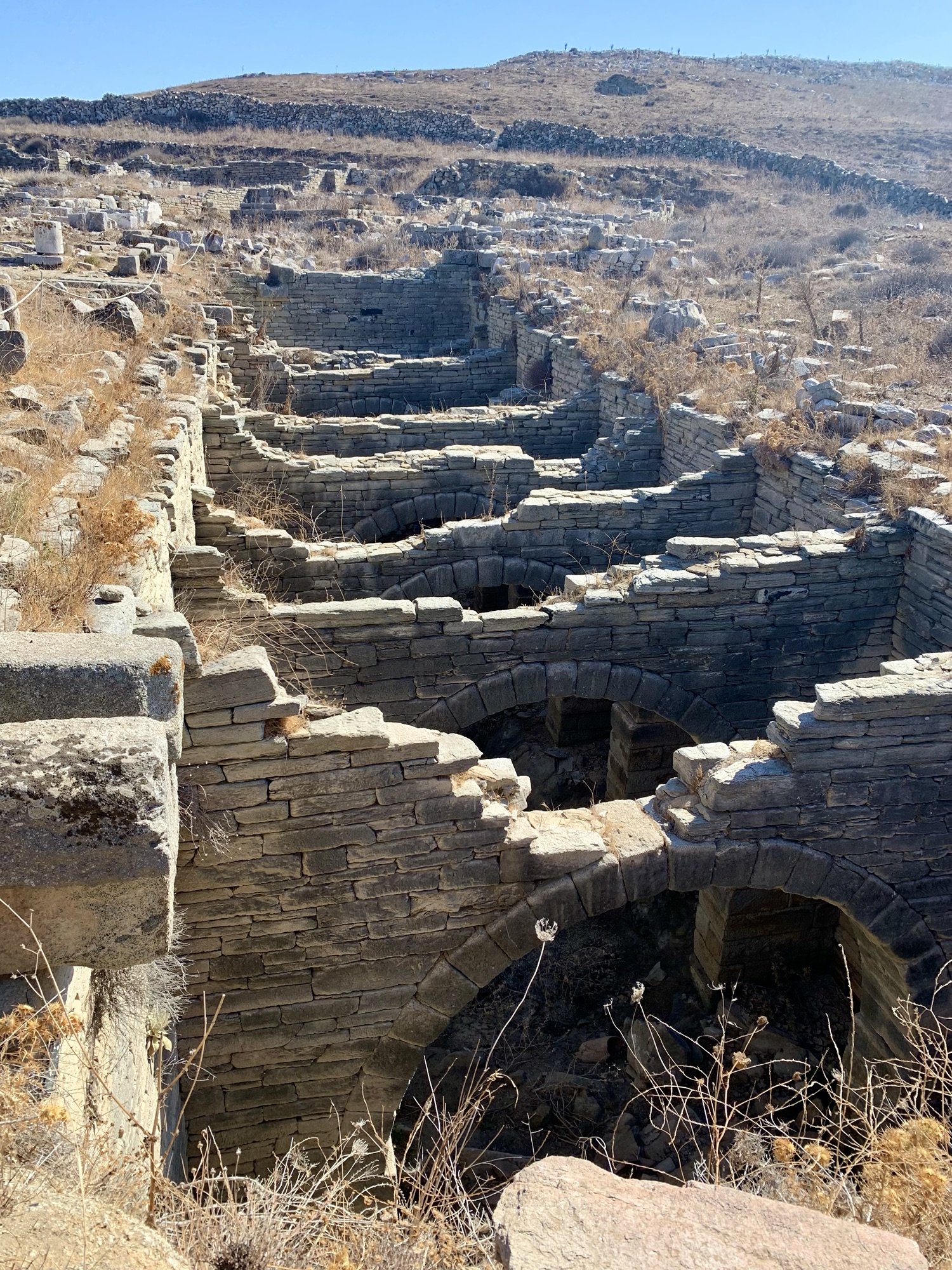
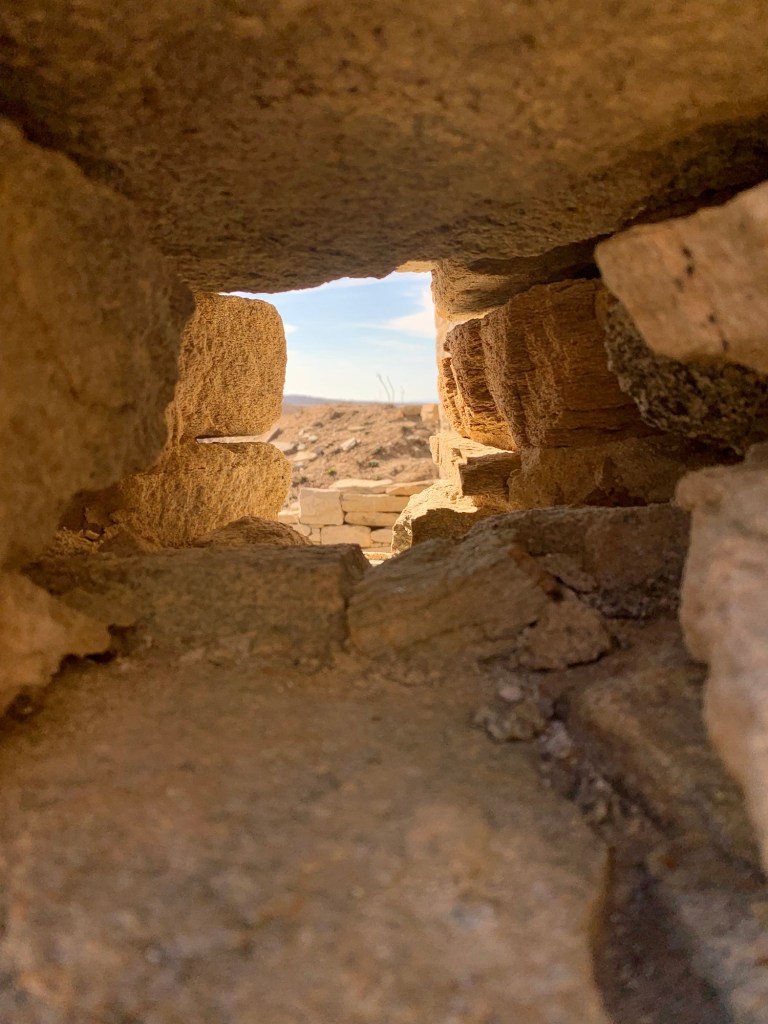
At its peak between the 5th and 1st centuries BCE, Delos was a thriving center of commerce and religion, filled with grand temples, marketplaces, theaters, and lavish homes adorned with intricate tiles. Key landmarks include the Sanctuary of Apollo, the Terrace of the Lions, the House of Dionysus, and the Temple of Isis, reflecting its diverse cultural influences. After centuries of abandonment, it was excavated in the 19th century by French archaeologists, and today Delos is a UNESCO World Heritage Site.

After a few hours of exploring, we sailed to a little secluded bay where we got to spend some time hanging out and swimming before heading back to Mykonos. It was definitely a cool experience, especially for anyone interested in Greek history or mythology and wants an alternative way to see some of the islands.
Day 7-10: Naxos
Naxos was the smallest and quietest of all the islands I visited, but it had a charming old town and a relaxed atmosphere that made it one of my favorites. I stayed at the St. Vlassis Hotel, a small boutique hotel just a 10-minute walk from the Old Town. It was so affordable that I splurged on their rooftop suite, which has a private hot tub on the patio, amazing staff, and remote-controlled shutters that felt extra fancy.
Since the island was smaller and not as busy as Mykonos, I decided to design my own tour and drive across Naxos to visit historic churches, monasteries, and ruins scattered around the island. My stops included:
- Panagia tis Spilias – A hidden cave church built into the rocky hillside, accessed by a steep, unmarked path.
- Monastery Kaloritsa – A clifftop monastery, once a place of refuge and meditation and a home for monks. It’s about 15-20 minutes up a very steep hill, and though partially in ruins, it offers breathtaking views.
- Temple of Demeter – A 5th-century BCE marble temple dedicated to Demeter, goddess of harvest. One of the earliest Ionic temples, later repurposed for Christian worship.
- Melanes Kouros Statues – Kouros were marble statues depicting young male figures. The Melanes kouros statues were left where they were sculpted in 600 BCE due to cracks in the marble, which made them unstable to be transported and thus were left abandoned
- Panagia Drossiani Church – A 6th-century Byzantine church, home to some of the earliest Christian frescoes in Greece. Its thick stone walls and domed ceilings showcase early Byzantine architecture.
- Panagia Protothrone – A 9th-century church, continuously used for over 1,000 years. The name “First Throne” suggests it was a key religious center, with well-preserved frescoes from multiple periods.
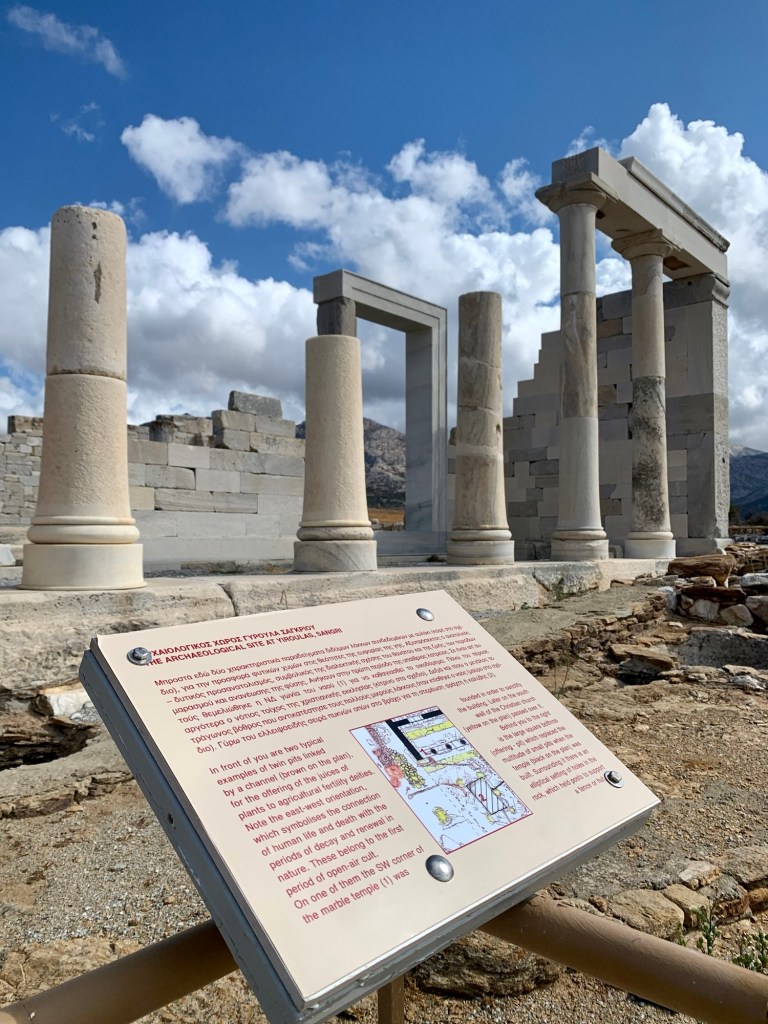

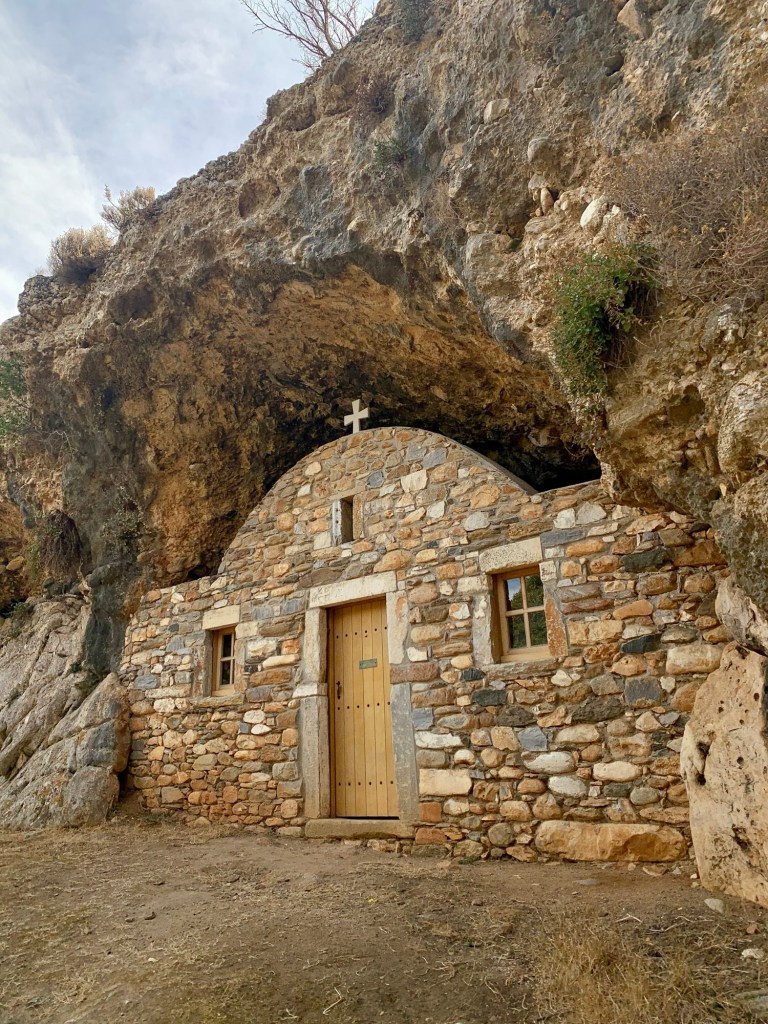

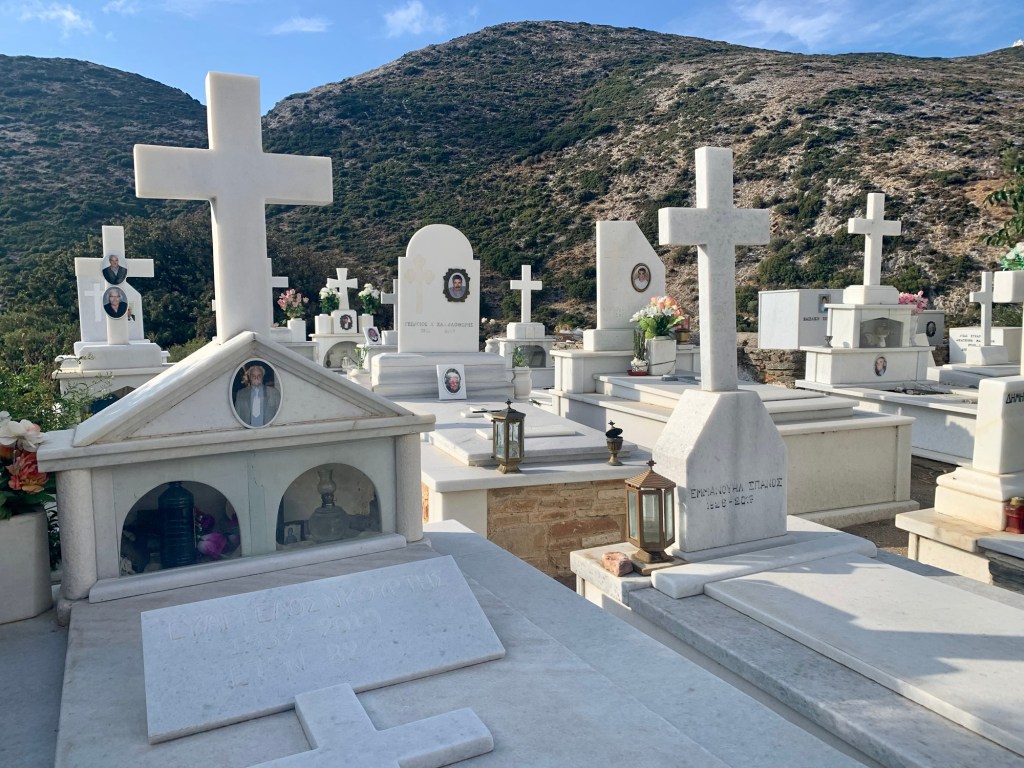
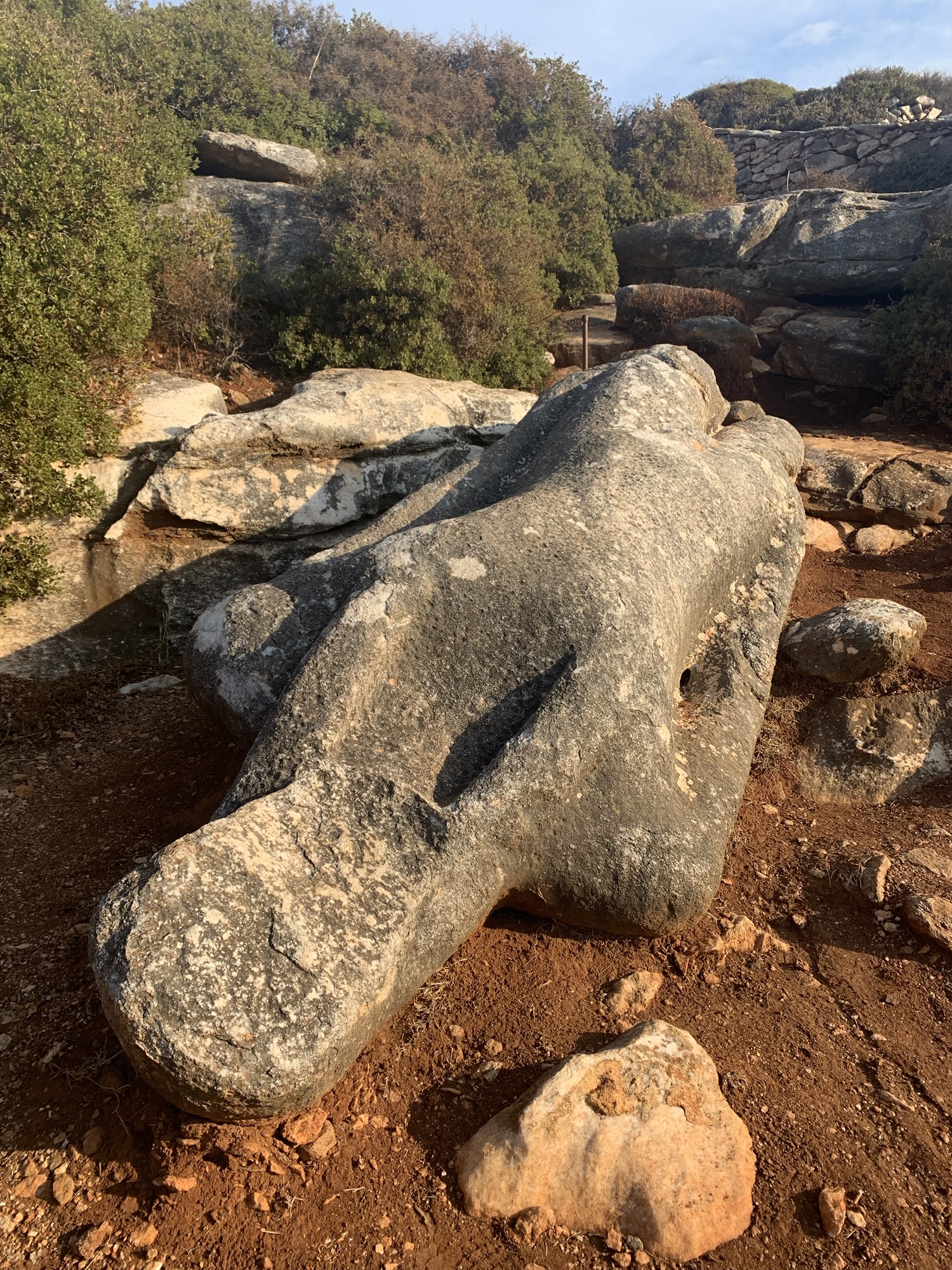
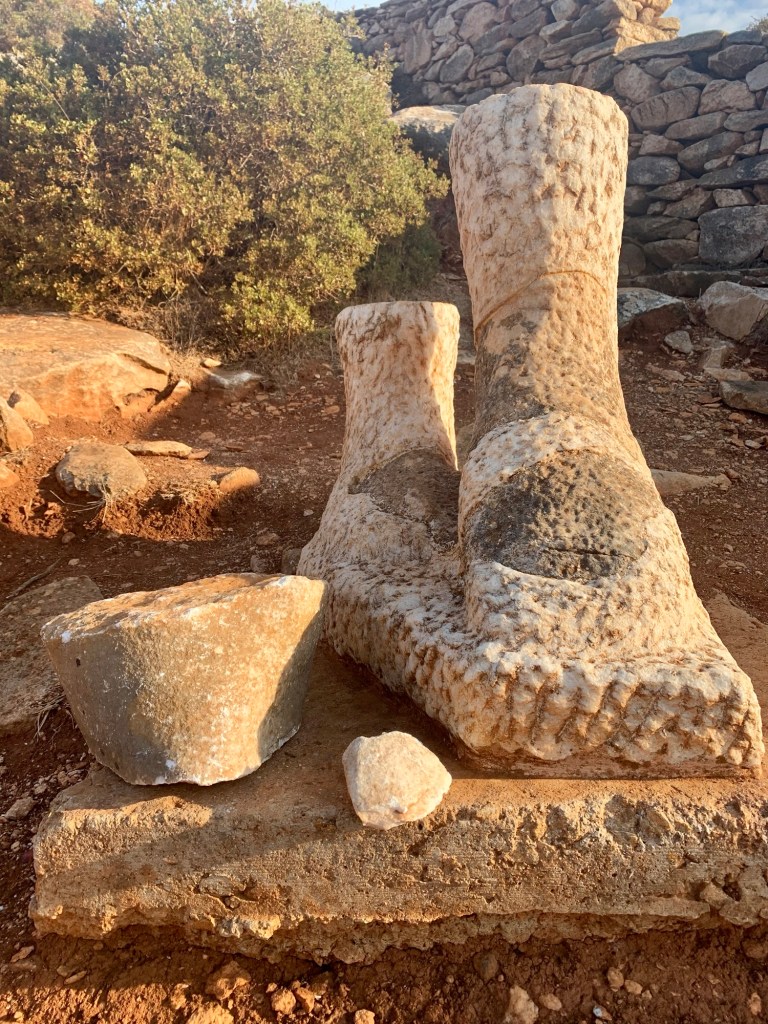
Driving across the island was an adventure in itself, with stunning views of the marble mountains, quiet winding roads, and very few other cars. As the day wrapped up, I caught the sunset on my drive back, the golden light casting a glow over the island’s rolling hills. Naxos may have been smaller and less crowded, but it had so much character and history, and the ability to explore at my own pace made it a highlight of my trip.
P.S. There was one amazing additional stop I made that is not pictured here (but has a big section in my photo gallery) which was exploring the ruins of Hotel Alyko, an abandoned, half-built resort on the southwest coast. The place was meant to be a luxury hotel, but construction started in the late 60’s, but was never completed, leaving behind a massive empty shell that’s now covered in street art and graffiti. Walking through the huge open-air structure, it was amazing to see how artists had transformed the space, turning it into what felt like an outdoor museum in the middle of nowhere. The mix of unfinished walls, colourful murals, and the backdrop of the coast made it such a unique spot to wander through. Definitely one of the most memorable places I explored.
Day 11-14: Santorini
Santorini is known as being one of Greece’s most iconic and picturesque islands, famous for its breathtaking views over the volcanic caldera. Shaped by a massive volcanic eruption thousands of years ago, the island has a distinct crescent form, with cliffside villages that offer what many consider the most stunning sunsets in the world. What surprised me most about Santorini was how everything is perched high on the cliffs. The journey from the ferry start at sea level and wound almost vertically up a series of steep switchbacks before reaching the towns and villages. Similarly, the bus from Fira to Oia felt almost treacherous as we sped around the corners just feet from the cliffside.
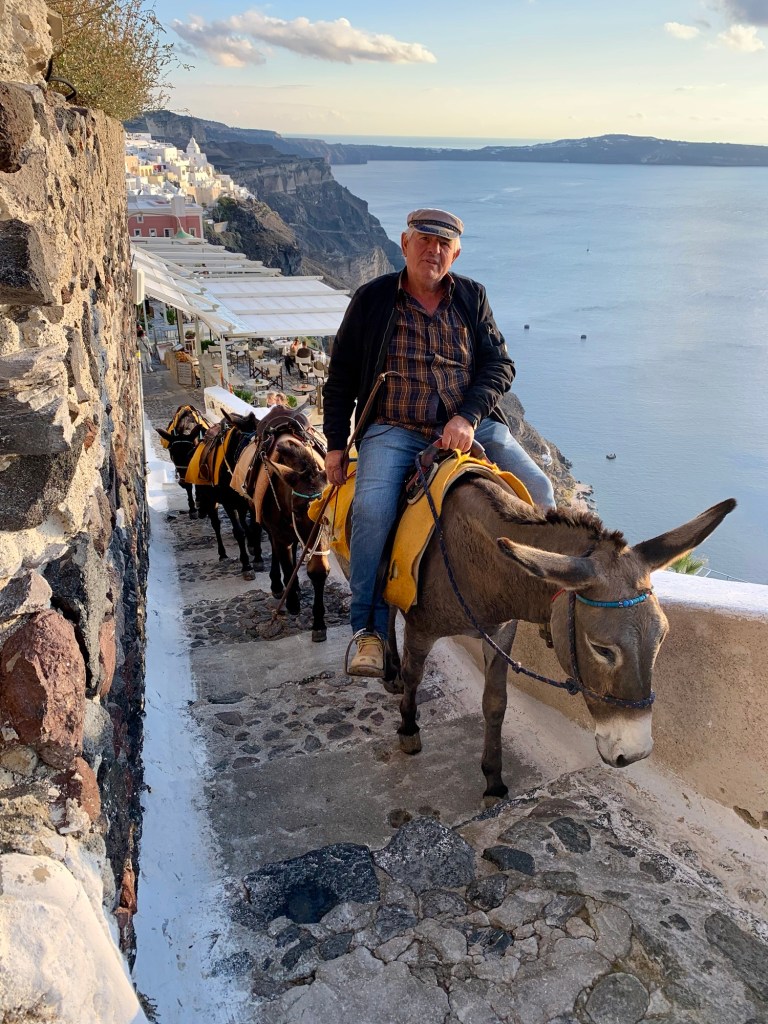
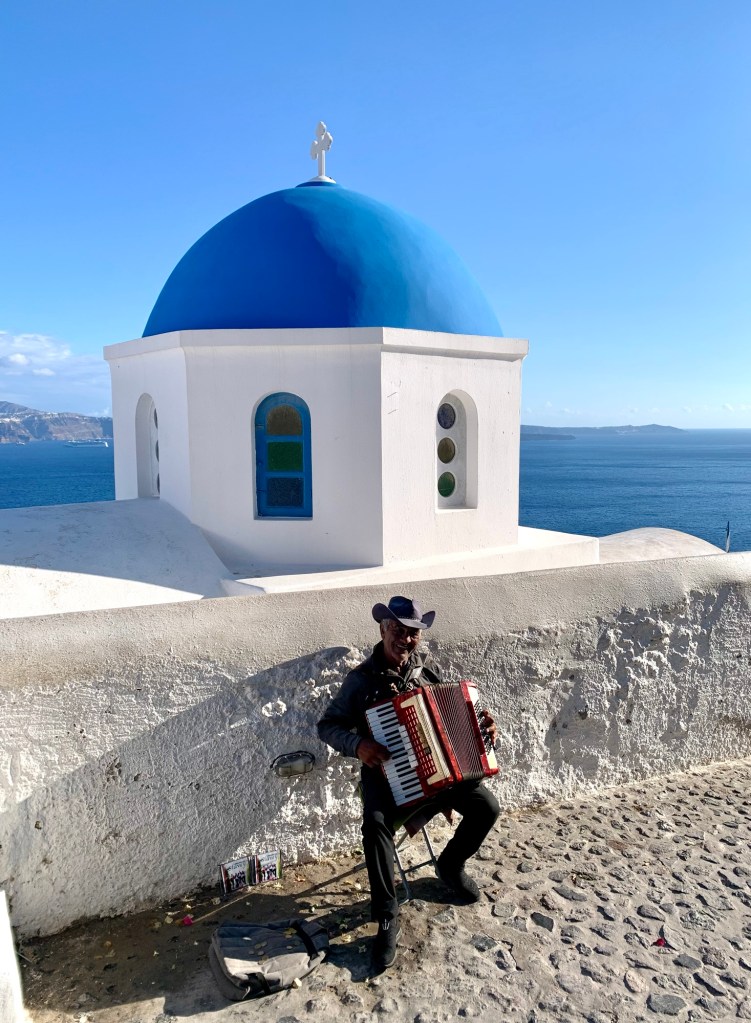
Santorini was everything I expected—whitewashed buildings, blue-domed churches, and incredible views over the caldera. I stayed in Fira, which had a great mix of shops, markets, and winding streets lined with restaurants and bars. It was lively but not overwhelming, and it was easy to wander, find a great meal, and take in the island’s unique atmosphere.
One evening, I made the classic trip to Oia for sunset. Even though it’s crowded and touristy, it’s still one of those must-do experiences—watching the sun dip into the Aegean, lighting up the cliffs and white buildings in shades of orange and pink. While I waited for sunset I perused all the shops and stores with beautiful artisanal goods. It was the perfect way to soak in the beauty and spend an afternoon in Oia!
 Nostalgia in Motion
Leave a comment