
In April 2024, we packed up the truck and hit the road for a seven-day adventure through the American Southwest, visiting Grand Canyon, Zion, and Bryce Canyon National Parks, with a few fun surprises in between. Each park had its own personality, from massive canyon walls to towering hoodoos, and by the end of the trip, I was completely hooked on the idea of seeing more National Parks.
Day 1-3: Grand Canyon National Park
We departed from San Francisco and made the 11 hour drive to Kingman, Arizona, where we spent the night in a cute little Airbnb. Since we were going to be camping for the next 6 nights we decided to treat ourselves to a nice comfortable stay before our more rugged accommodations. We went out for some pizza and live music to Rickety Cricket Brewing.
The next morning, bright and early, we were able to get up and have breakfast at Mr D’z Route 66 Diner before checking in at our campsite at Mather Campground
We stayed at Mather Campground on the South Rim in April, when the North Rim was still closed for the season and the South Rim was the only accessible side of the canyon. Camping there put us right inside the park, close to Grand Canyon Village. While we were happy to have the truck there were also a bunch of easy to use shuttle routes, which could have made exploring easy without needing to drive much.
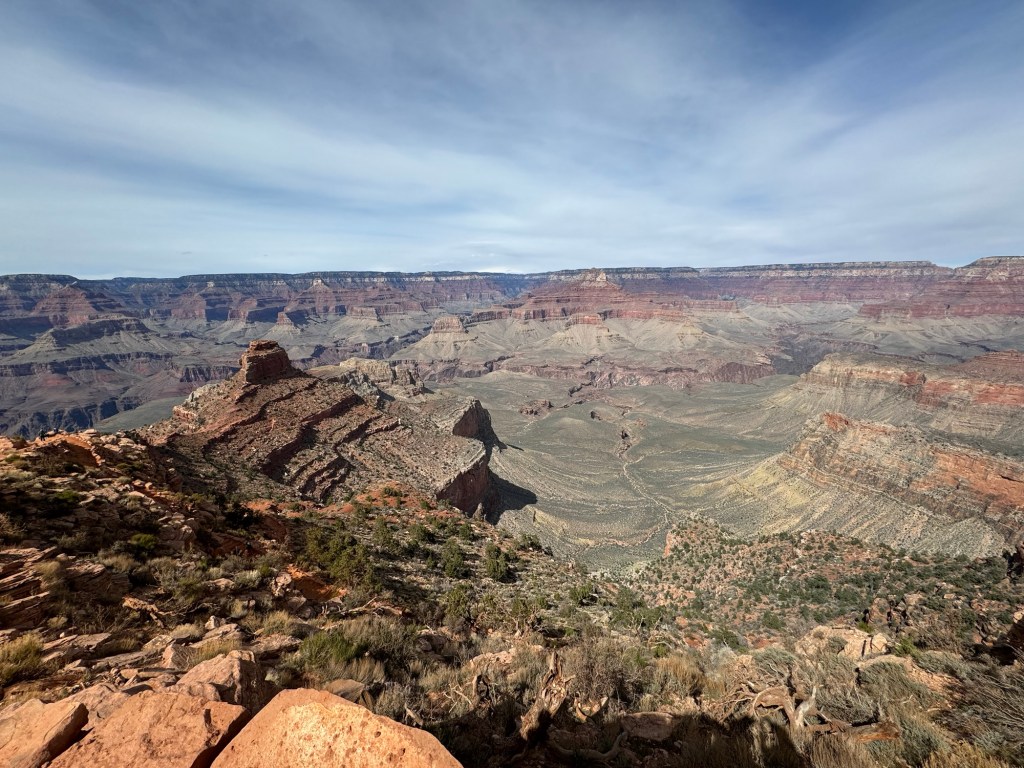
During our stay, we spent our time walking the main Rim Trail, following the canyon’s edge and stopping at viewpoints along the way. April turned out to be a great time to visit – cool enough for long walks, fewer crowds than peak summer, and clear views that made the canyon feel especially striking. Walking the Rim Trail was an easy, immersive way to experience the Grand Canyon without committing to a full hike below the rim on the first day.
Here are a few highlights of scenic viewpoints and key stops:
- Mather Point – Iconic first stop for panoramic canyon views; easy access from the Visitor Center. Great for sunrise too.
- Yavapai Point – Offers sweeping vistas and excellent interpretive displays; you can see the Colorado River snaking through the canyon.
- Grandview Point – A bit quieter, with dramatic cliff-edge views; perfect for photography and feeling the canyon’s scale.
- Hopi Point – Known for unobstructed westward views; considered one of the best spots for sunset.
- Mohave Point – Slightly less crowded than Hopi, with striking canyon layers visible; excellent for both morning and evening light.
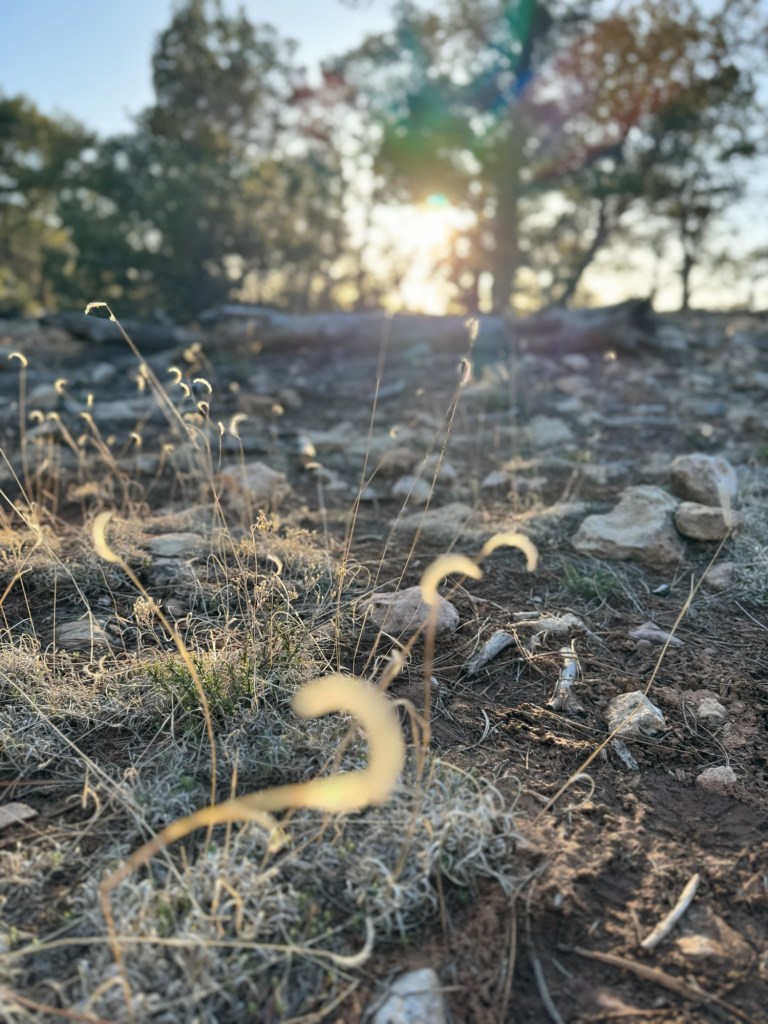
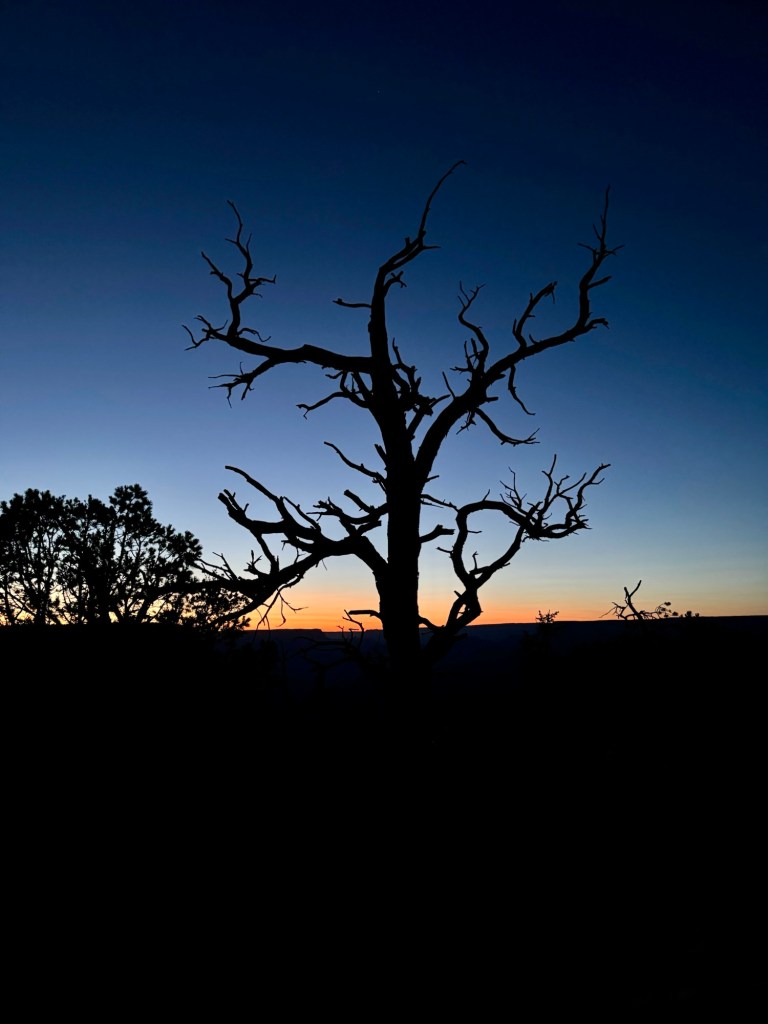
The next day we decided we were going to tackle the South Kaibab Trail, which is a very popular hike not too far away from the main village. We parked at main Grand Canyon Visitor Center and grabbed a super convenient shuttle from the main area to the trailhead with no problem.
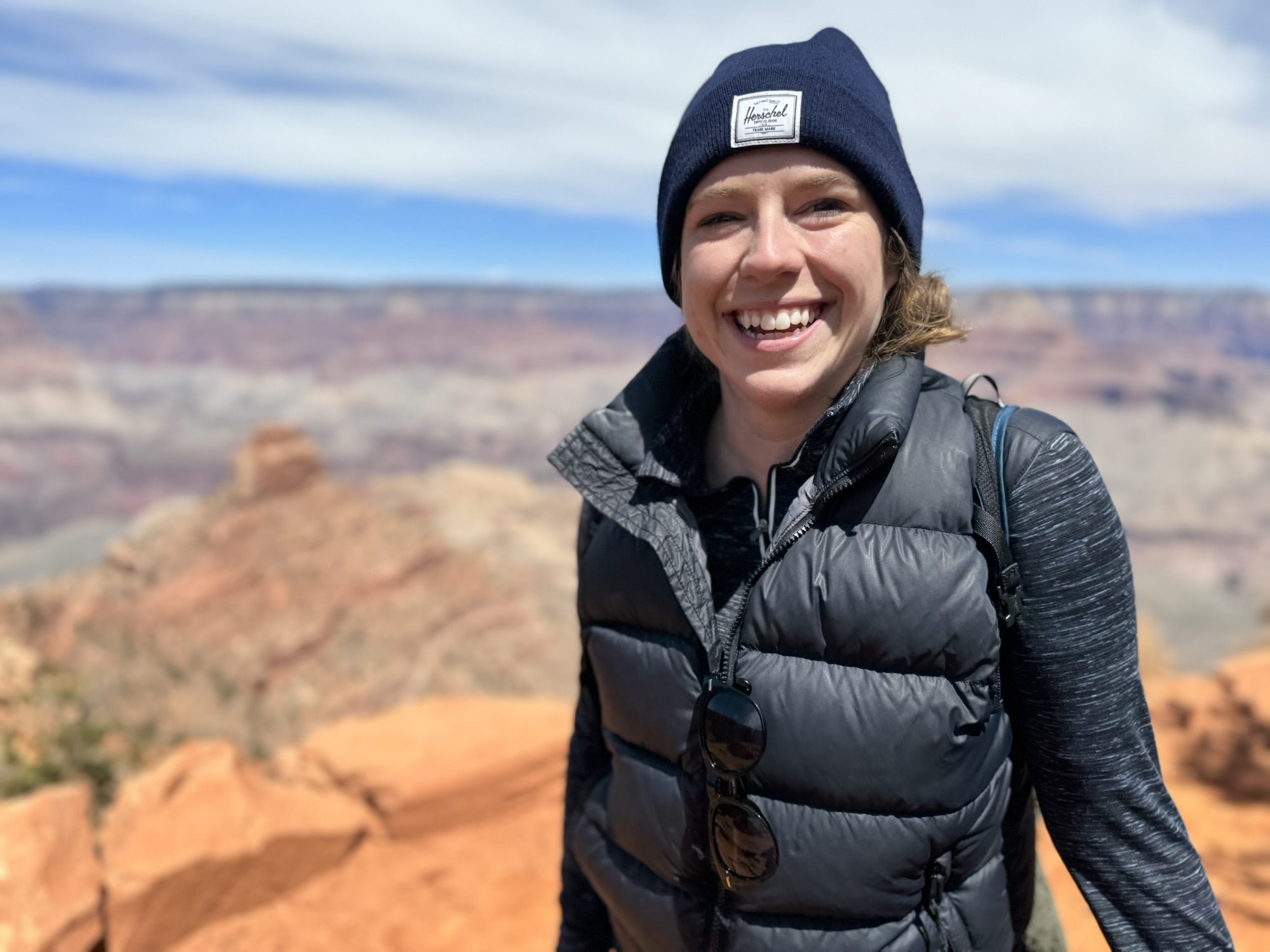
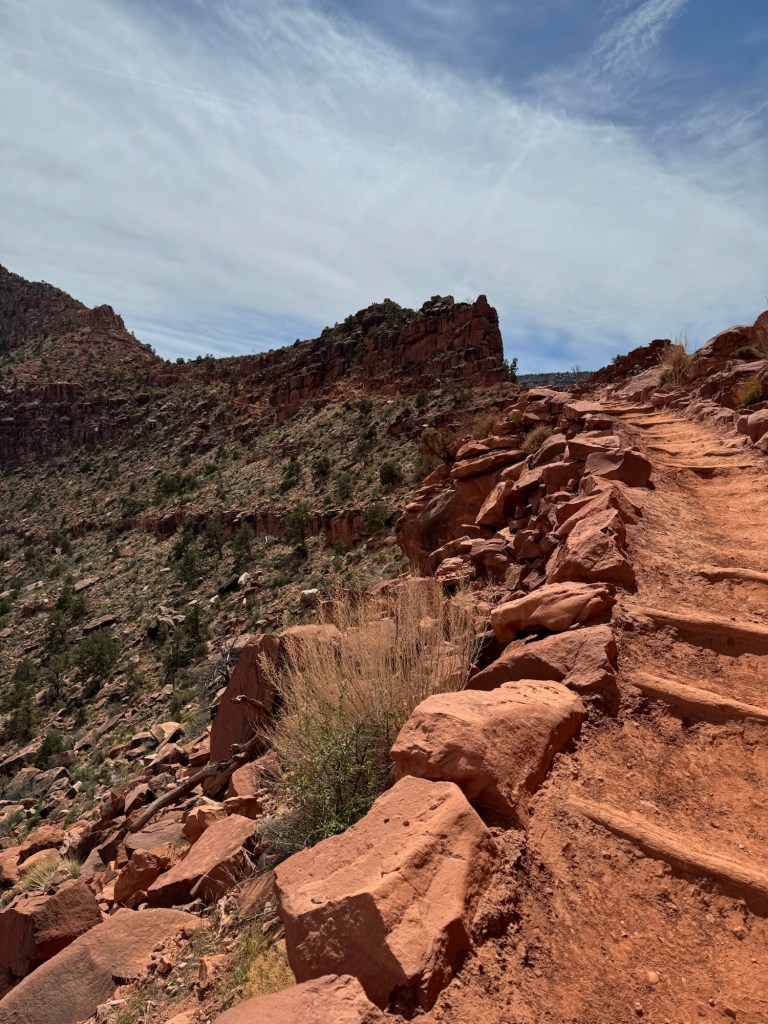
From the rim, the trail plunges quickly, twisting down the canyon on a series of switchbacks. It was funny starting a hike from the top, knowing that however far we went down, we’d have to hike back up.
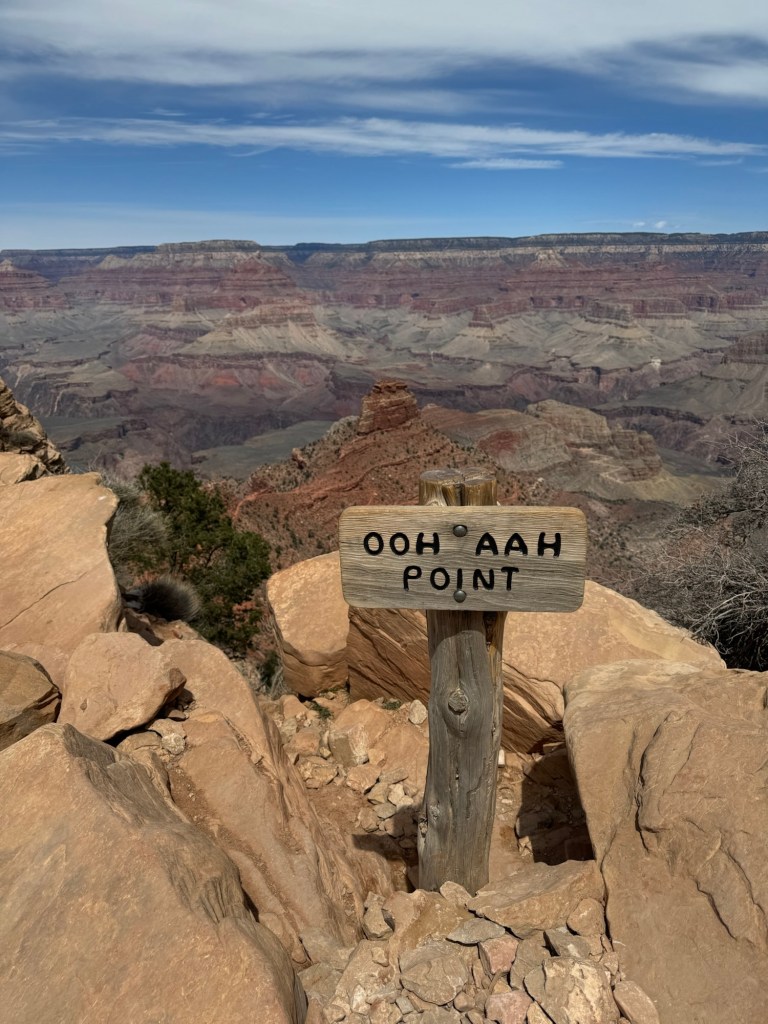
About 1.6 km in, we hit Ooh Aah Point, roughly 180 metres below the rim, and the views were absolutely incredible every step of the way. We paused for some fun, silly photos and to soak in the scenery, then continued down to Cedar Ridge, about 270 metres into the canyon, where we stopped for lunch. After refueling, the trail wound steadily down and as we walked over the ridge, which felt particularly special. With the beauty of the scenery, amazing long stone steps, and the generally vastness of the canyon, it made traversing the ridge feel like such an adventure. When we finally make it to Skeleton Point, around 3.2 km long and 45o metres of elevation from the rim, the Colorado River finally peeked through the canyon walls and we knew we had reached our destination,
While it was was a bit chilly since it was April, it was perfect for this hike, which had almost no shade along the trail (I can’t imagine doing this in the summer). I absolutely loved this trail even though my heart rate was at about 170 BPM the entire time, both up and down, but the awe of the cliff faces dwarfing us in the canyon, made every step feel absolutely worth it.

Day 4-6: Zion National Park
On the morning of day 4, we started the 5 hour drive toward Zion National Park. Looking at the directions it seemed as though there were a number of sand dunes along the way and after a quick search we landed on a visit to the Kanab Sand Caves.
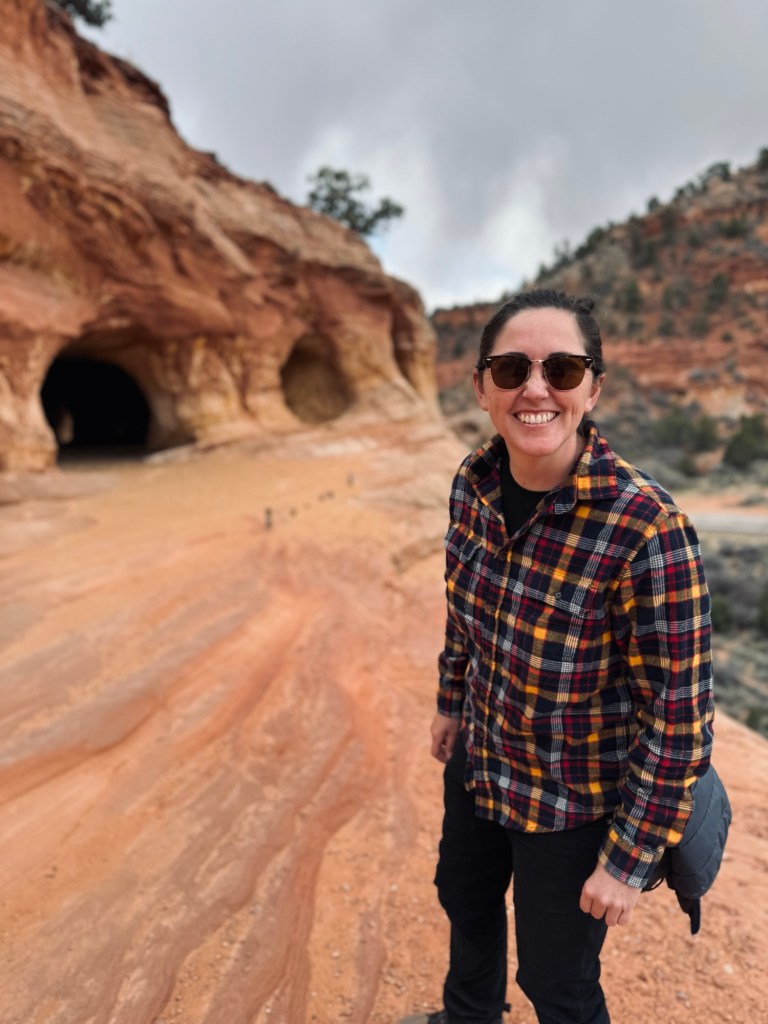
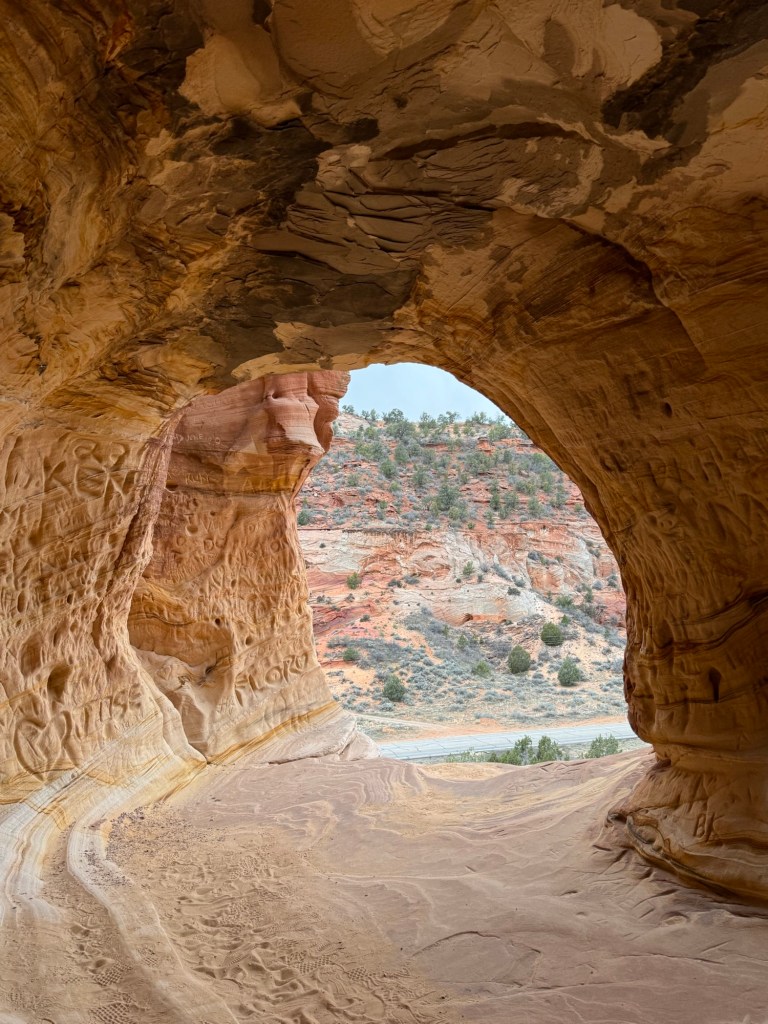
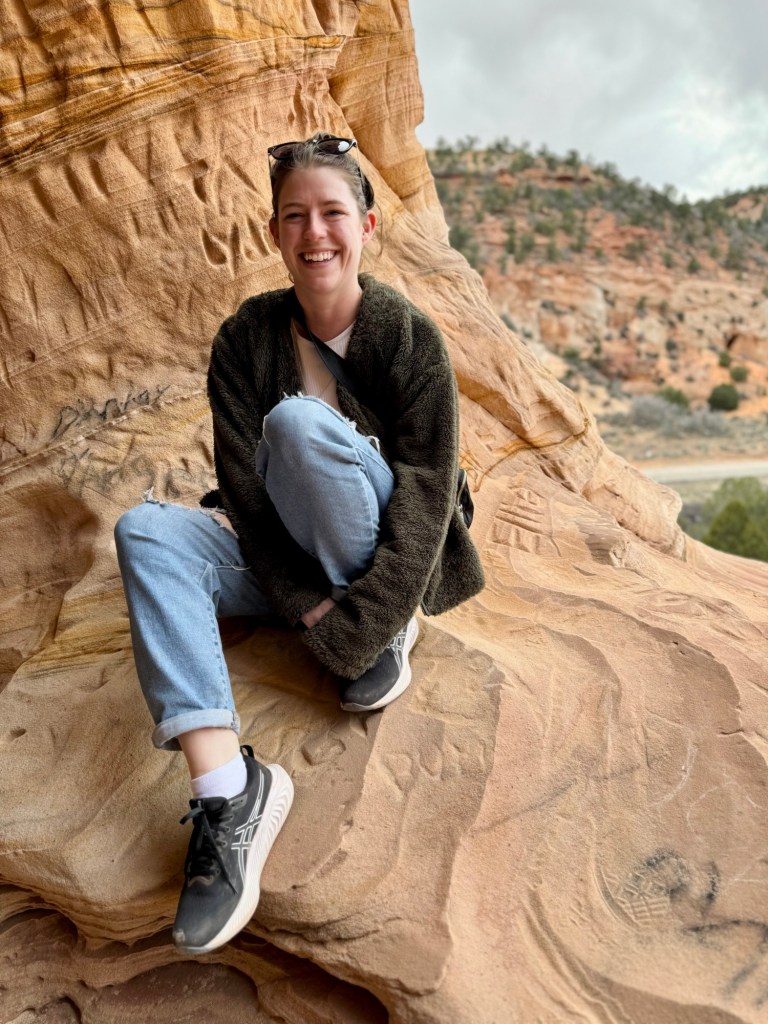
From the road everything looked totally unassuming, just a quiet stretch of desert sand, nothing too flashy, but once we got closer we realized it was going to be a bit more effort. . To explore the sand caves hidden among the rocks, we had to scramble 30 metres/90 feet up the side of a moderately steep sandstone rock face like a couple of mountain goats. Though, once we made it to the top, it was incredible: inside the caves, there were tons of archways that led to the cliff face and the walls were covered in engravings throughout. The sands in the caves were extra soft and cold, and it felt like an special hide out that you would hope to find as a child. We took a few minutes to take some pictures and run around enjoying to uniqueness of this space which turned out to be another fun mini adventure detour.
When we arrived at our destination we checked into the Zion Ponderosa Ranch Resort in Orderville, Utah, about 45 minutes away from Zion National Park. Since we were camping, we wanted a spot where we could set up for four days and still be close enough for a day trip to Bryce Canyon, roughly 1.5 hours away. The resort was fantastic – it had a hotel, dining facilities, plenty of amenities, and tour-booking options. Even though it was fairly geared toward families, we still enjoyed the tennis courts, hot tub, and the water slide in the heated pool.
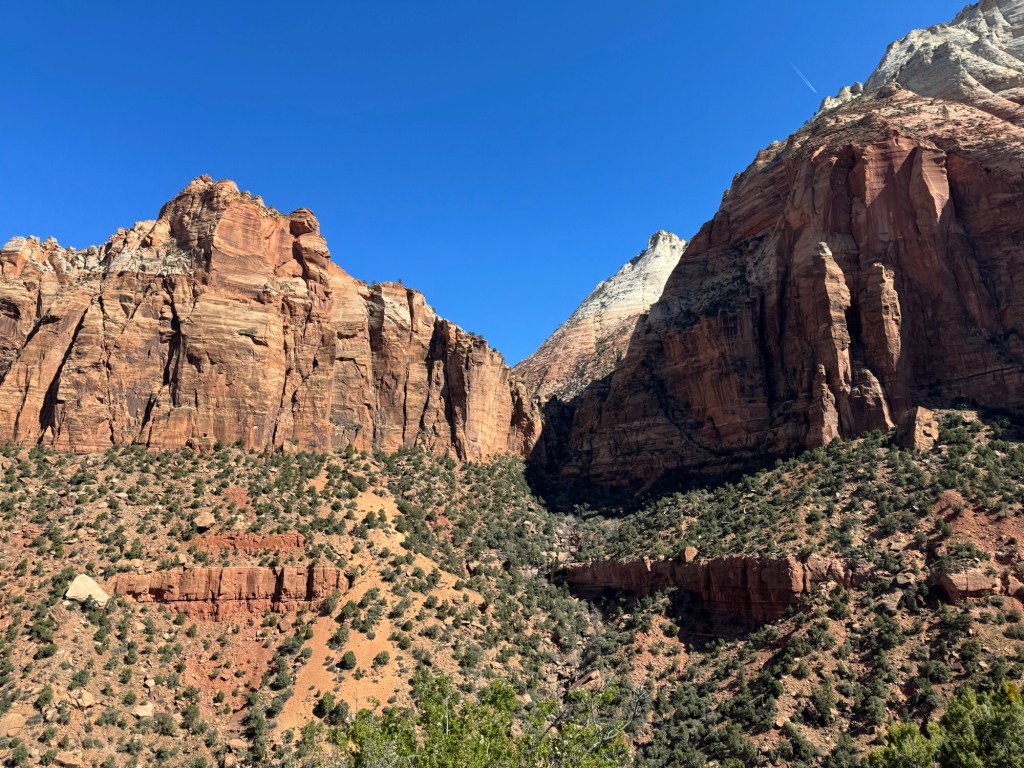
Arriving in Zion for the first time means driving through a long tunnel, and when you come out the other side, it truly feels like emerging into a completely new world. The atmosphere in Zion felt distinct from the Grand Canyon, still massive, but more immersive. The winding roads and rock tunnels connecting different parts of the park made it feel like you were deep inside the landscape, surrounded by towering canyon walls rather than just looking down at them.
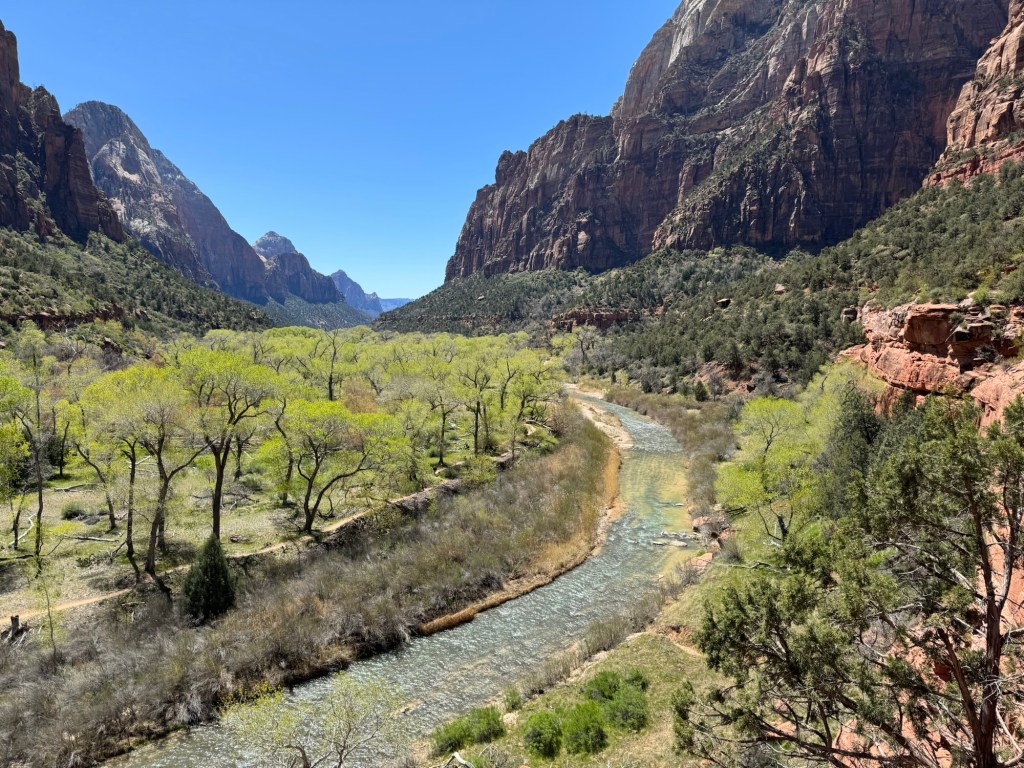
We kicked things off by heading to the Emerald Pools via the Kayenta Trail, which offers an iconic outlook over the Virgin River. From there, we continued along the Grotto Trail, where a small waterfall allowed us to walk underneath, a really fun experience where you could feel the cool mist on your face. Next, we reached the Lower Pool, an easy stroll to a gentle waterfall surrounded by lush greenery and then made our way up to the Middle and Upper Pools, where the trail became steeper and rockier, with shaded nooks perfect for pausing and snapping a few photos.
After the Emerald Pools, we continued along the Pa’rus Trail, which winds along the river and connects different parts of the canyon. The trail was surprisingly lively, we even came across a group of older ladies having a laugh. They stopped us to ask if we’d seen their friend, joking that they weren’t sure if she was ahead or behind them. A little further along, we caught up with this tiny, spry lady who had left her friends in the dust to enjoy the beauty of the trail.
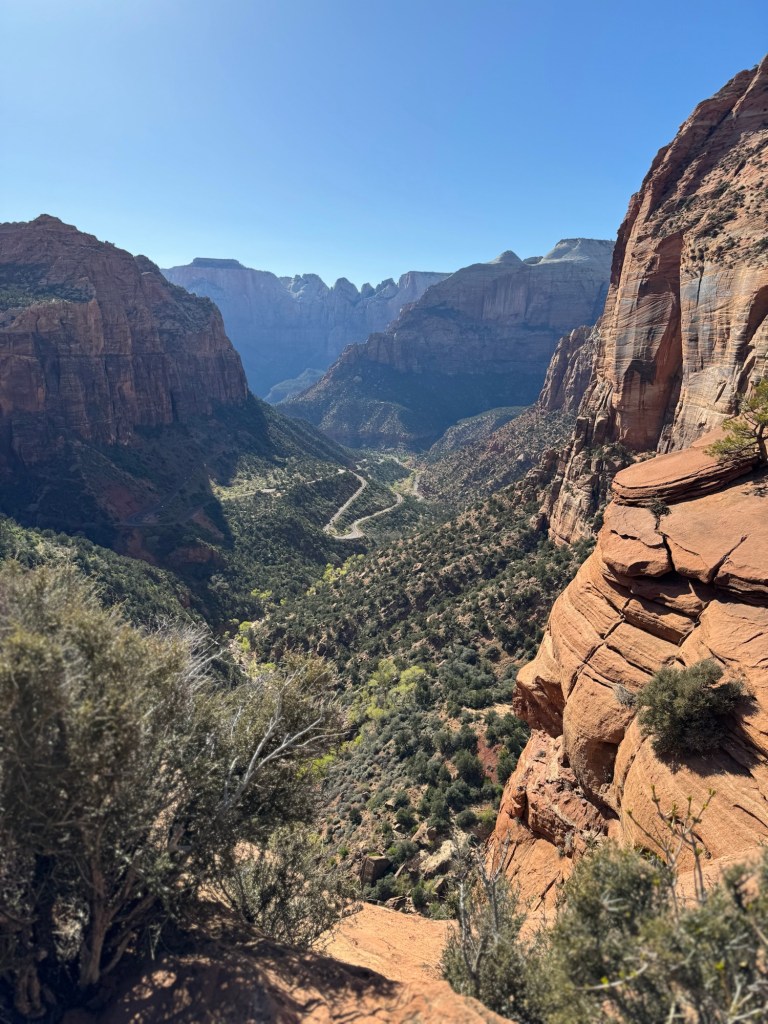
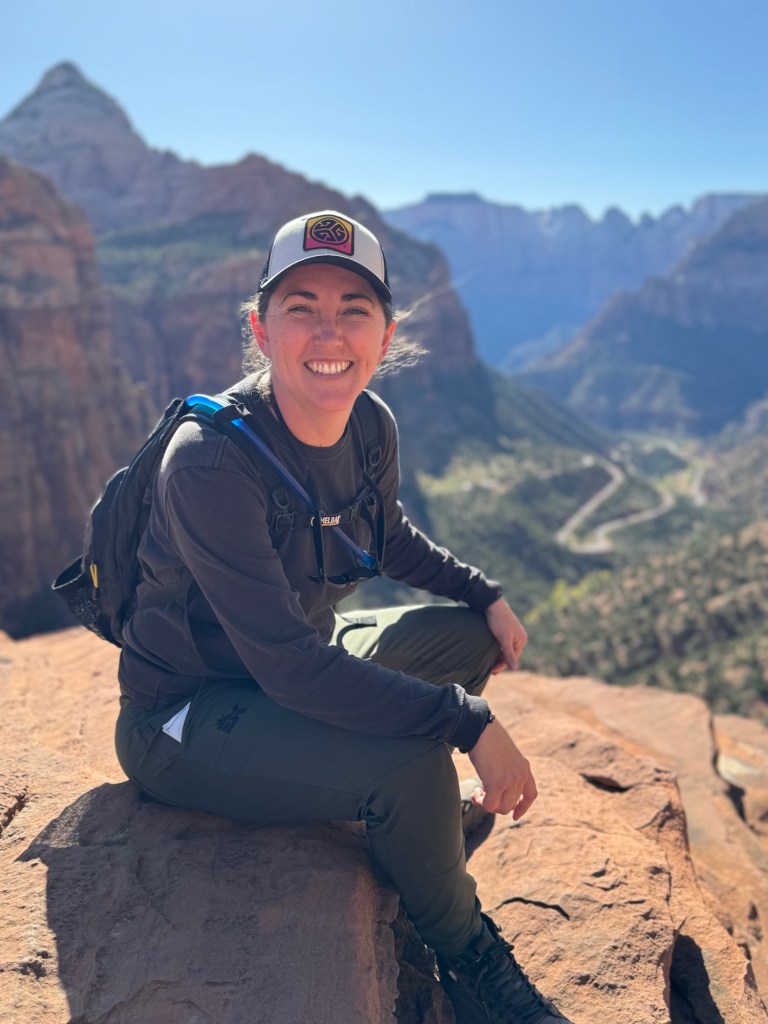
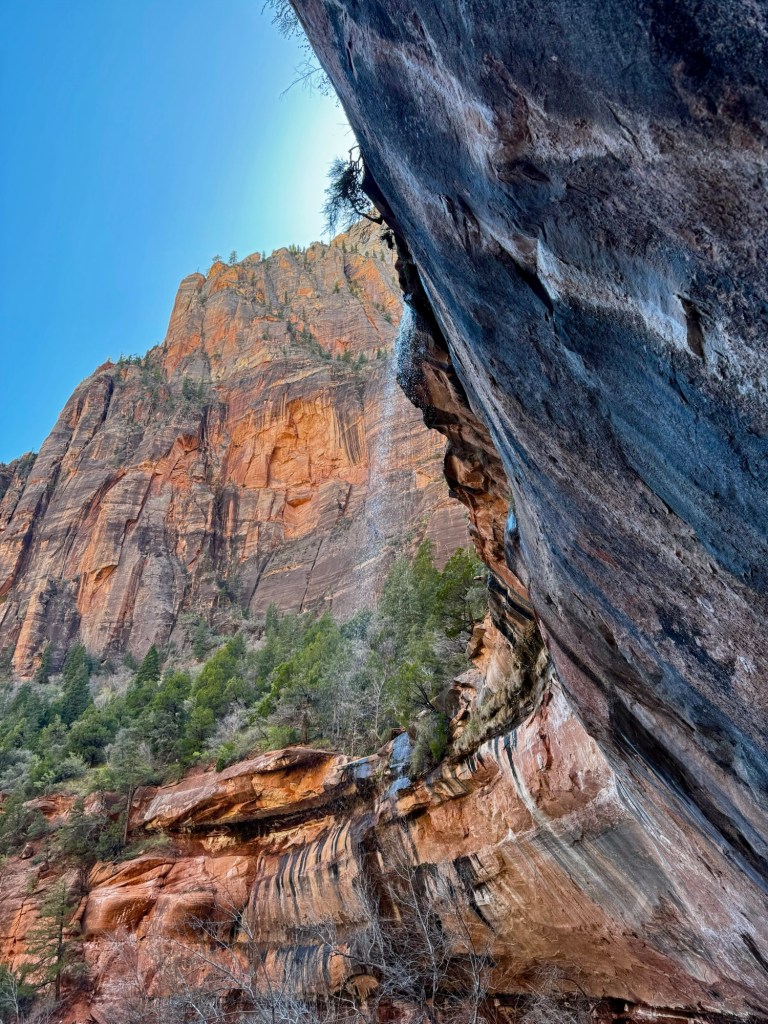

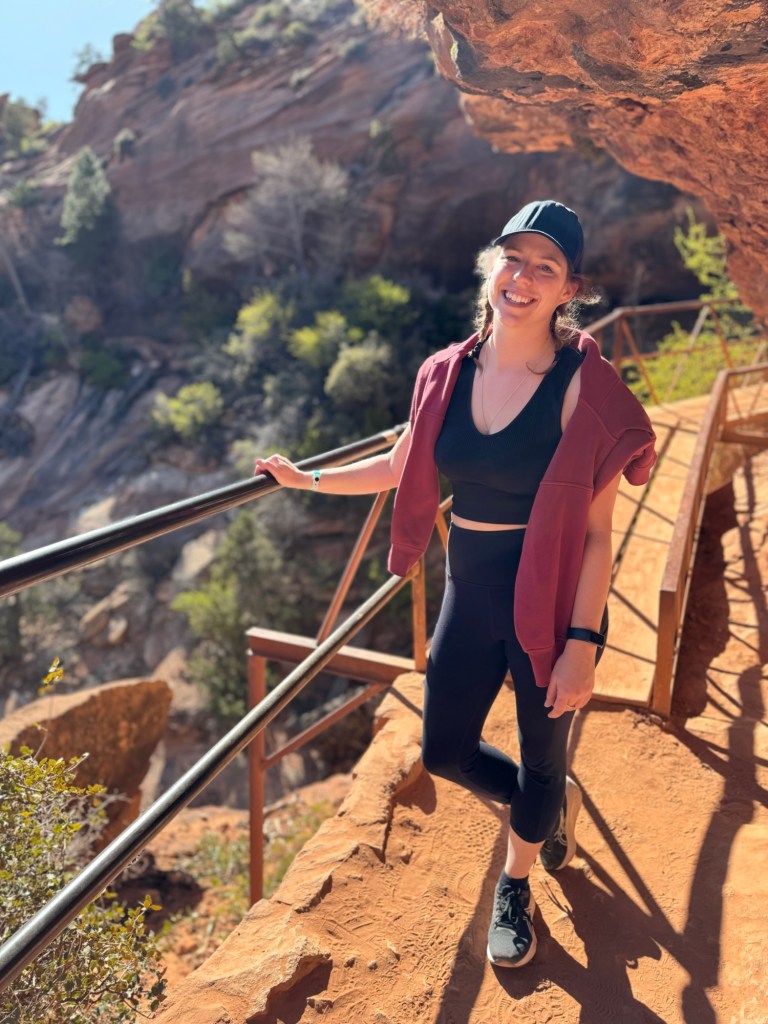

We had planned to tackle the Narrows on our second day in the park, but we decided to put it off until the following morning to enjoy a more relaxed start. Unfortunately, out of nowhere, a flash flood warning popped up the next day, which meant we couldn’t go after all. It was a bit of a bummer, but we pivoted and headed up the Canyon Overlook Trail. The trail is short but sweet with a couple steep spots. It’s only about a kilometre long, but the final viewpoint opens up in a way that makes you feel like you’re on top of the world. The canyon stretches out below, the road winding through the cliffs, and the rock formations are really cool and its an amazing spot to take it all in.
Day 7: Bryce Canyon National Park
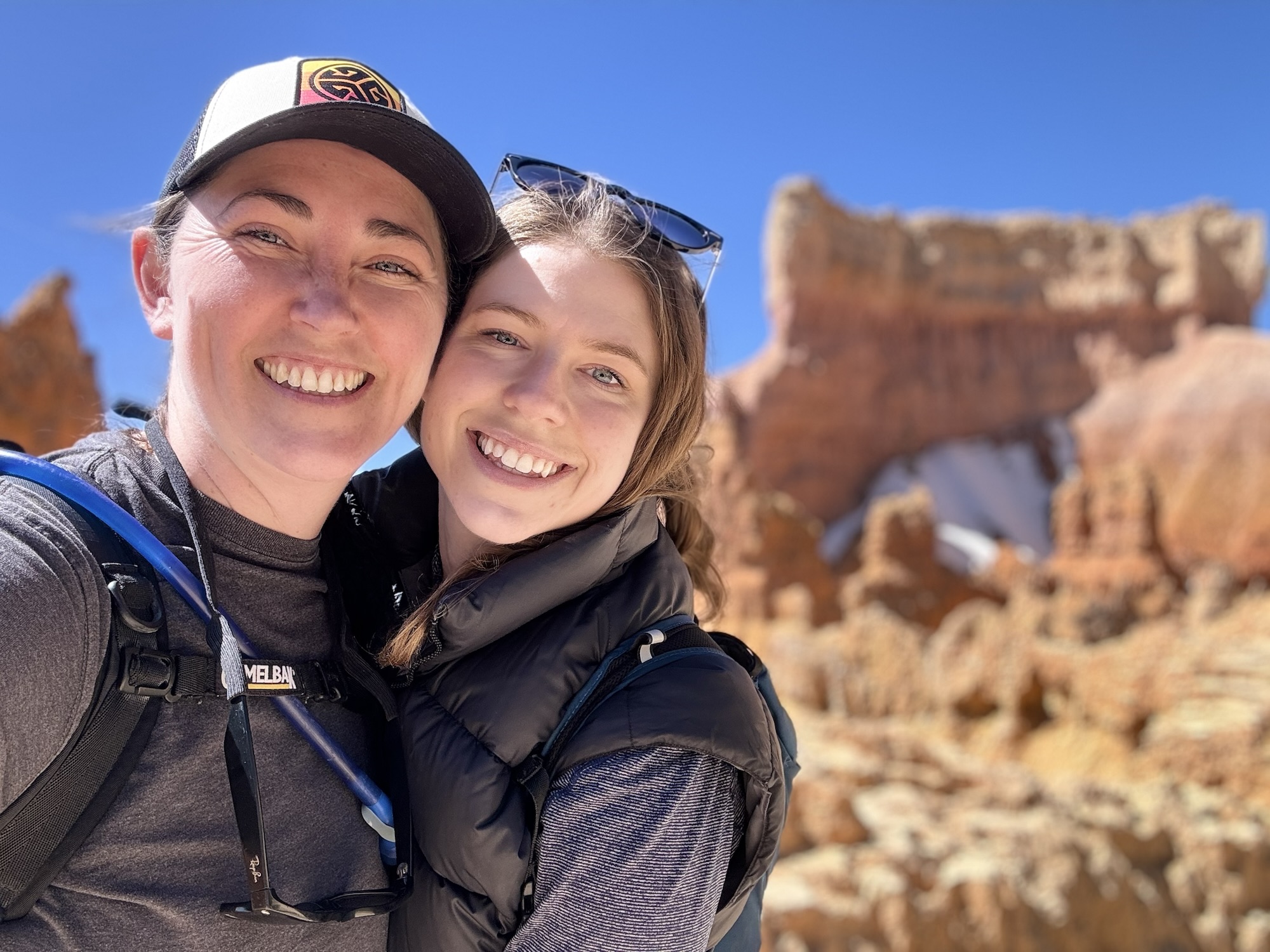
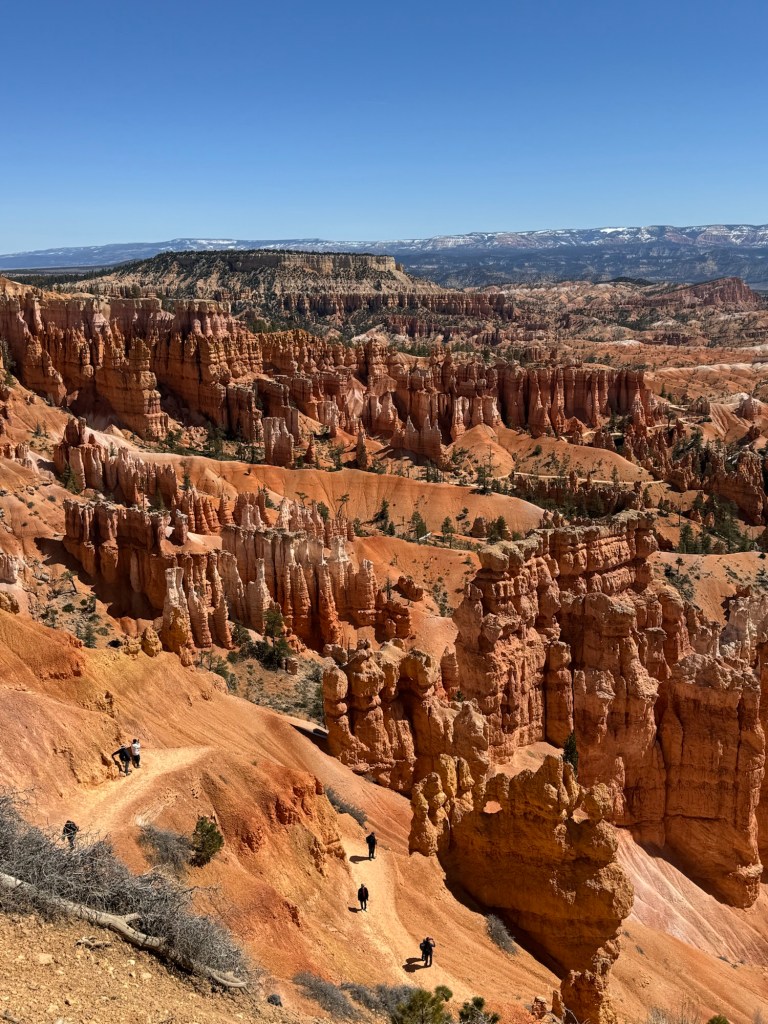
Bryce Canyon felt completely different from the other parks. Instead of deep canyons, it’s known for its endless clusters of hoodoos- tall, spindly rock spires packed tightly together in shades of orange.
Instead of one massive canyon, the park is made up of a series of natural amphitheatres filled with thousands of the hoodoos. The trails are well-maintained and surprisingly approachable, even though they look dramatic from above. At the top, the Rim trails were flat and easy and you could walk around getting an eagles eye view before descending into canyon. Compared to the size of the other national parks, Bryce Canyon, was very small, so the path for the trails were straightforward. We did the Navajo Loop and Queen’s Garden that wind through the hoodoos on a bunch of switchbacks, putting you right in the middle of the formations.


After we finished a couple hours at Bryce Canyon, we continued 45 minutes driving to Willis Creek Slot Canyons. Slot canyons are narrow passageways carved over time by water cutting through soft sandstone, creating smooth, twisting walls that rise straight up on either side of you. I had never been and I’m so glad we decided to go!

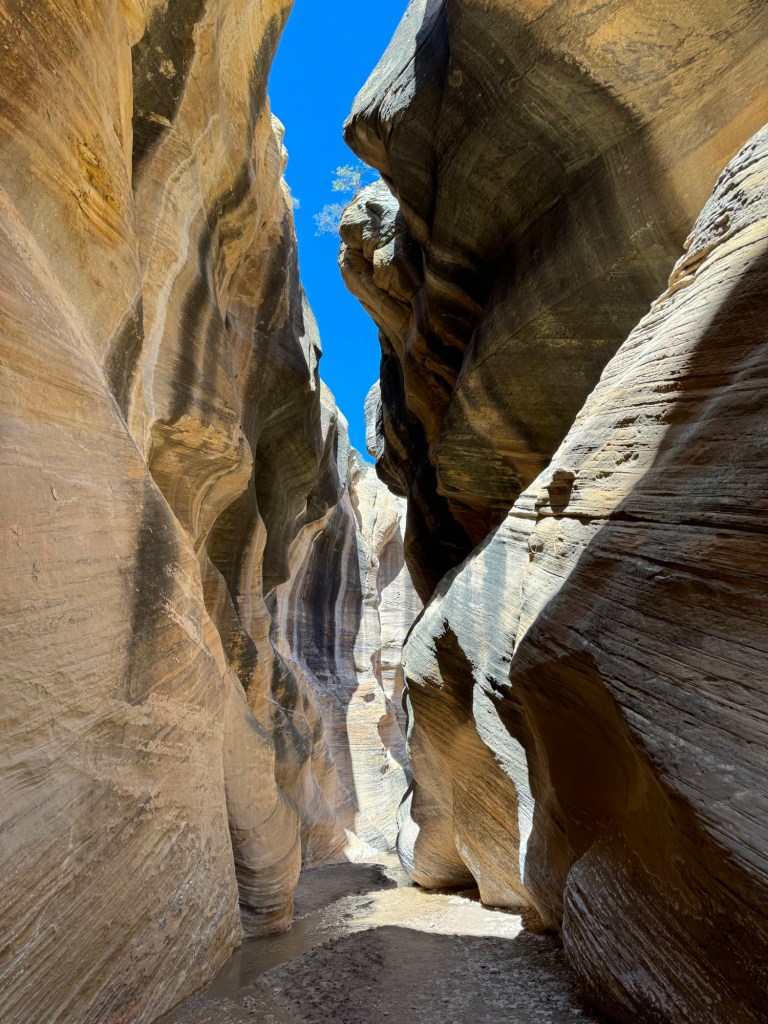
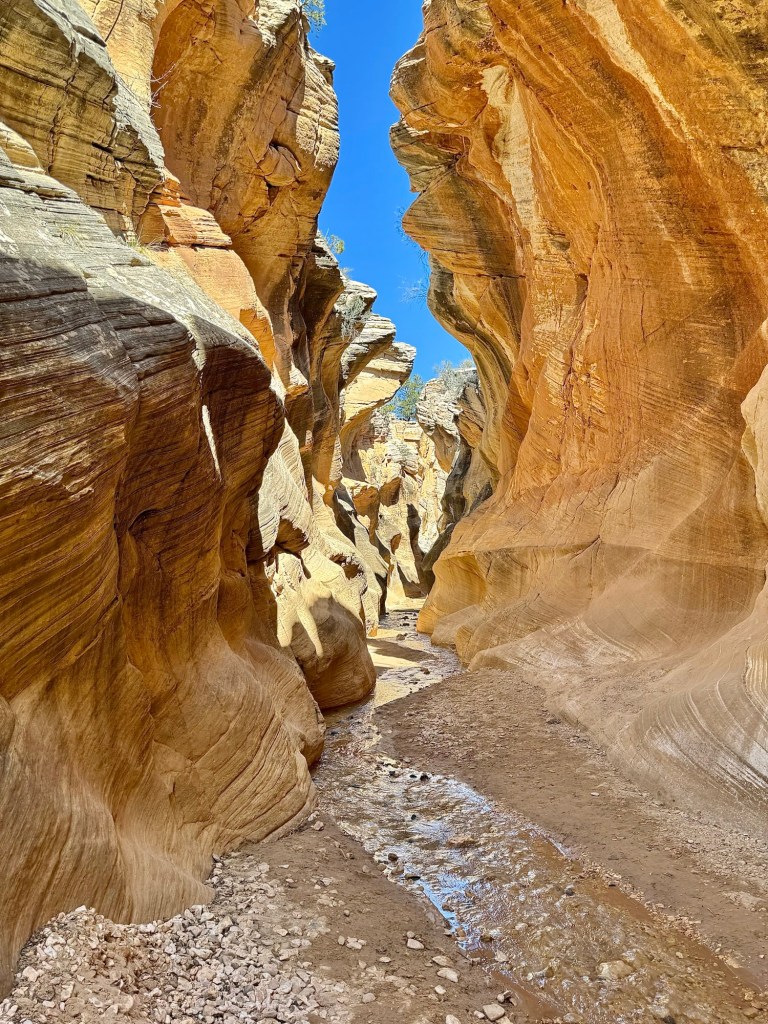
The trail takes you a bit off the beaten path, so I’d definitely recommend downloading an offline map in case you lose cell service. Once you get there it seems unassuming, and while the entrance is marked, we really relied on the map to make sure we were heading in the right direction because it takes a little while to get to the slot canyon part. The hike is about 4 kms round trip, out-and-back trail, so you can turn around whenever you feel like it – after about an hour we felt pretty satisfied and began the trip back. There’s very little elevation gain, and the route follows a sandy creek bed, making it more of a wander than a workout. Along the way, you cross the shallow creek a few times, which adds to the fun and keeps things interesting without being difficult. There were very few other people there, which made it feel special to have it all to ourselves, and overall a super fun add on to our Bryce Canyon adventure.
 Nostalgia in Motion
Leave a comment