
In April 2023, my brother and I set off on a three-week backpacking trip through Vietnam and Thailand. We had the whole thing mapped out with the trip being a mix of high-energy cities and quiet moments, giving us the chance to really immerse ourselves in each place and have a super memorable experience.
Day 1: Tokyo
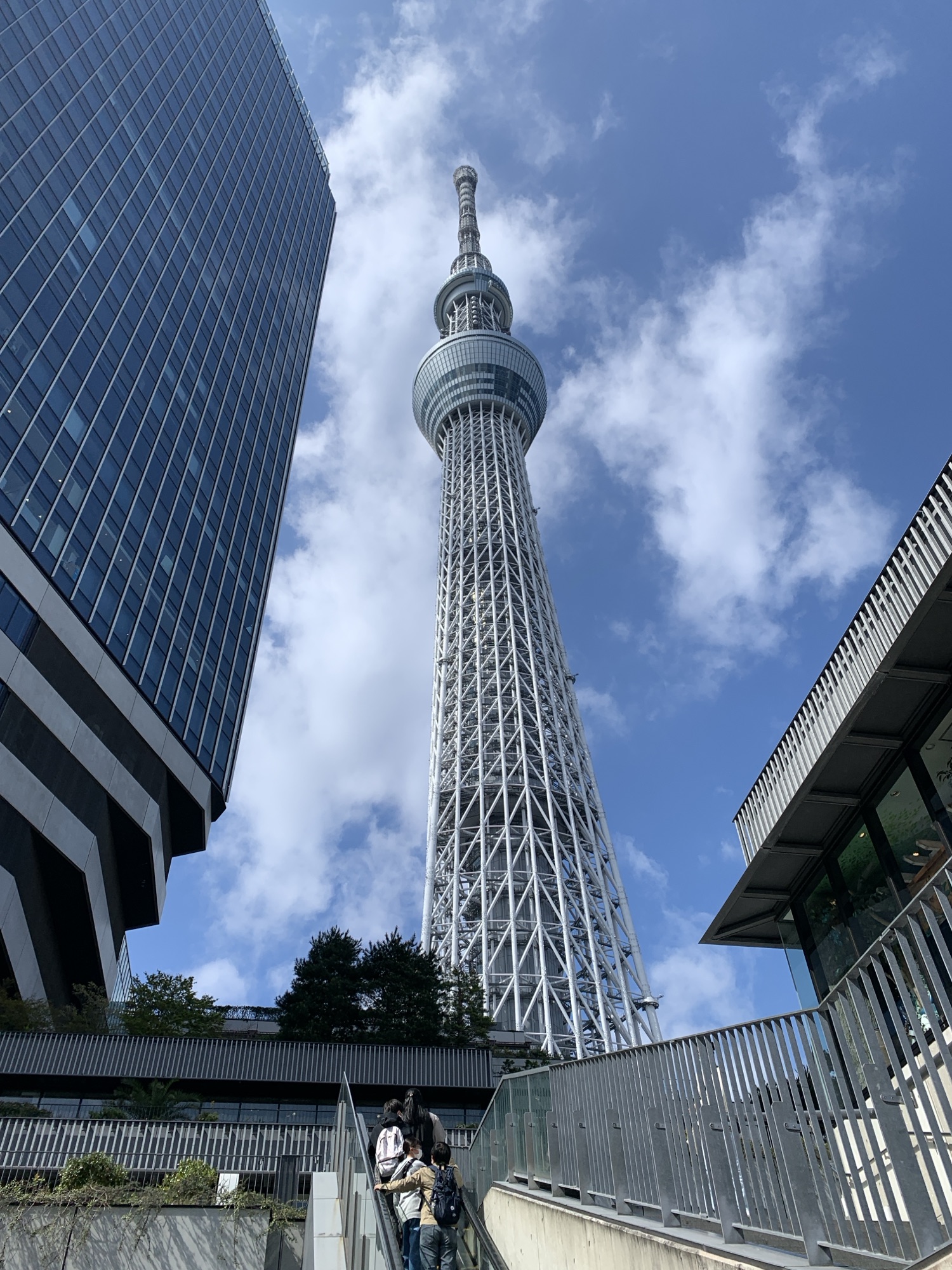
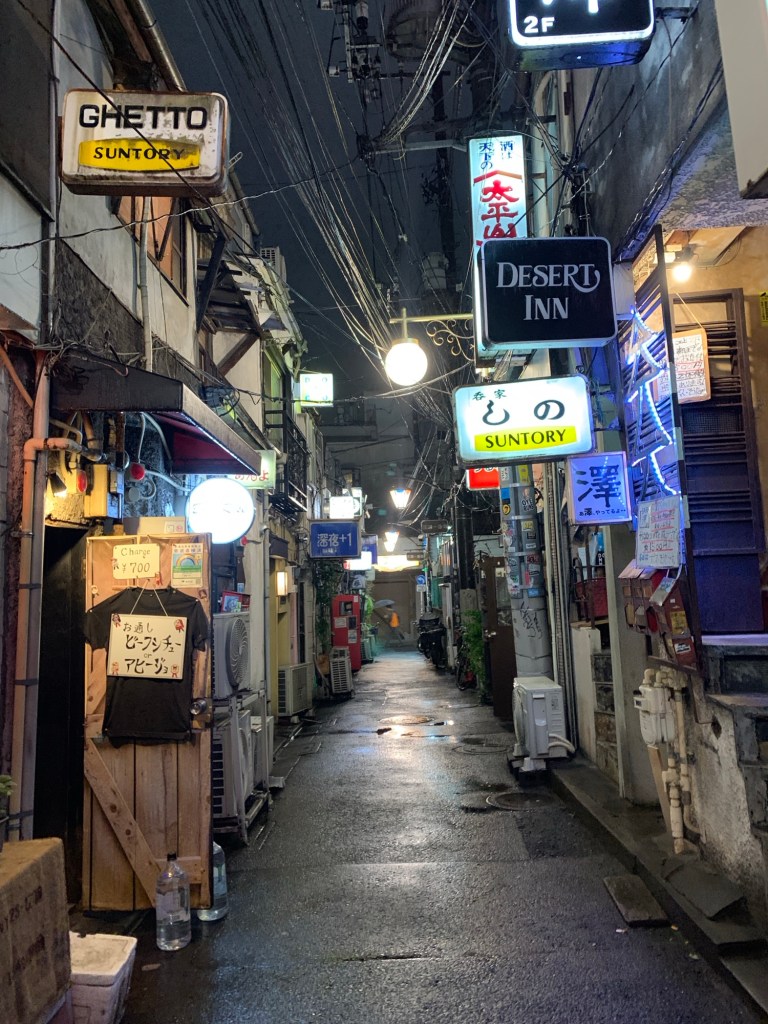
Before meeting up with my brother, the trip started solo with a 15-hour layover in Tokyo and I wanted to maximize every minute of it. After landing, I headed straight into the city and spent the evening exploring Shinjuku wandering through the narrow eclectic alleys of Golden Gai Alley filled with tons of bars only big enough to fit a handful of people in each.
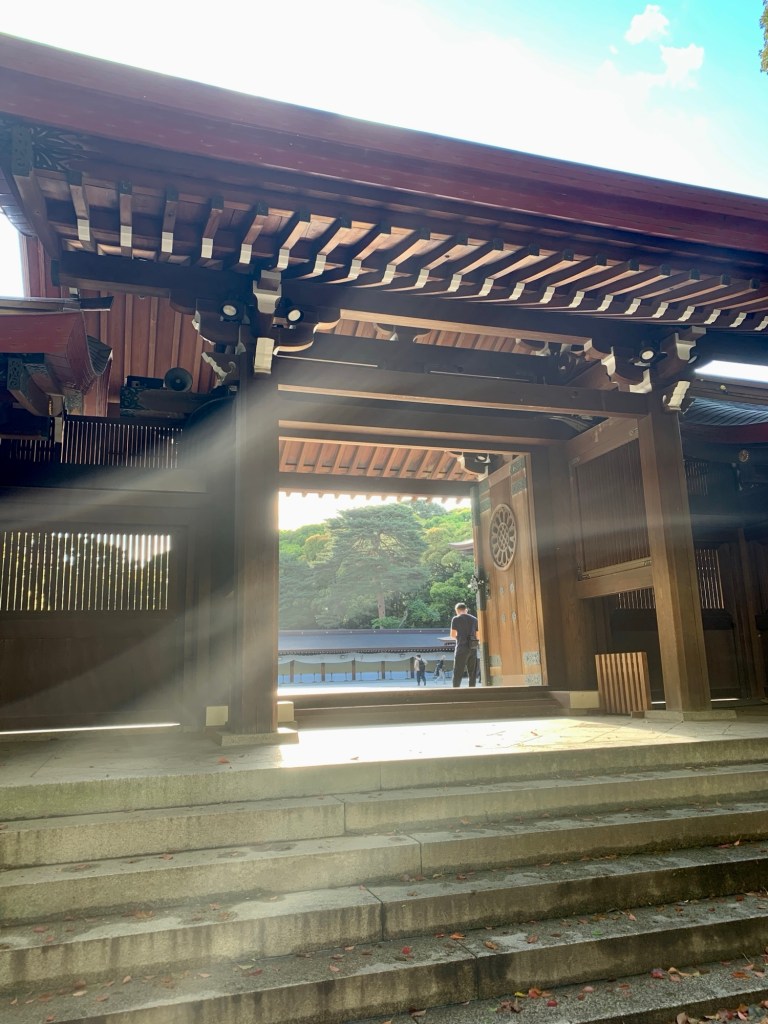
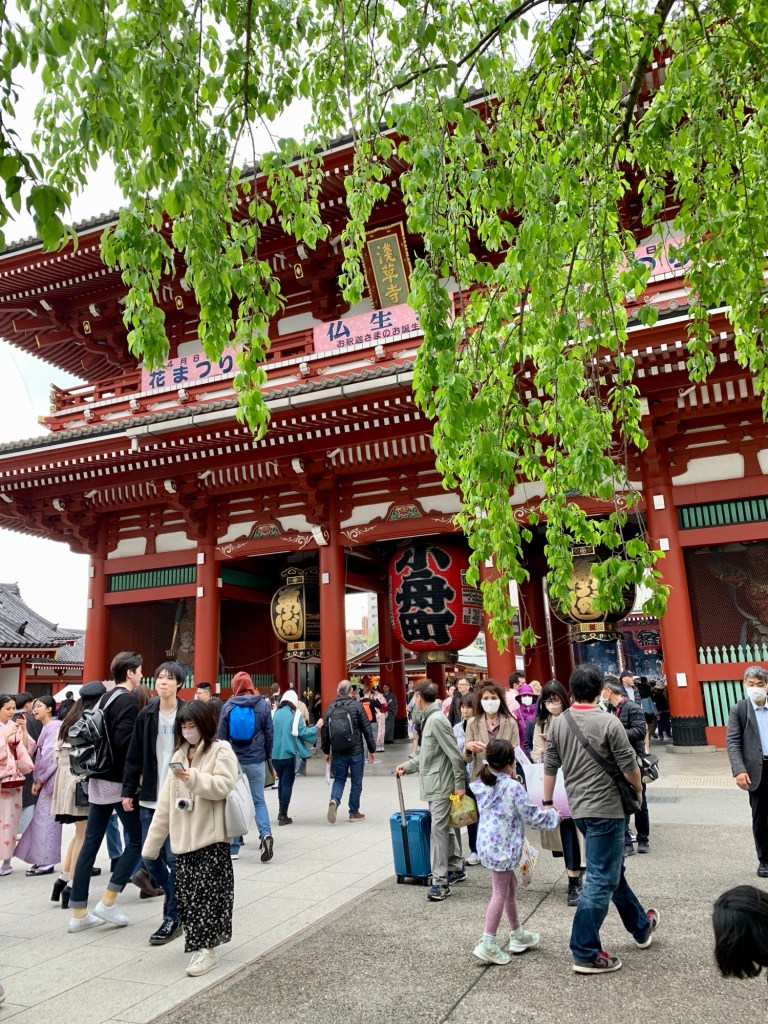
The next morning, I visited Meiji Jingu, a peaceful contrast to the buzz of the city, then made my way to the famous Shibuya Scramble Crossing and took in sweeping views from Tokyo Skytree. Lastly, I headed to Sensō-ji, the oldest temple in Tokyo, located in the Asakusa district. I loved my short time there and even got to catch the very end of the sakura season (cherry blossoms), which was the perfect way to kick things off.
Day 2-4: Ho Chi Minh City
I arrived in Ho Chi Minh City without a hitch, everything was smooth and surprisingly easy. But it’s worth noting: when applying for a Vietnamese e-visa, make sure your name matches your passport exactly, including your middle name. Even a small discrepancy can lead to major hassles at the border and unexpected fees. Do it right the first time, and you’ll save yourself a lot of stress.
In Ho Chi Minh City, we spent our time exploring a mix of historical and cultural sites:
- We began at the Saigon Central Post Office, a beautiful colonial building that still functions today to send a post card home.
- Just around the corner, we walked through Book Street (Đường Sách), a quiet pedestrian alley lined with cute bookshops and cafés.
- One of the most powerful experiences was visiting the War Remnants Museum, which documents the Vietnam War through photographs, personal stories, and artifacts. The museum presents a difficult but important perspective, especially regarding civilian impact and the long-term effects of the war.
- We also took a guided tour of the Củ Chi Tunnels, an extensive underground network used by the Viet Cong where we got to walk through the narrow passages.
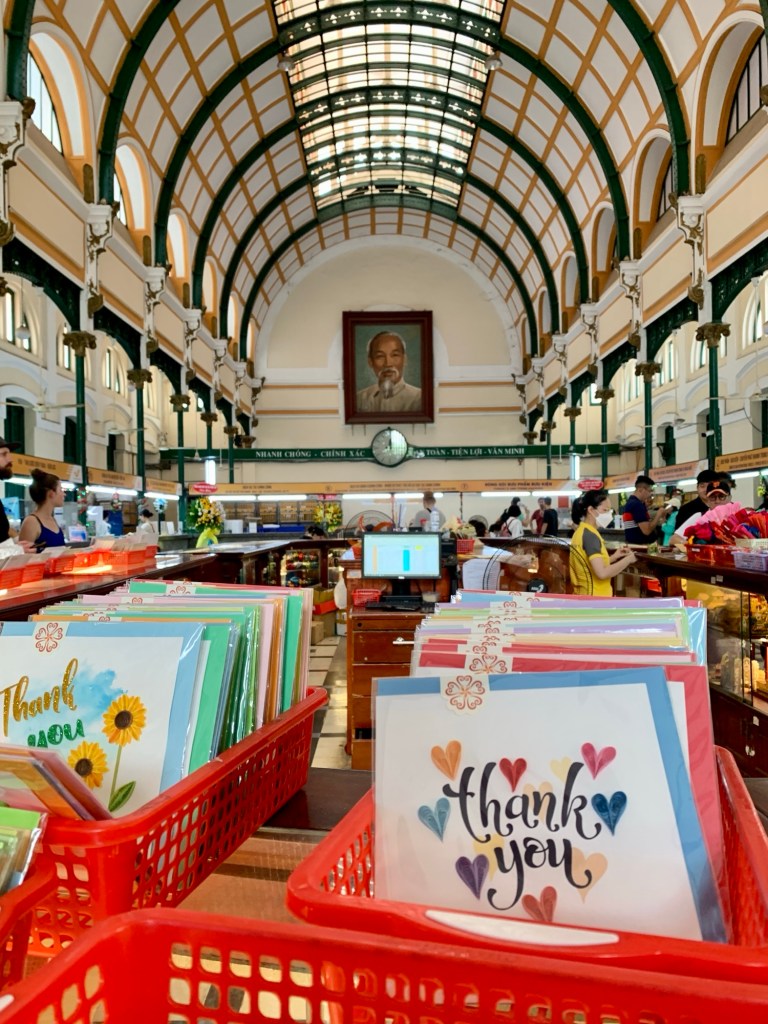
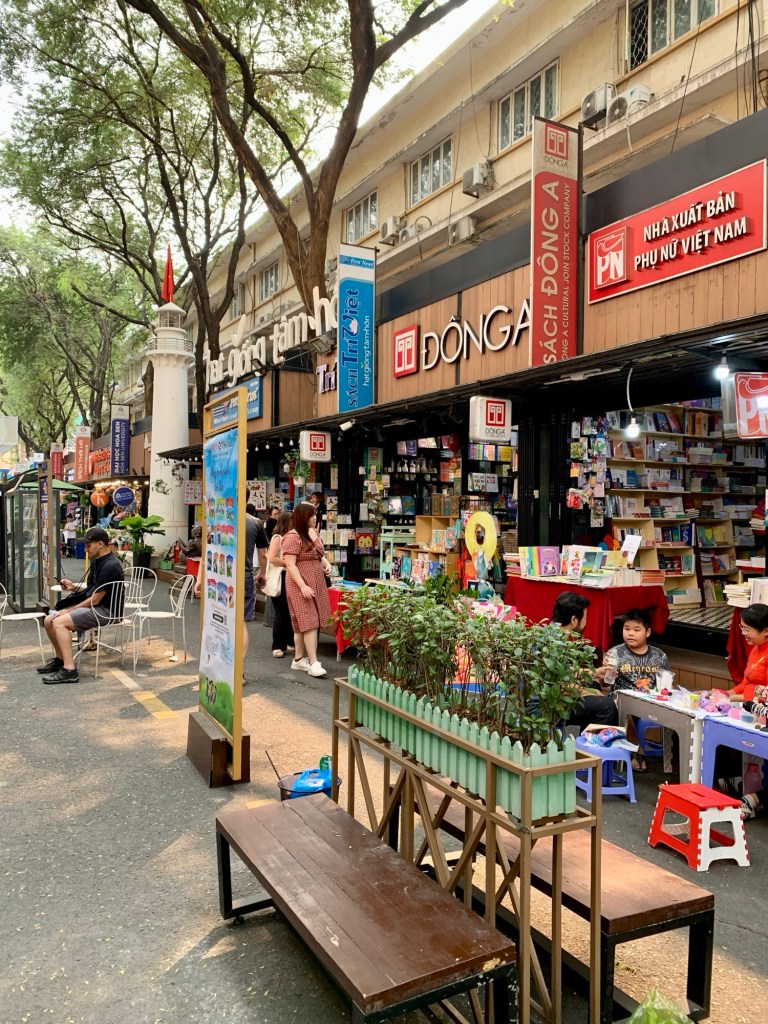
While our time in the city was short, and Ho Chi Minh City is a massive, fast-moving place full of noise and energy, there’s something redeeming around nearly every corner. We had amazing street food, middle schoolers interviewed us in the park to practice their English, and the city offered time for both reflection and insight into Vietnam’s complex history and vibrant present and would definitely recommend visiting.
Day 5-7: Nha Trang
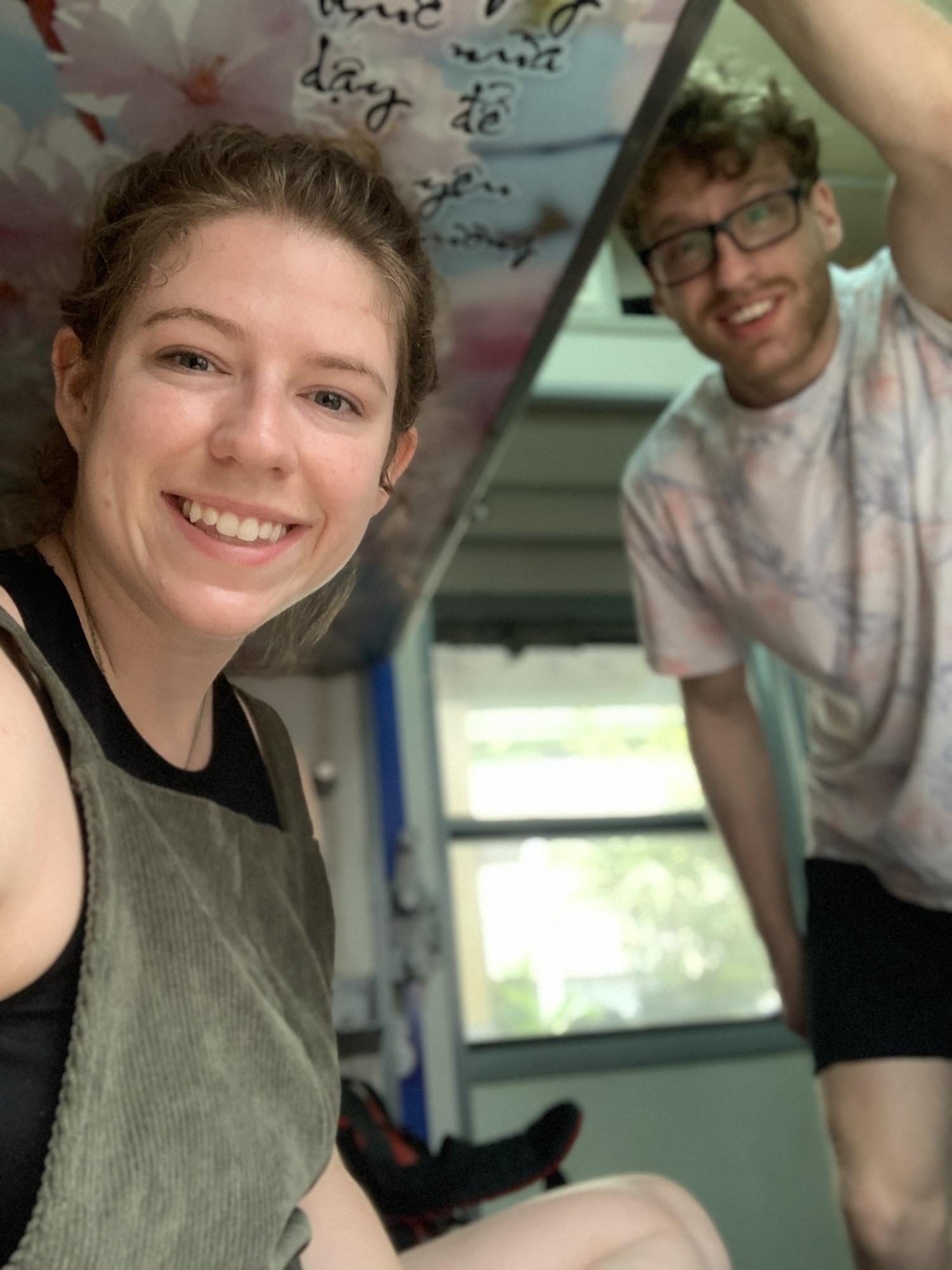
Instead going to Hoi An right away we added a stop to visit Nha Trang. We had an 11-hour journey to our destination, but luckily we also had a sleeper cabin. We shared a room with a sweet elderly Vietnamese lady who continually offered us fruit and had us wave to her family on FaceTime – then a couple naps and some reading later we were there.
After the energy of Ho Chi Minh City, we headed to a two-night stay at Amiana Resort Nha Trang for a peaceful retreat. Located along the coast, the resort has a private white-sand beach and multiple pools, including a huge natural seawater pool and a freshwater infinity pool. It was fun to add a bit of luxury to our trip to before getting back to more traditional backpacking.
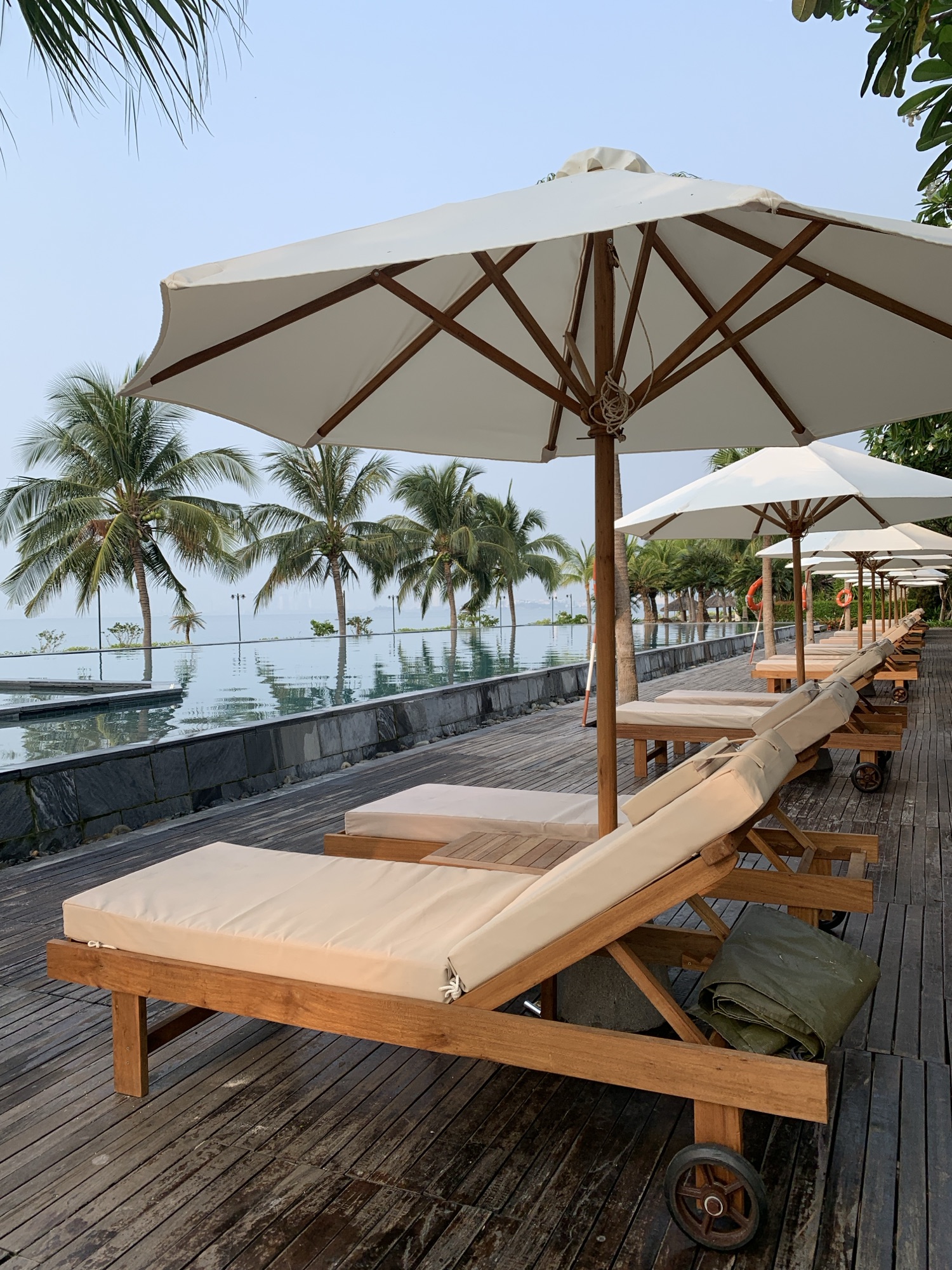

In our time there we were able to check out several notable cultural and religious landmarks:
- The Ponagar Cham Towers, built between the 7th and 12th centuries by the Cham civilization, are a collection of red brick temples dedicated to the goddess Po Nagar and remain an active site of worship. It is located on Cu Lao Hill, which is a 10-meter-high hill adjacent to Cai River.
- Long Son Pagoda, founded in the late 19th century, is a Buddhist temple known for its towering white Buddha statue, seated on a lotus blossom, which sits 24 meters high atop Trai Thuy Hill visible from much of the city.
- Nha Trang Cathedral, also known as Christ the King Cathedral, was constructed by the French in the 1930s in a Gothic Revival style using locally quarried stone.

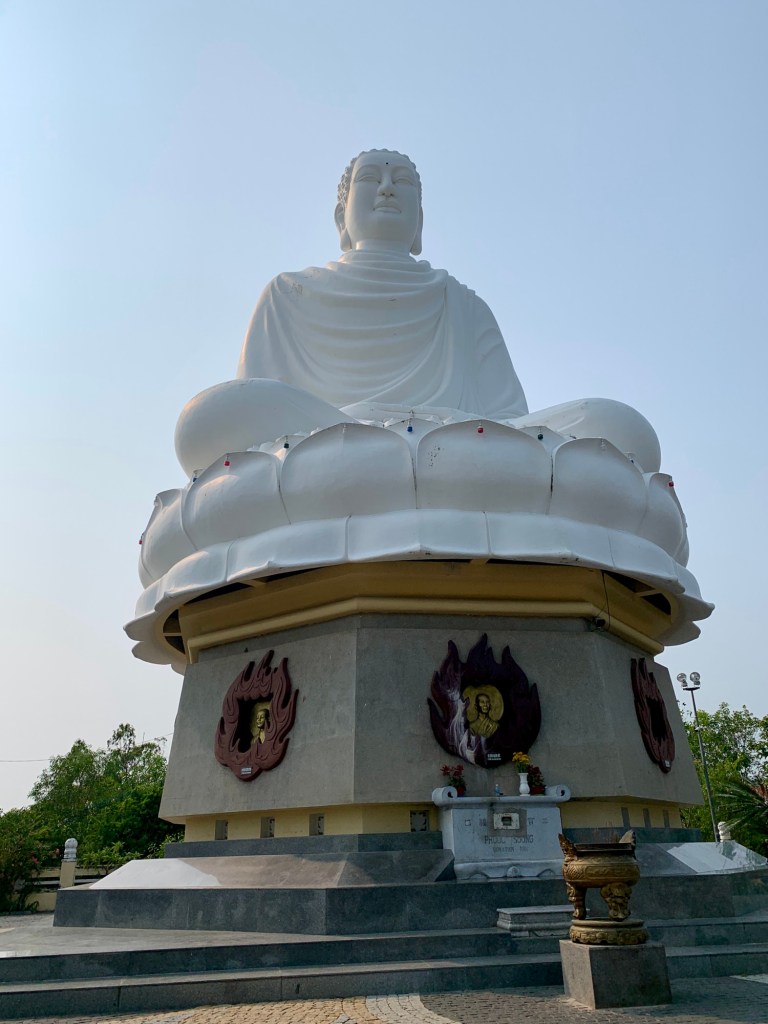
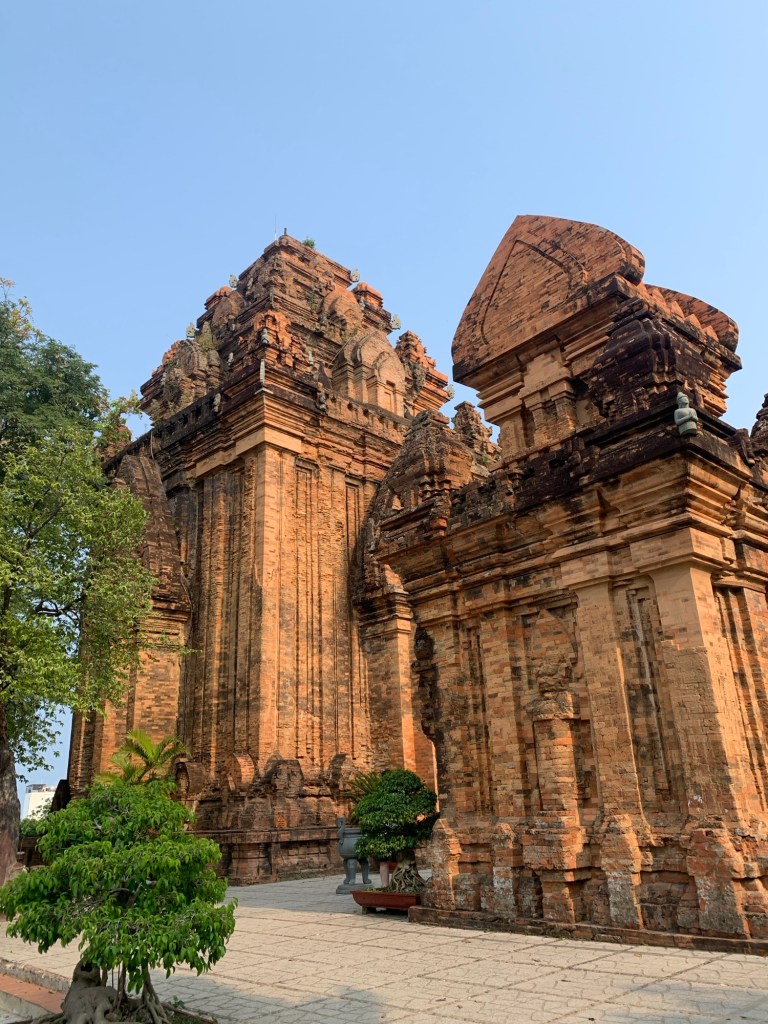
As a final stop in Nha Trang, we visited Susan Koi Coffee, a unique café designed around large koi ponds, the café features sunken booths while koi fish swim all around the outside edges where you can even feed the fish. We had some time to kill so this was a really random, fun way to pass the time.
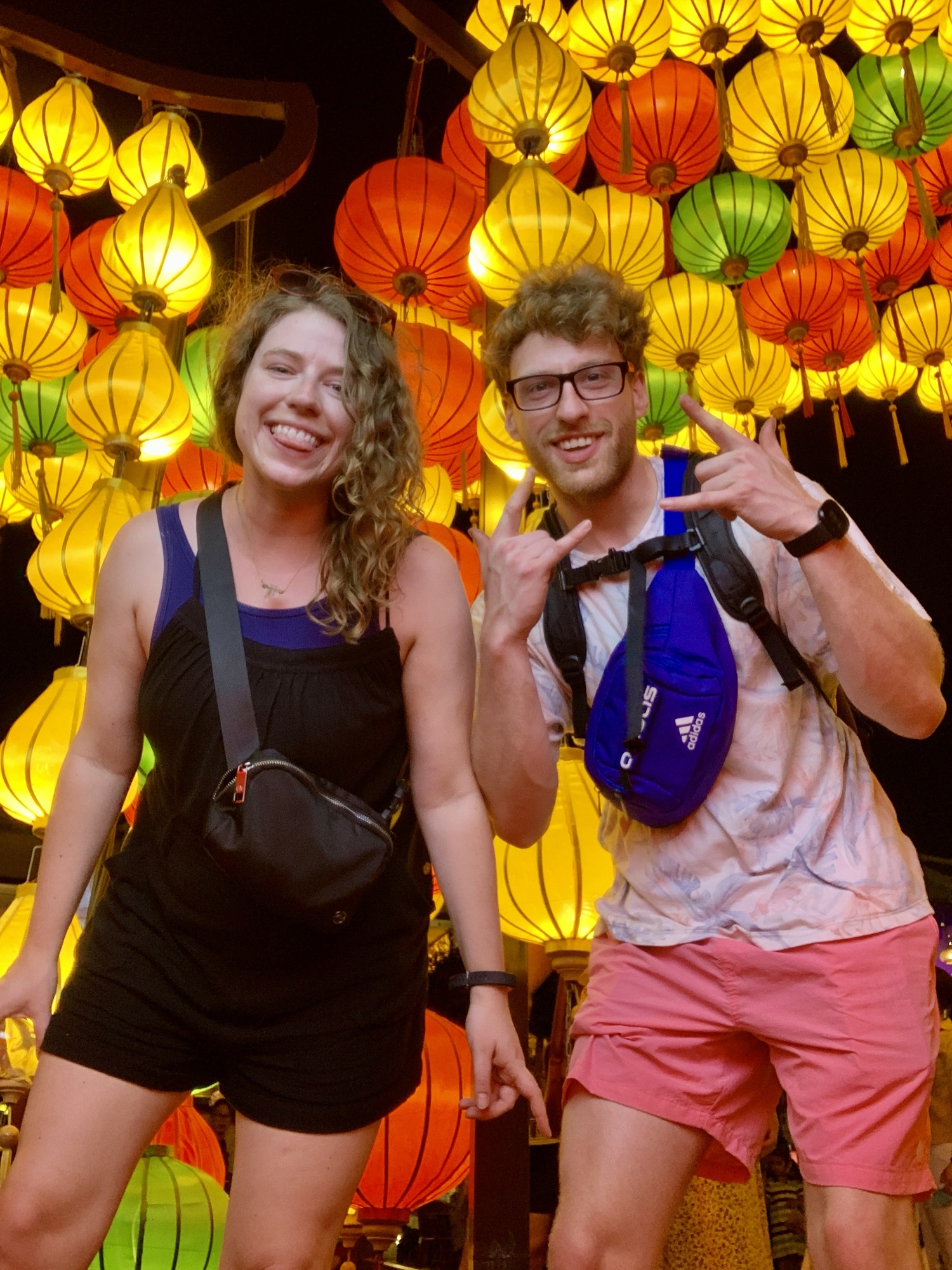
Day 8-11: Hoi An
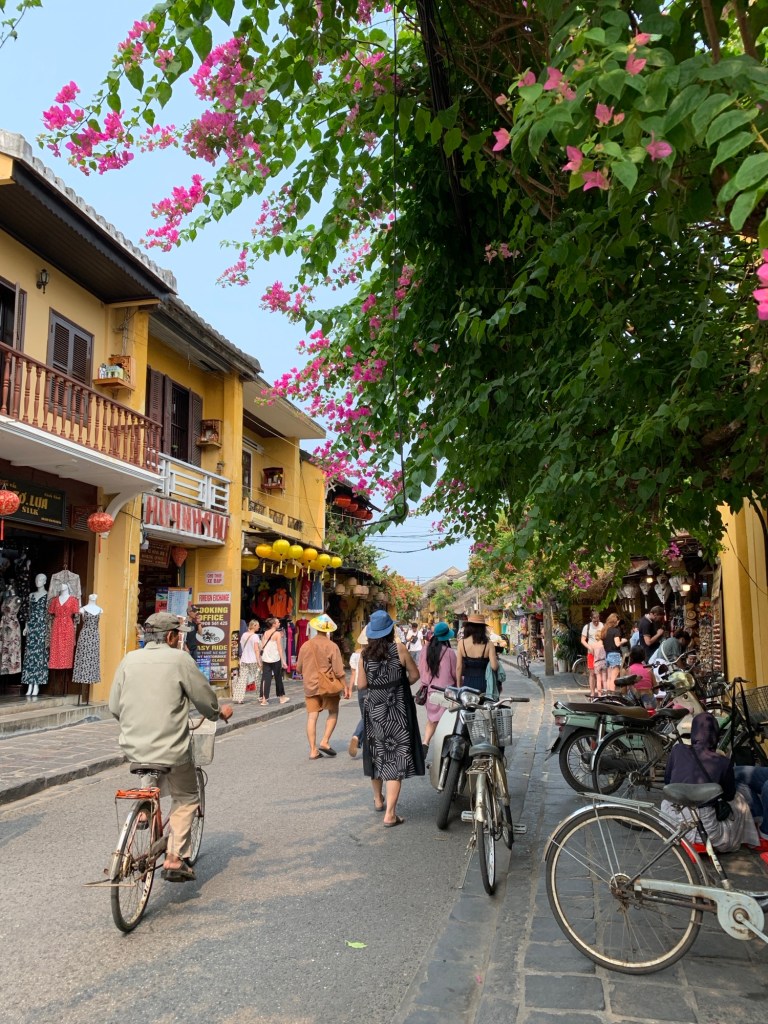
Once a bustling trading port from the 15th to 19th centuries, the streets of Hoi An are lined with traditional wooden houses, colorful lanterns, and a blend of Chinese, Japanese, and European architecture. Hoi An is one of the few places in Vietnam where the entire Old Town is a UNESCO World Heritage Site, recognized for being an exceptionally well-preserved.
Along the river, the two sides each had their own energy – one bustling with restaurants, night markets, and street performances, the other quieter and more relaxed, with cafés and shops tucked into restored colonial buildings. The whole town was filled with bicycles, which made it easy to get around and explore every little alley and hidden courtyard at a slower, peaceful pace.
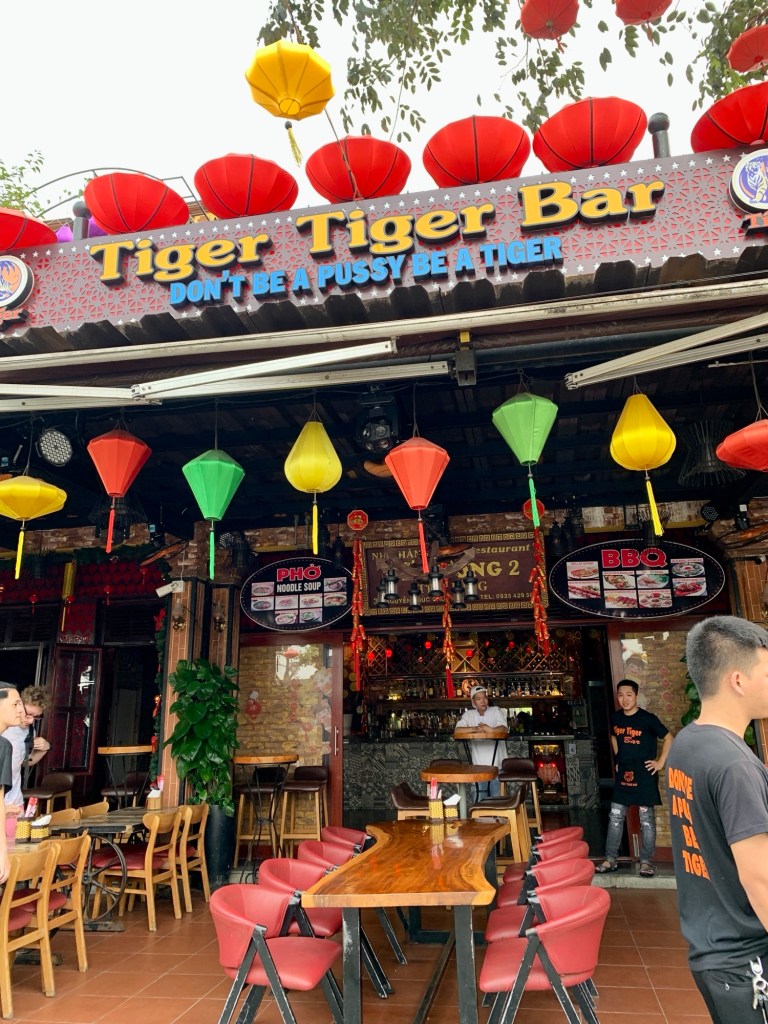
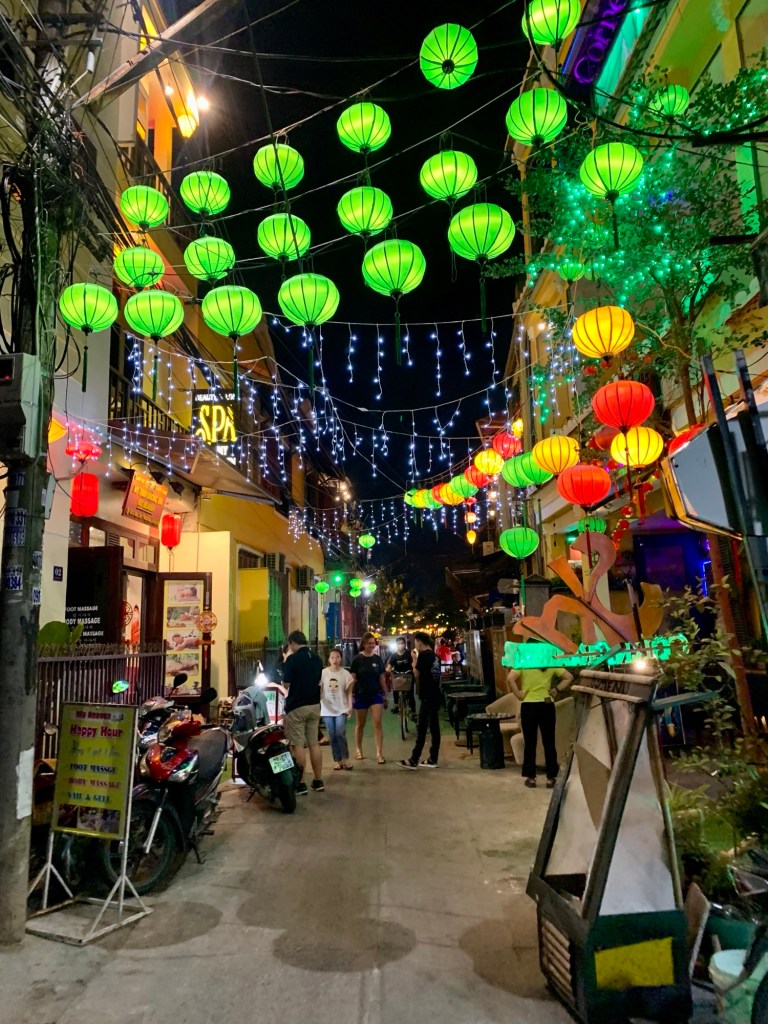
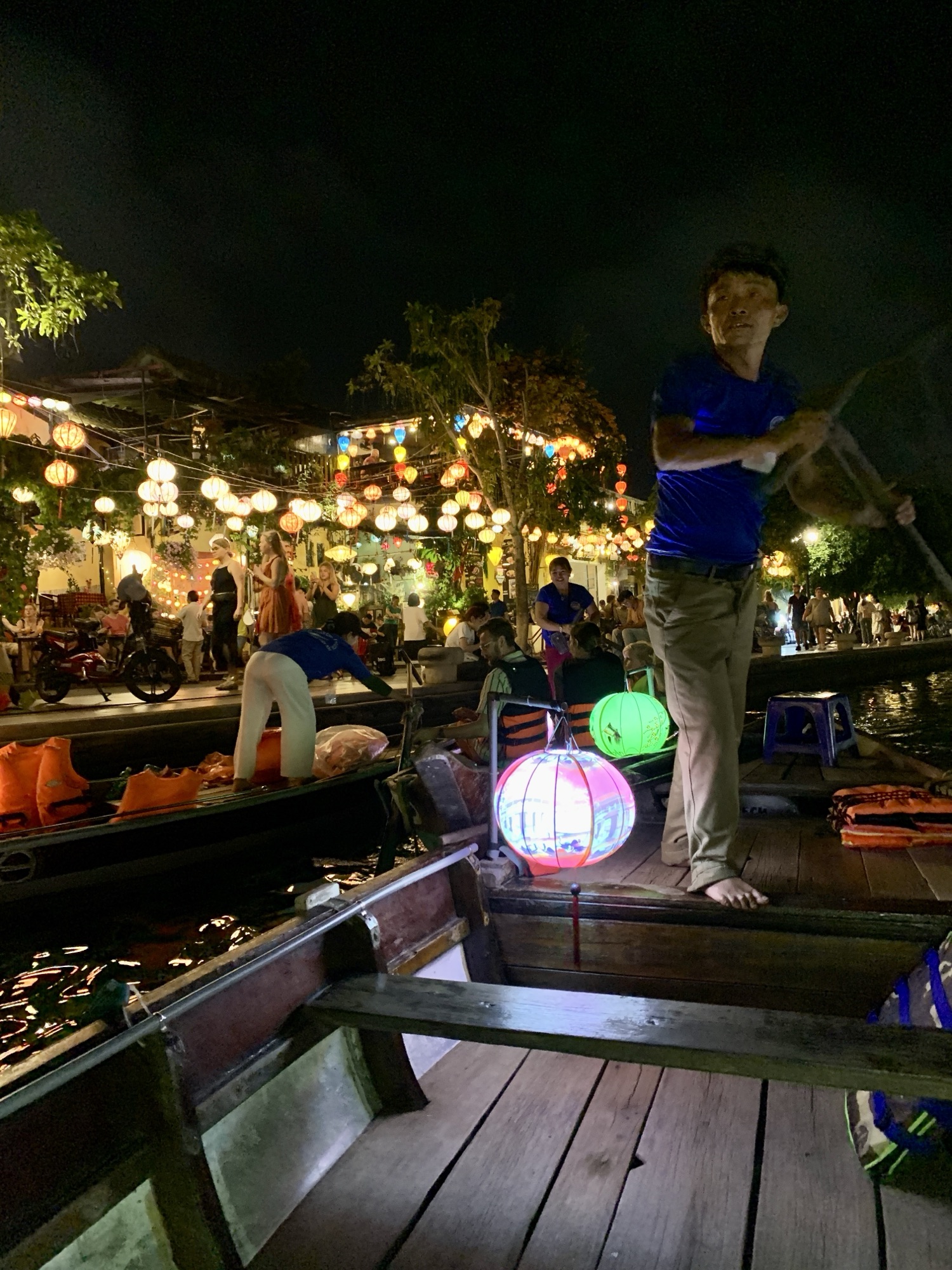
Each evening in Hoi An, the Hoai River is lit up by the beautiful tradition where locals and visitors release small, candlelit paper lanterns, known as hoa đăng, onto the water, each carrying personal wishes for health, happiness, or peace. You line up just before sunset and get a ticket for a nominal fee and a local boatmen will take you around the canal for a short scenic tour and to release your lantern.
We also had the chance to take a couple of day trips to see some local cultural historical sights:
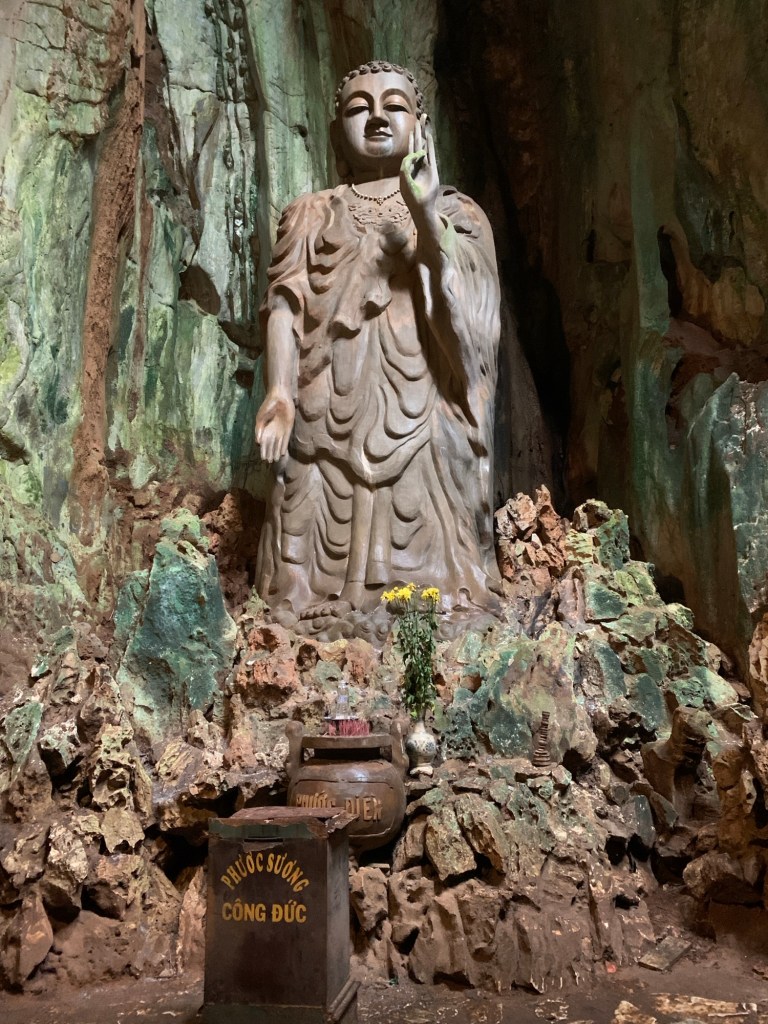
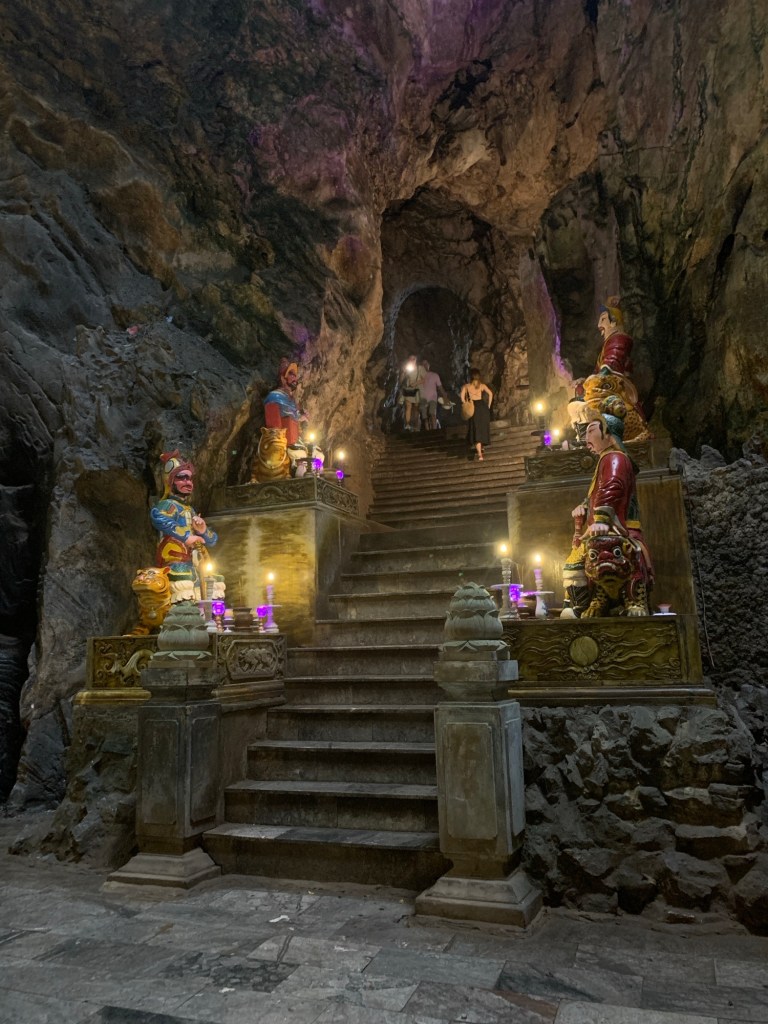
- The Marble Mountains, or Ngu Hanh Son, are a cluster of five limestone and marble hills located approximately 30 minutes from Hoi An, close to the city of Da Nang. The mountains house a network of caves, tunnels, and Buddhist sanctuaries. Visitors can ascend the mountain via stone steps or an elevator, and from the summit, enjoy panoramic views of Da Nang and the coastline.

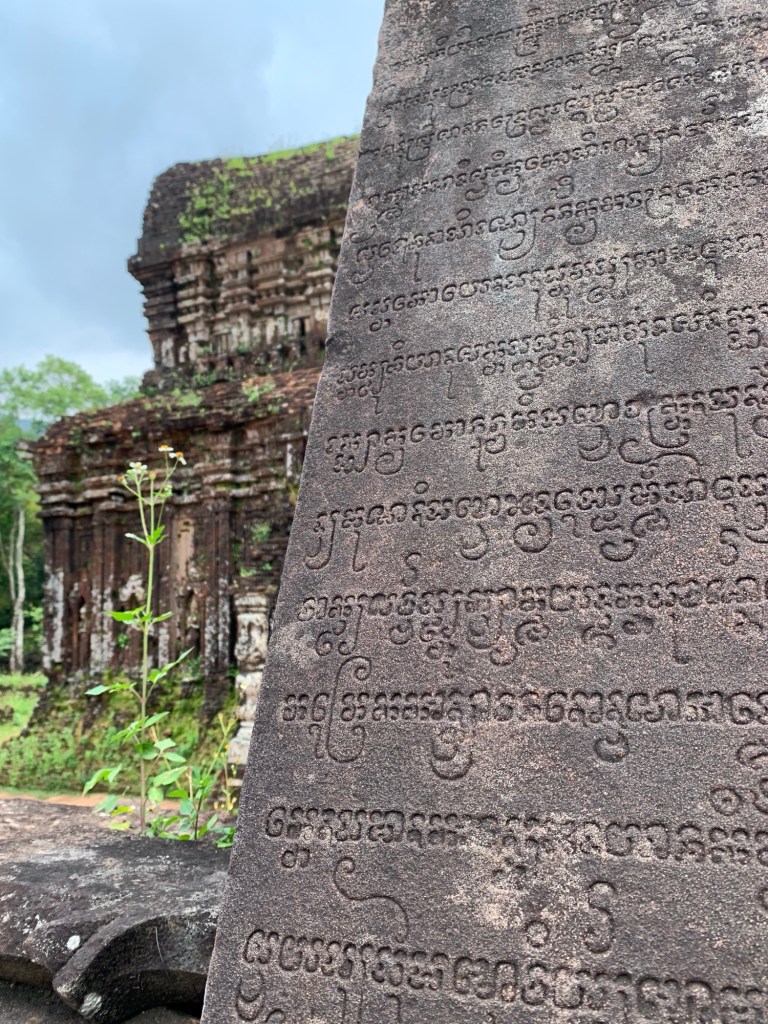
- Just outside Hoi An lies My Son Sanctuary, a UNESCO World Heritage Site. Built between the 4th and 13th centuries by the Champa Kingdom, the site was a major center of Hindu worship, dedicated primarily to the god Shiva. It features intricate brick temples and towers inscribed in Sanskrit and Cham. Though partially damaged during the Vietnam War, the sanctuary remains a powerful symbol of the region’s historical depth and spiritual heritage.


Day12-15: Chiang Mai
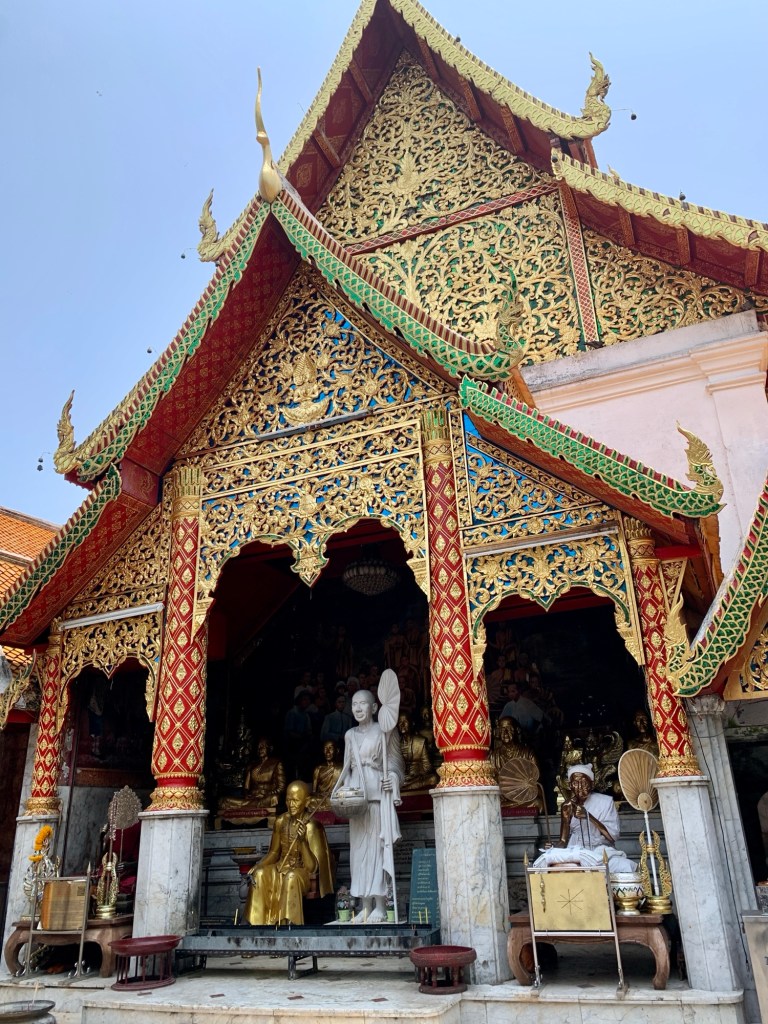
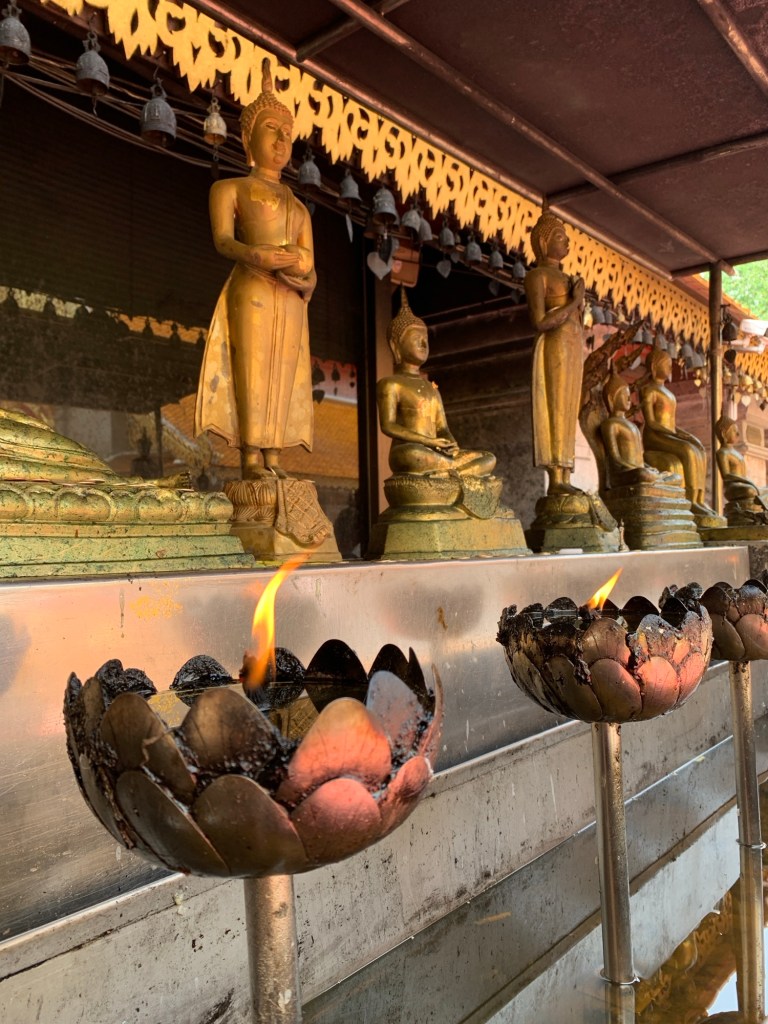
Next we headed to Chiang Mai where we stayed at Hostel Lullaby, a cozy spot in the Old City. Founded in 1296, it’s surrounded by remnants of ancient walls and a moat that once protected the capital of the Lanna Kingdom. It’s home to dozens of historic temples including Wat Phra Singh, Wat Chedi Luang, and Wat Chiang Man, the oldest temple in the city.

Just a short walk away is Buak Hard Public Park, a peaceful green space perfect for relaxing or people-watching. The park has shaded paths, ponds, and open lawns, and it even hosts the annual Chiang Mai Flower Festival, where locals create elaborate floral displays.

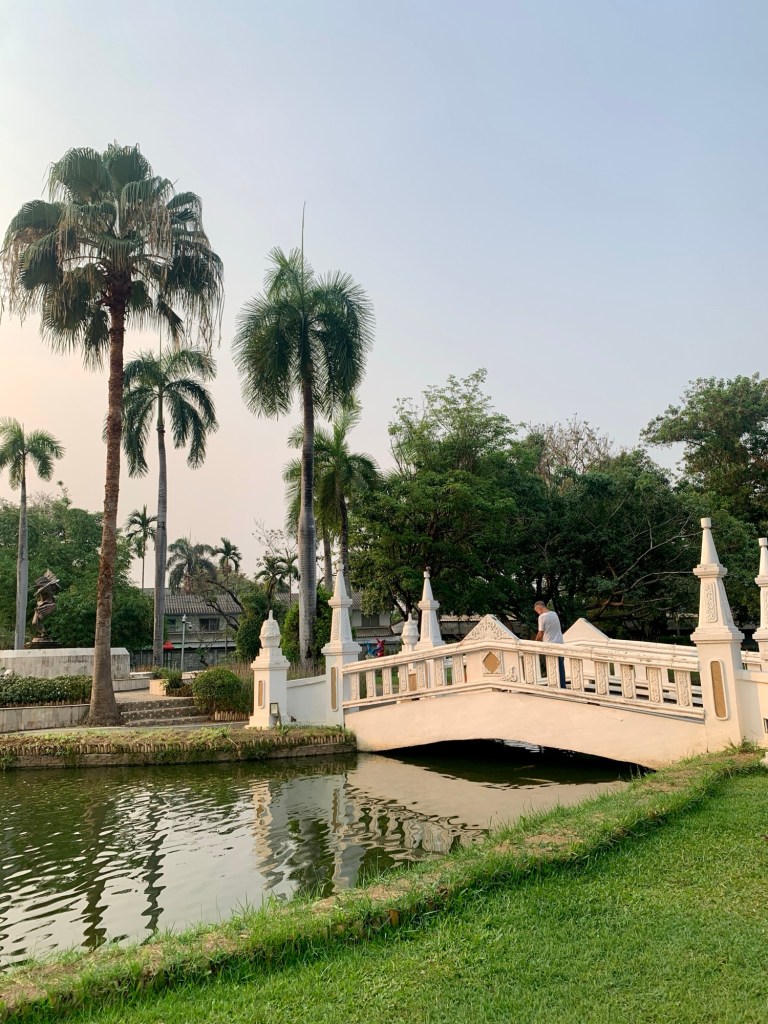

Beyond exploring the Old City, there were so many other interesting places to discover around Chiang Mai and the surrounding areas:
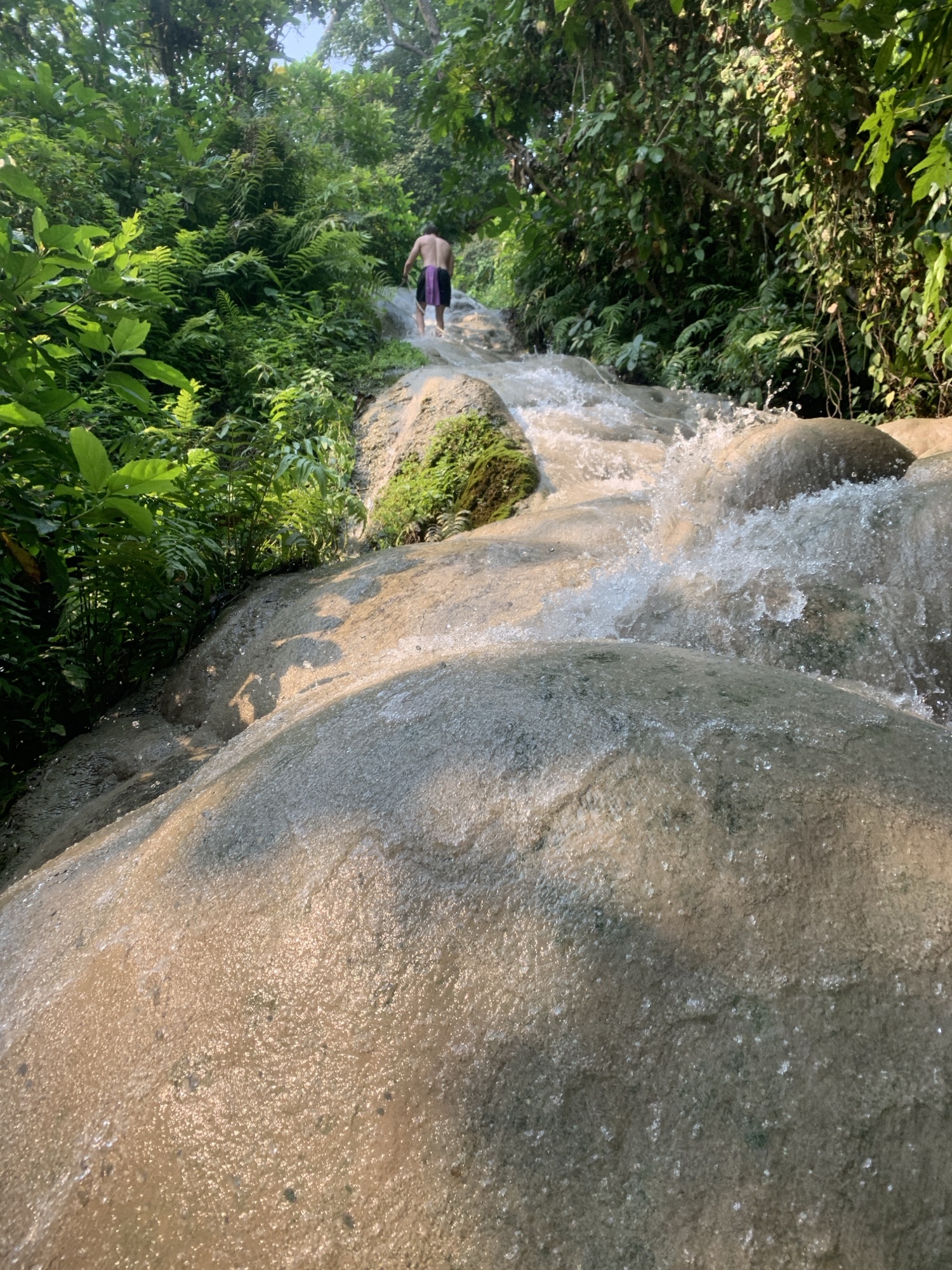
We took a trip to visit the Bua Tong Sticky Waterfalls, a natural attraction located about an hour away in the Sri Lanna National Park. Unlike typical waterfalls, the limestone rocks here are unusually grippy, allowing people to climb up the falls without slipping. Surrounded by a lush forest it felt like a surreal experience being able to climb the waterfalls barefoot.
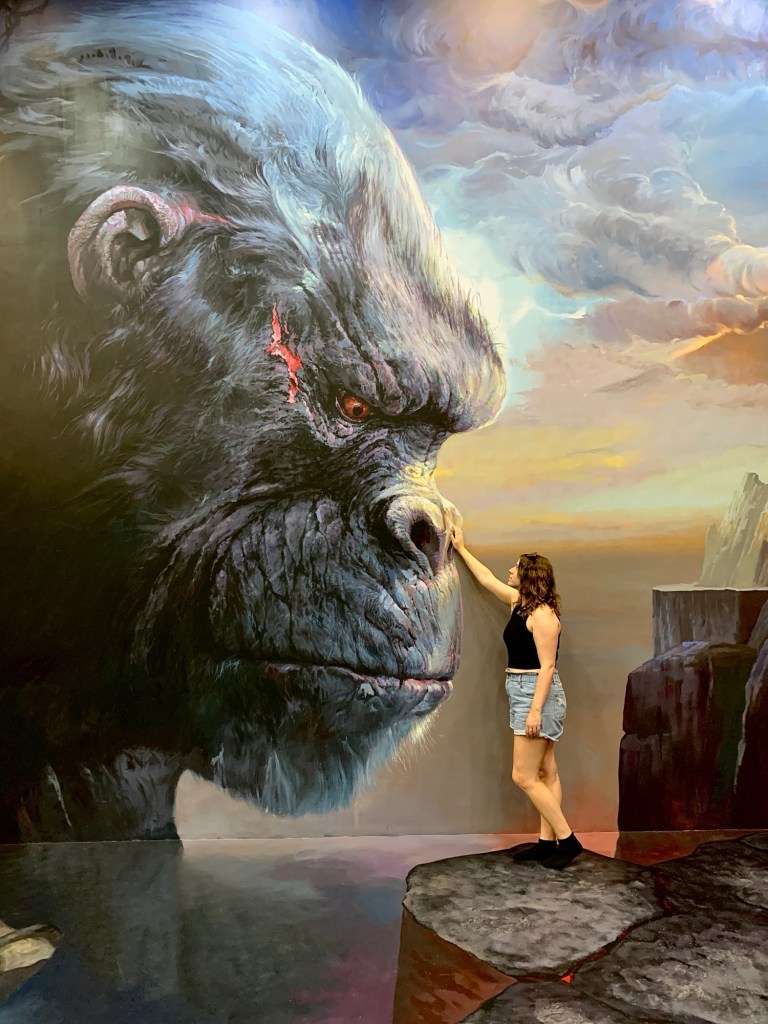
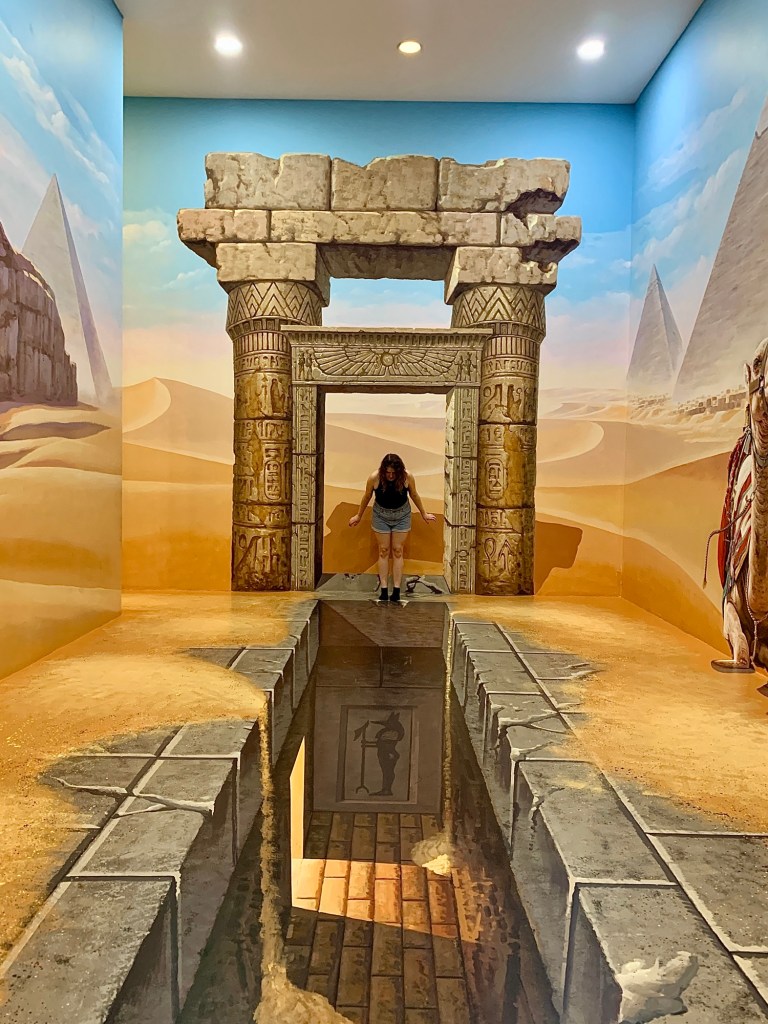
The Art in Paradise Chiang Mai, an interactive 3D optical illusion museum, is a fun and light-hearted place to spend a couple hours. The museum is filled with murals and installations designed for you to pose with and become part of the art, creating some really creative and funny photos. The whole experience is built around perspective, so just make sure you bring someone with you to take your pictures.

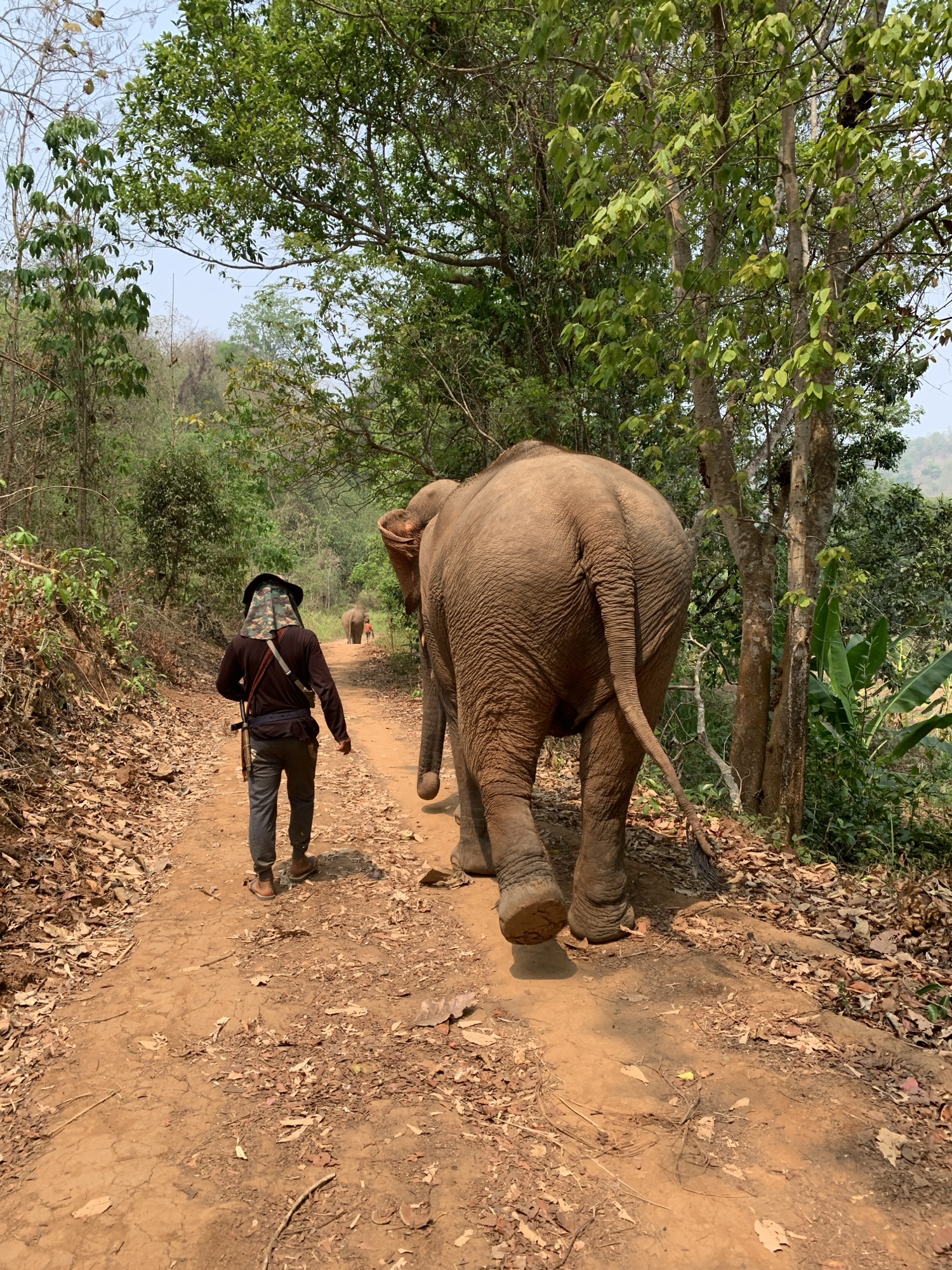
Chiang Mai also has many elephant tours where you can feed and observe the elephants, but it’s important to choose an ethical sanctuary that bans riding and performances. Places like Elephant Nature Park and Into the Wild Elephant Camp focus on rescue and letting elephants live naturally, with minimal human interaction and respectful observation.
Day 16-20: Krabi
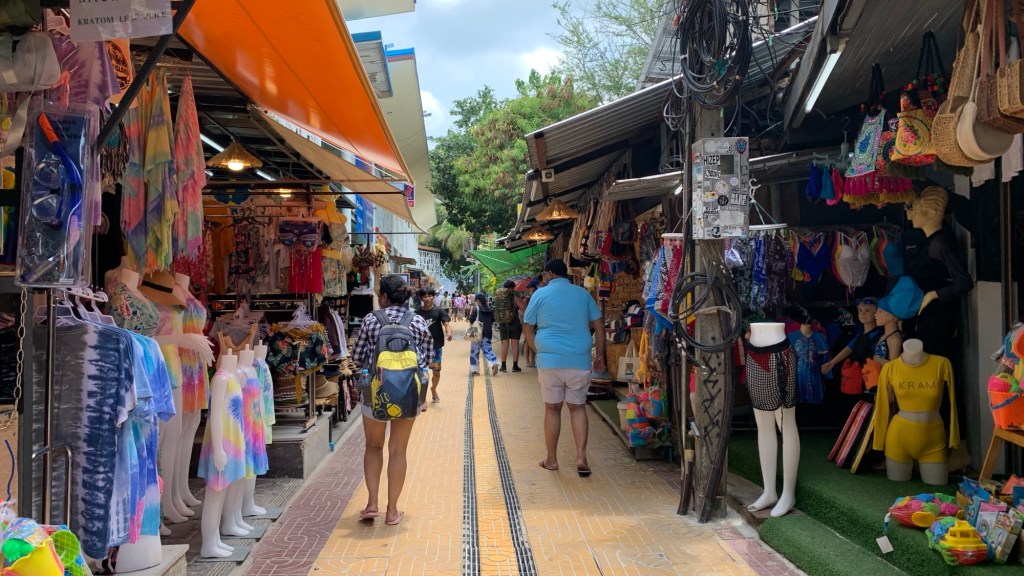
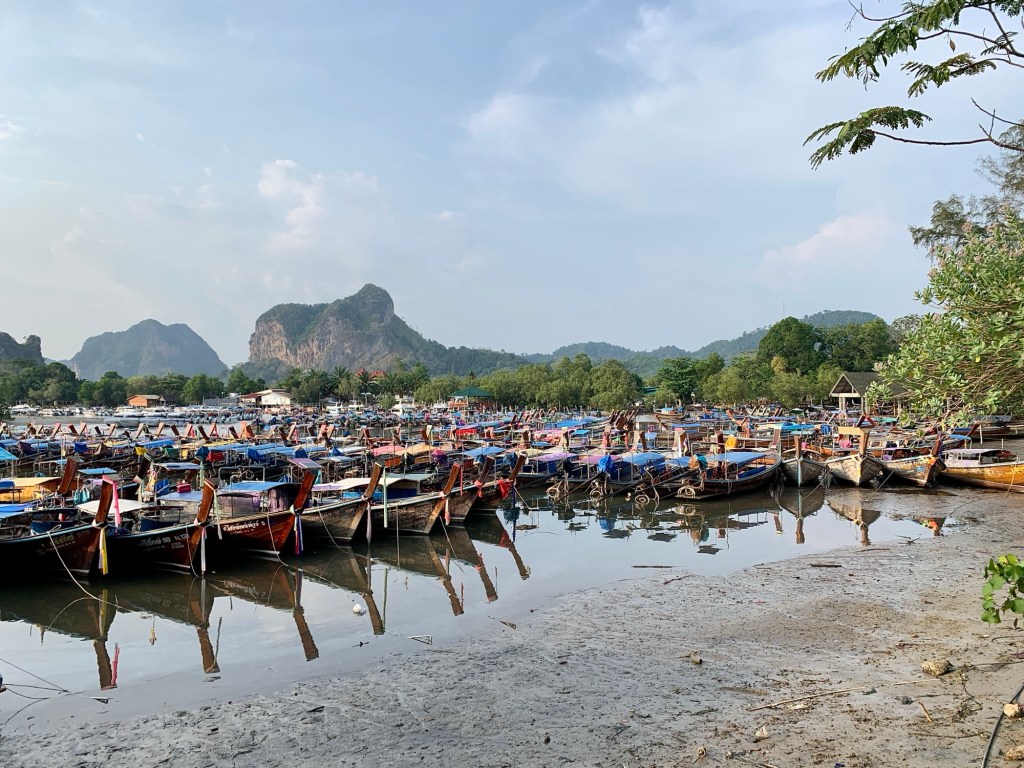
Looking to complete our time in Thailand with some more classic beach time, we decided to head to Krabi. Krabi has a more laid-back, local vibe compared to some of Thailand’s busier beach spots, with fewer crowds, stunning natural scenery, and a mix of small-town charm and easy access to islands and outdoor adventures.
- While we were in Krabi Town, we joined a sunset island-hopping tour that had a number of island stops including time for snorkeling, a beachside BBQ dinner, and ended with a night swim in the bioluminescent plankton. When moving through the water, the plankton lit up anywhere you touched which was a pretty magical, surreal experience. They only illuminate momentarily, but the entire experience is very mesmerizing!
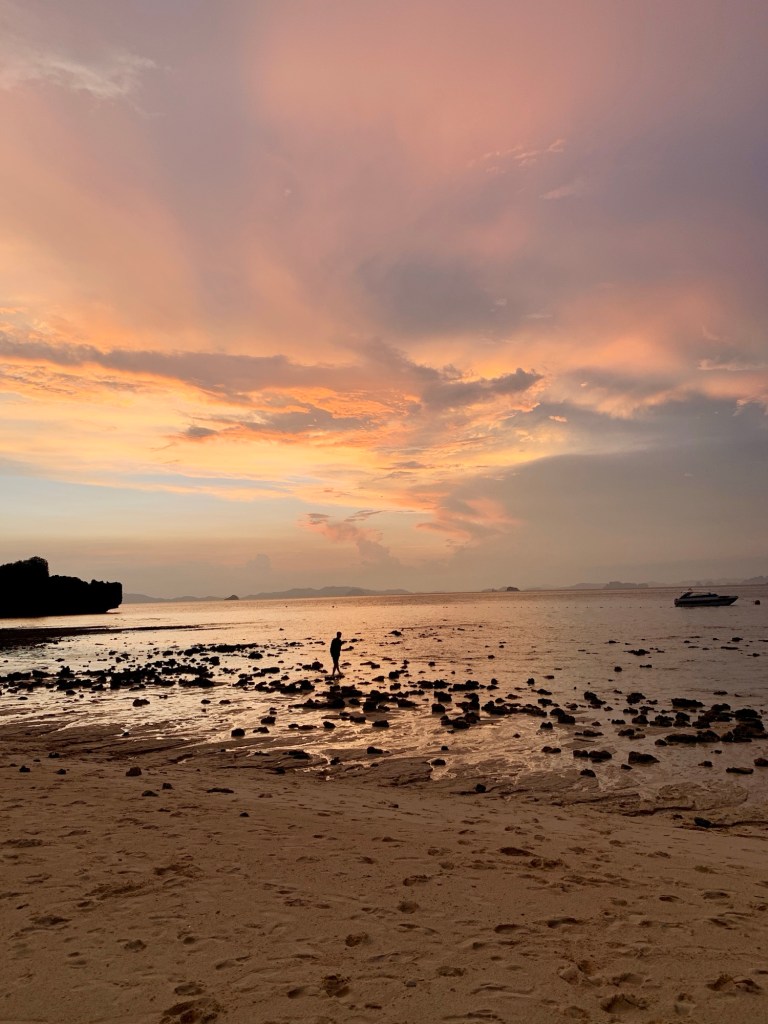
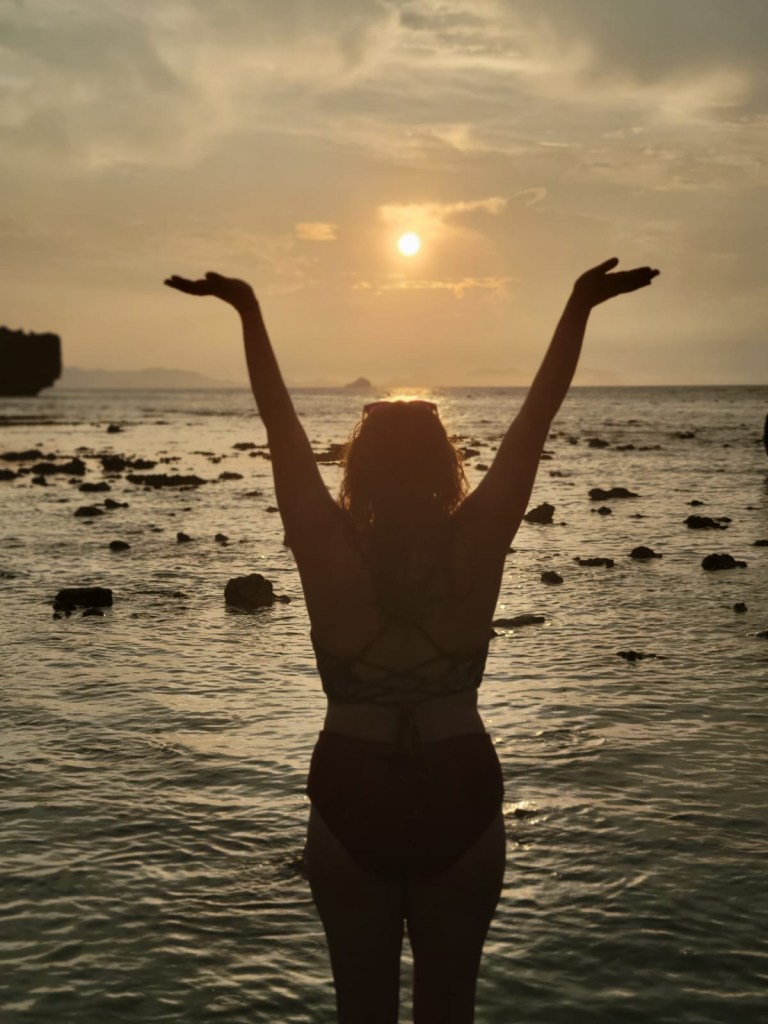
- Railay Beach was also a fun way to spend an afternoon. Just a short boat ride away it feels like a hidden island escape, with dramatic cliffs, chill beaches, and a super laid-back vibe. It’s the kind of place where you can swim, relax, grab food or drinks at one of the many restaurants and bars, and take it all in, all without any cars or crowds.
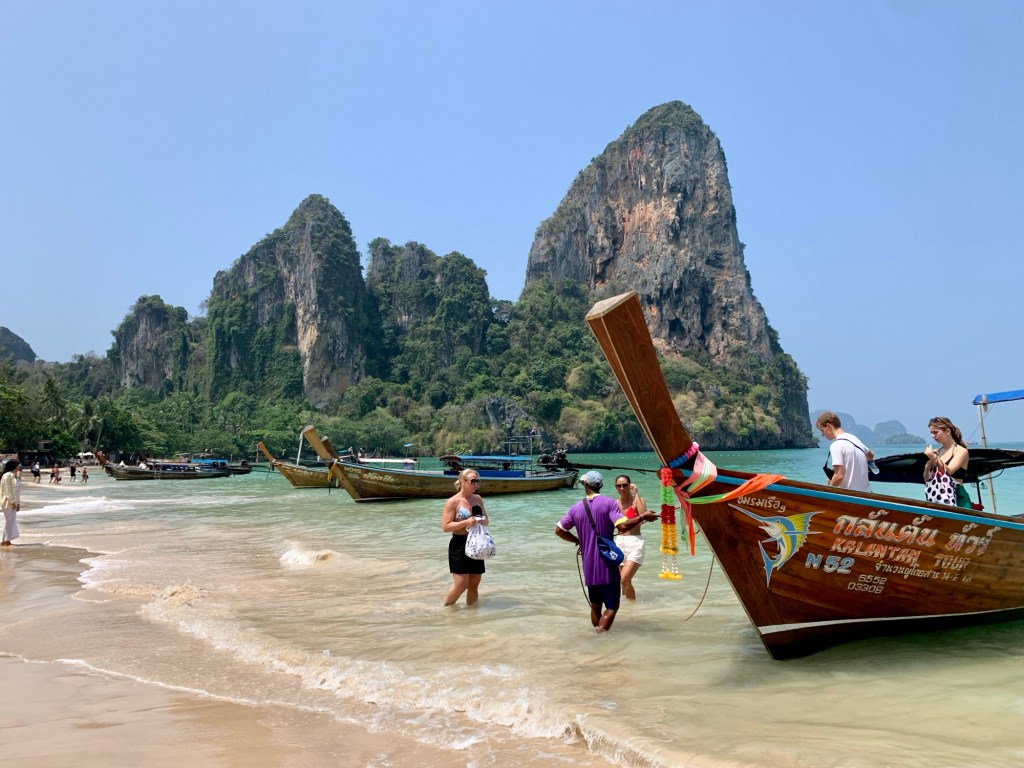
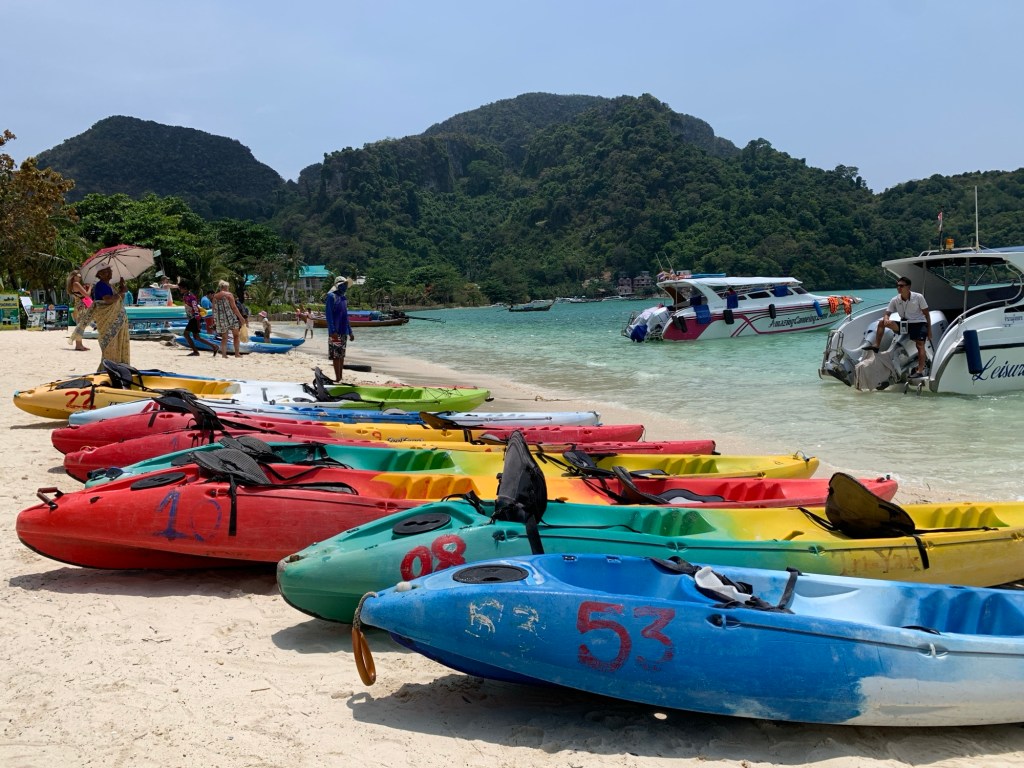
- The Phi Phi Islands are famous for their dramatic limestone cliffs, crystal-clear water, and a lively, backpacker-friendly vibe. Even though the main areas can feel busy, it’s easy to find quieter spots if you get out on the water. We rented a kayak and paddled over to Monkey Beach, a hidden stretch of sand where wild monkeys live right along the shoreline. The paddle was a mini adventure in itself, and it was a great way to see the islands from a different perspective.
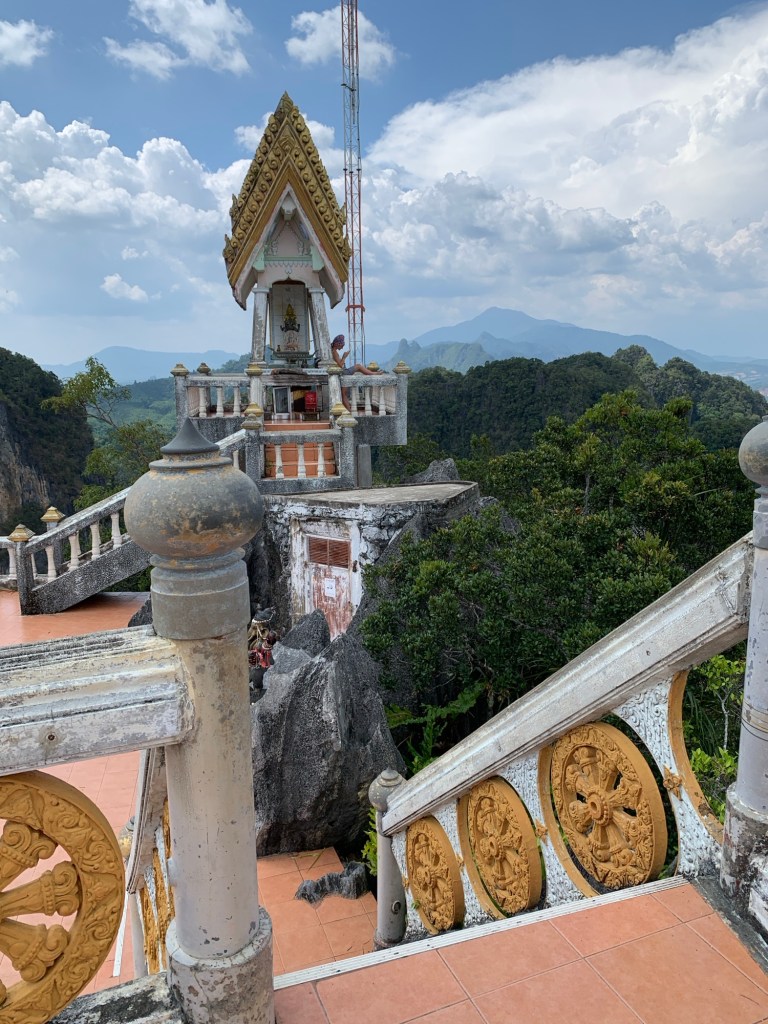
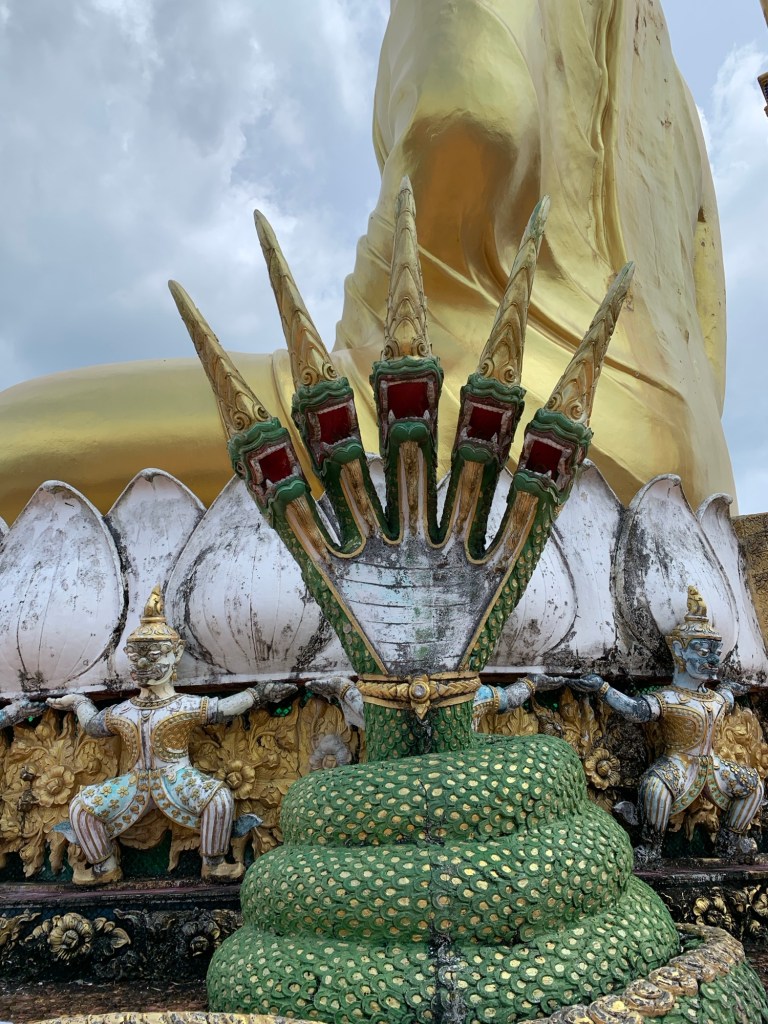
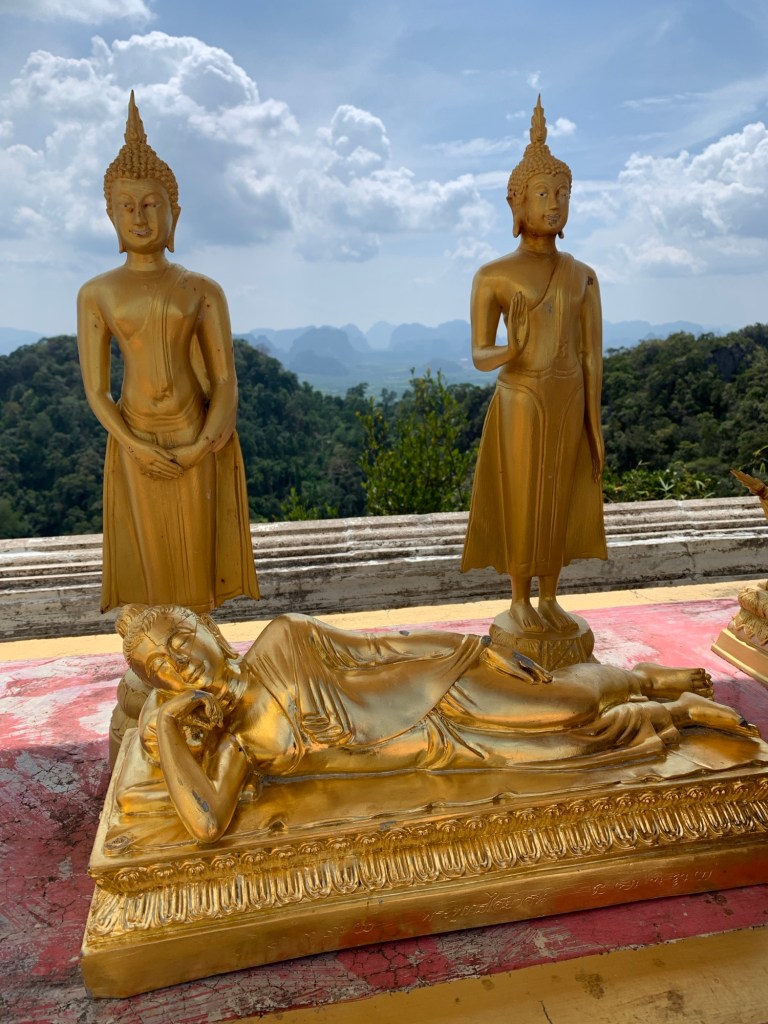
- The Tiger Cave Temple (Wat Tham Suea) near Krabi Town is a sacred Buddhist site founded in 1975, named after tiger paw prints discovered in its caves. Visitors climb 1,260 steep steps to reach a 278-meter-high summit with a giant golden Buddha and panoramic views of the Andaman Sea, lush forests, and limestone cliffs. The temple grounds also feature meditation caves, ancient trees, and archaeological remains like stone tools and pottery.
Day 21-22: Bangkok
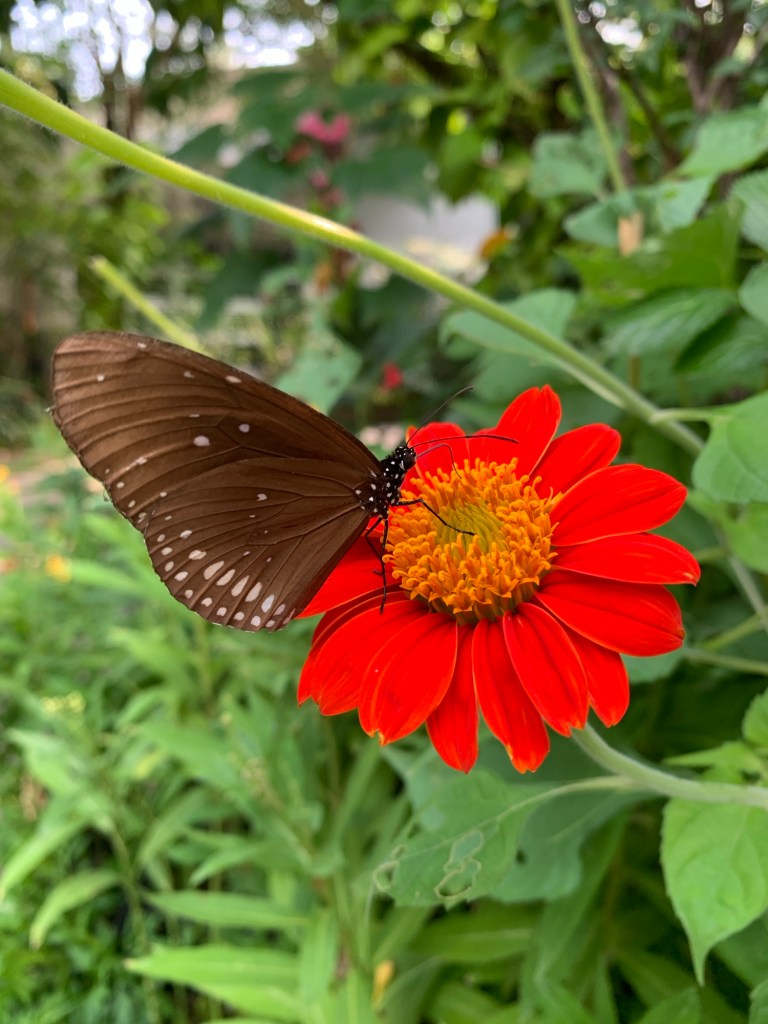
During our brief stay in Bangkok, we explored the city’s vibrant streets and markets near Khao San Road. A unique discovery was the Bangkok Butterfly Garden and Insectarium, located within Wachirabenchathat Park, this free attraction features a large, dome-shaped enclosure designed to replicate a tropical rainforest, with lush vegetation, a cooling waterfall, and a variety of butterfly species.



 Nostalgia in Motion
Leave a reply to Just Joey Cancel reply